

Not two months in office, as the price of west Texas crude approached $14 a barrel, President Jimmy Carter donned a cardigan to speak candidly about his strategy to face the permanent energy shortage he saw in the nation’s future.
His “fireside chat” is mostly remembered for asking Americans to lower the thermostat to 65F in the daytime and 55F at night, an idea that didn’t go down too well in the bitter winter of 1977.
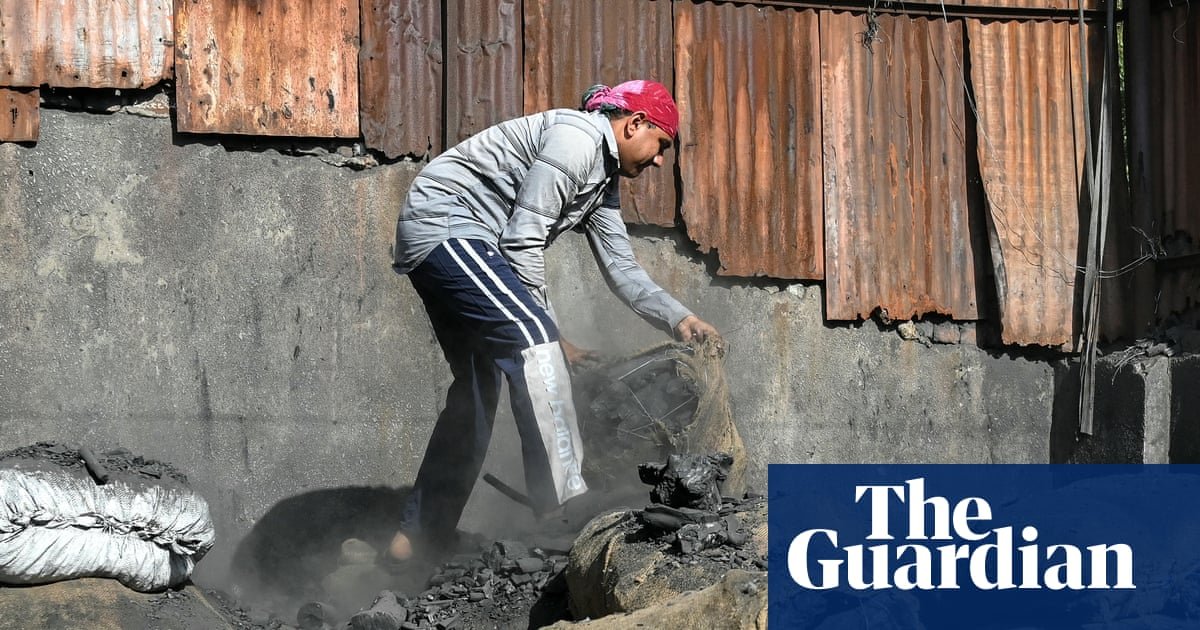
Environmentalists fondly recall his promise to research solar power and other renewable sources of energy. But the most consequential commitment Carter made that night, alluded to in subsequent speeches and furthered in his energy agenda, was to aggressively develop domestic sources of coal, what James Schlesinger, appointed by Carter to be the nation’s first energy secretary, called America’s “black hope”.
Donald Trump’s America is in a not-too-dissimilar quagmire. The price of gasoline is higher than it was in the winter of 1977, after inflation, by some accounts threatening to push inflation to its highest in three years. Though the US economy is much less reliant on energy than it was in the 1970s, fear of stagflation, the unholy mix of recession and high inflation, is in the air again.
And Trump is doubling down on Carter’s old strategy: to push pedal to the metal to develop US fossil fuels.
The energy crisis sparked by the US’s and Israel’s war against Iran makes a strong case for redoubling efforts to replace fossil fuels with renewable energy. Solar and wind power are mostly homemade, not vulnerable to bottlenecks like the strait of Hormuz, where Tehran is throttling the flow of energy the world economy needs.
The rationale is even more powerful in Europe and Asia, which are more dependent on energy imports. Even after the war is over, the new era of global instability (caused largely by the US’s belligerence) could justify investing heavily in renewables to build economic resilience and safeguard national security. As Keir Starmer, the British prime minister put it: “If we took control of our energy and had homegrown renewables, we could stabilise your bills.”
As an extra incentive, this rationale dovetails nicely with the project to wean the world economy from fossil fuels to slow climate change. Unfortunately, sensible though it appears, the proposition is unlikely to prevail. Because, just like in Carter’s time, doubling down on coal is cheaper. Faced with looming energy shortages, countries around the world will turn to that dirtiest of fuels.
Renewables do not, in fact, insulate the energy supply from international upheaval. Notably, wind turbines and batteries require critical minerals that come overwhelmingly from China, which has demonstrated its willingness to leverage this dominance as a geopolitical weapon. More critically, at the moment, the conflict in Iran has raised an additional hurdle to investing in renewable power generation capacity, by pushing up inflation and interest rates around the world, raising the cost of capital.
Coal is just too easy. Consumption worldwide has increased by about 1.3bn tons since 2020, to 8.8bn tons. While this has largely been driven by breakneck demand for energy in India and China, it has also been propelled by crises like Russia’s invasion of Ukraine, which compelled Europe to stop buying Russian gas.
Despite the rising concerns over climate change and pollution more generally; as world leaders flocked to global climate summits in Rio de Janeiro in 1992, Kyoto in 1997, Paris in 2015, coal has largely prevailed at the top of the energy supply. In the year 2000, coal supplied 23% of the world’s energy. By 2023 it accounted for 28%.
Indeed, changes in energy policy sparked by the war in Iran could unravel much of the progress the world has made toward decarbonization in recent decades, which has been aided by the switch from coal to cleaner gas in power generation. With 20% of the natural gas supply stuck behind the strait of Hormuz, countries in Asia and even in Europe are likely to switch some back.
In Asia, the region most affected by the blockade of oil and gas from the Middle East, Japan, India, Bangladesh, the Philippines, South Korea, Thailand and Taiwan have either already ramped up their use of coal or are considering doing so within weeks or days. In Europe, the region most committed to the battle against climate change, Italy said it would postpone the shutdown of its coal-fired power plants for all of 13 years. Germany is also considering switching back on some idled coal plants.
More than half a century on, Carter’s energy initiatives offer a cautionary tale about how such crises can affect the energy supply. His enthusiasm for renewable energy was heartfelt. He famously installed solar panels on the roof of the White House, (later removed by Ronald Reagan). In 1979, he called for the US to obtain 20% of its energy from renewable sources by the year 2000. By the turn of the century, however, renewables – largely biomass – covered just over 4% of the nation’s energy demand. By contrast, coal covered 23%.
Decarbonization remains within our reach, of course. Coal today satisfies only about 9% of energy demand in the United States, slightly less than renewables. But a more unstable world does not further the cause. It puts the effort at risk.
