

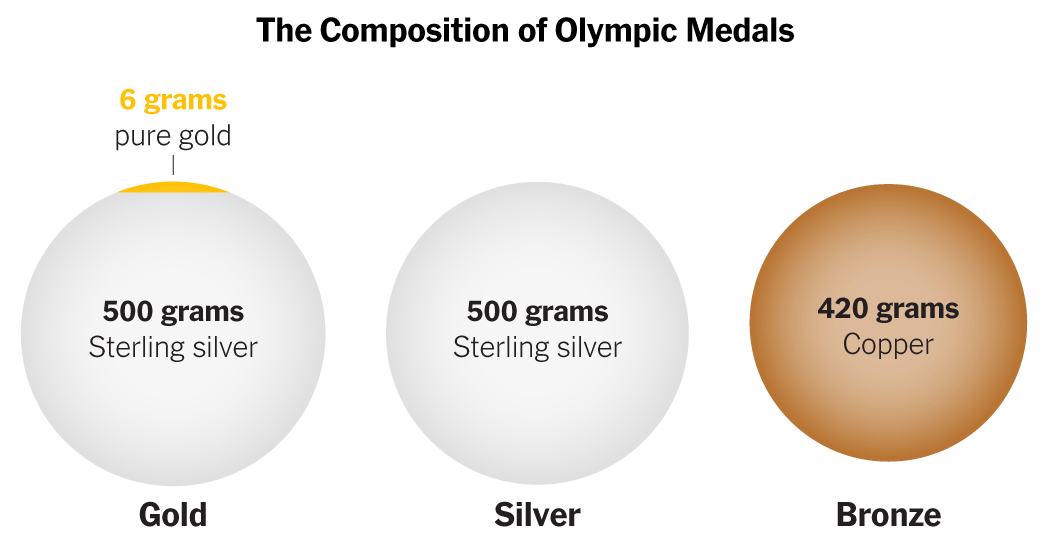
Olympic gold medals haven’t been actual gold for over a century. The last solid, 24-karat gold medal to be awarded was at the 1912 Games in Stockholm, according to the International Olympic Committee.
Since then, they’ve been mostly made up of silver — with six grams of thin gold plating on the outside.
But especially as the prices of gold and other metals have jumped recently, those six grams make a big difference.
As of Feb. 6, gold was trading at $4,889 an ounce — up 70 percent from its price a year ago. It’s about double what it was worth during the 2024 Paris Olympics.
Silver was trading at $77 an ounce — up 138 percent from a year ago, and almost triple what it was worth during the 2024 Olympics.
The values of gold and silver have soared over the last year — silver rose 60 percent in January 2026 alone — as investors seek safe places to park their money during heightened geopolitical turmoil and worries about inflation.
Olympic athletes don’t compete to resell their medals, and most are in the Games for the prestige the medals represent.
The movements in the precious metal markets in the run-up to this year’s Games in Italy, however, have drawn new attention to the real value of the athletes’ accomplishment.
Even with volatility in recent days — both metals plunged in value last week, as analysts speculated that the prices had become overvalued — gold and silver medals are worth well over twice what they were worth at the 2024 Paris Olympics.
