

October 14, 2025
3 min read
Being Wrong Is a Scientific Superpower
Snake oil, smuggling and a fundamental change in the way we understand life
Scientific American, November 2025
One of the things I love most about science is that sometimes it gets things wrong. In other disciplines, errors are fatal; chefs don’t benefit from poisoning their patrons. But scientists learn early that failure is core to the scientific method—it reveals the limits of previous thinking, as well as new paths of inquiry and research.
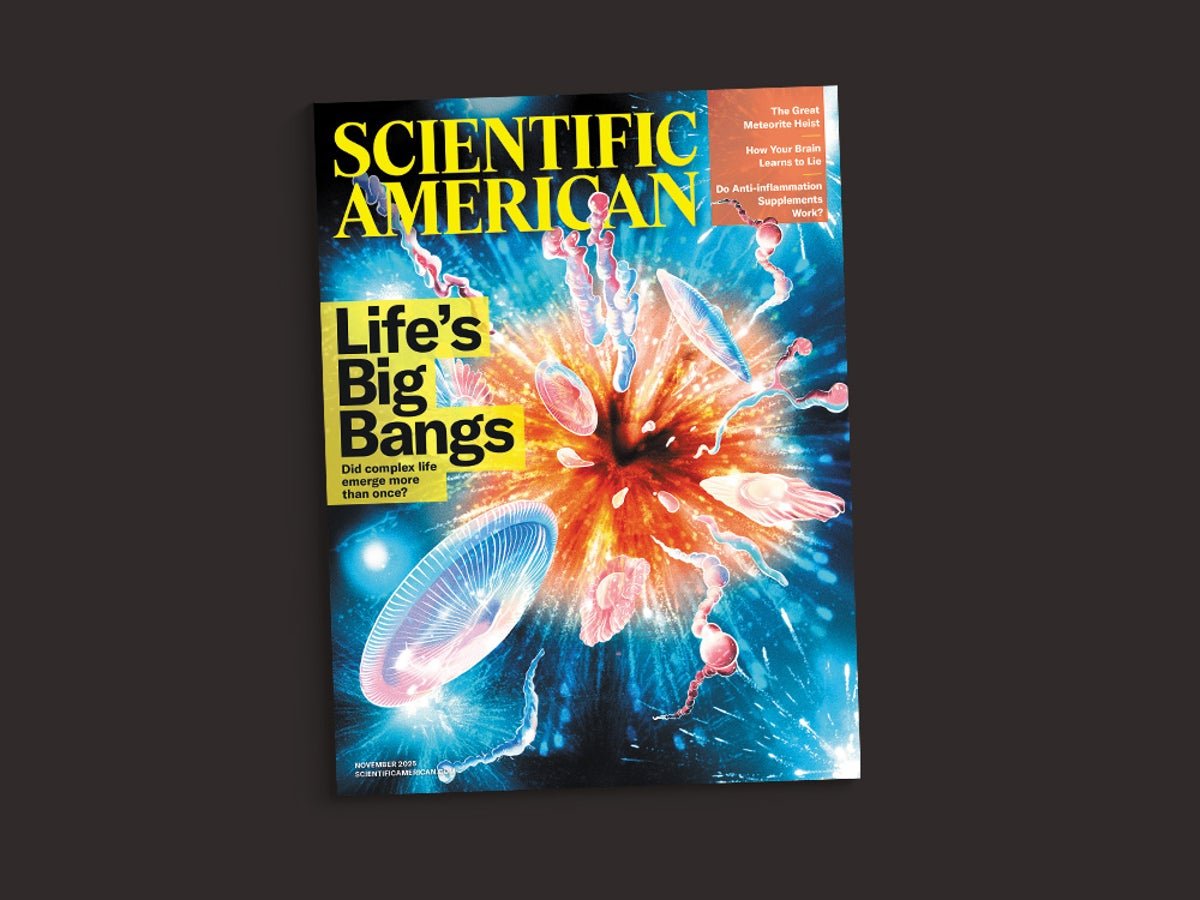
So it should be no surprise that my favorite Scientific American stories are often the ones that threaten to blow up what we believe to be true. Our cover story in this issue tosses one of those bombs: Pretty much every scientist agrees that complex life originated on Earth about 1.6 billion years ago. Everyone, that is, except French Moroccan geochemist Abderrazak El Albani, who believes he has found evidence of advanced multicellular organisms in rock layers dating back more than two billion years—a time when conventional wisdom says there should have been nothing of the sort.
The potential implications of this discovery, as described by science journalist Asher Elbein, are profound and would upturn our entire understanding of the history of life on Earth. Naturally, El Albani’s argument has plenty of critics. But recent discoveries from other teams support El Albani’s idea that our old theories might be wrong, and it might be time to radically rethink our understanding of life’s big bang. Read the story and decide for yourself—and let us know what you conclude.
On supporting science journalism
If you’re enjoying this article, consider supporting our award-winning journalism by subscribing. By purchasing a subscription you are helping to ensure the future of impactful stories about the discoveries and ideas shaping our world today.
As a person who suffers from back pain, I was fascinated to read journalist Lori Youmshajekian’s feature about new research into causes of and treatments for chronic inflammation. There’s a booming, multibillion-dollar dietary supplement industry offering thousands of products that promise to suppress inflammation, sometimes even claiming they can treat cancer or cure disease. But a review of the research suggests that just three of these compounds show evidence they’re actually effective at reducing inflammation. That means there’s a lot of snake oil on our pharmacy shelves.
Once you’re good and angry about the ethics of selling sick people products that don’t do what they claim to do, you should dig into author Elizabeth Svoboda’s article about the science of morality. Neuroscientists increasingly believe that lying tends to numb our brain and create neural habituation that can lead to ethical collapse; cheat one customer, and it gets easier and easier until you’re selling sugar water as a cancer treatment to lots of unsuspecting victims. But before you despair, the inverse is true, too: performing one act of moral courage makes it easier to do the right thing again in the future.
Elsewhere in this issue you’ll find another example of one of my favorite kinds of science writing: a detective story. Scientific American senior editor Dan Vergano has followed a trail of theft, lies, smuggling and even death to tell the story of how the ninth-largest meteorite in the world disappeared from its original landing site in Somalia into a sketchy world of black market collecting.
And as long as we’re on the topic of favorite things: As I recently told our contributing editor Dava Sobel, I have never been much of a poetry reader, but I adore the Meter columns she edits for us every month. This issue’s selection, Jennifer Maier’s In Reality, is an intriguing verse that somehow made me feel special for being utterly insignificant. When’s the last time a page in a magazine did that for you?
Finally, if you haven’t been on our website yet to see all the coverage of our 180th anniversary, I encourage you to start by visiting sciam.com/180contest and checking out the results of our #SciAmInTheWild photo competition. Readers like you from around the world participated by taking photographs of a print issue of Scientific American placed in a setting where science meets scenery. I think the winners are funny and creative and smart and worth every minute of your time. Would I steer you wrong?
It’s Time to Stand Up for Science
If you enjoyed this article, I’d like to ask for your support. Scientific American has served as an advocate for science and industry for 180 years, and right now may be the most critical moment in that two-century history.
I’ve been a Scientific American subscriber since I was 12 years old, and it helped shape the way I look at the world. SciAm always educates and delights me, and inspires a sense of awe for our vast, beautiful universe. I hope it does that for you, too.
If you subscribe to Scientific American, you help ensure that our coverage is centered on meaningful research and discovery; that we have the resources to report on the decisions that threaten labs across the U.S.; and that we support both budding and working scientists at a time when the value of science itself too often goes unrecognized.
In return, you get essential news, captivating podcasts, brilliant infographics, can’t-miss newsletters, must-watch videos, challenging games, and the science world’s best writing and reporting. You can even gift someone a subscription.
There has never been a more important time for us to stand up and show why science matters. I hope you’ll support us in that mission.
