

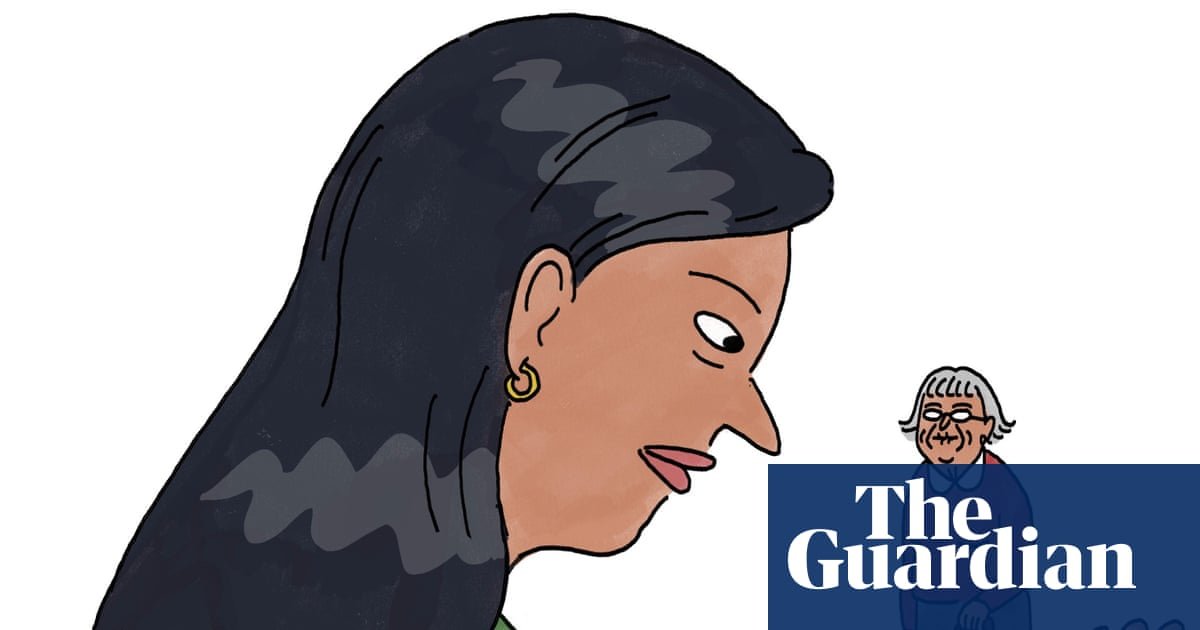
‘Without a doubt, we get shorter as we age,” says Adam Taylor, professor in Anatomy at Lancaster medical school. He says that after 40, humans typically lose about a centimetre of height every decade. Men lose 0.08-0.1% of their body height per year. Women typically lose 0.12-0.14% per year.
Some of this is caused by increasingly slumped posture as we get older. People who sit or stand with a curved spine for prolonged periods of time – perhaps at their desk – may find that, over time, their spine assumes that position naturally. Older people sometimes stoop to find a more secure centre of gravity too.
We all decrease in height between the start and end of each day as gravity squeezes water out of the intervertebral discs
Our change in height also happens at a more granular level. Between 30 and 35, height plateaux as our bone and muscle mass begin to decline. The discs between the vertebrae in our spine lose water and begin to shrink in size. The honeycomb-like centre of the bones in our spine, pelvis and legs becomes less dense. “And as that happens, the bone condenses ever so slightly, and gets shorter,” says Taylor, adding that decreased muscle mass affects our height further still: the way bones maintain their shape and size is by having the force of muscles on them.
skip past newsletter promotion
Sign up to Inside Saturday
The only way to get a look behind the scenes of the Saturday magazine. Sign up to get the inside story from our top writers as well as all the must-read articles and columns, delivered to your inbox every weekend.
Privacy Notice: Newsletters may contain information about charities, online ads, and content funded by outside parties. If you do not have an account, we will create a guest account for you on theguardian.com to send you this newsletter. You can complete full registration at any time. For more information about how we use your data see our Privacy Policy. We use Google reCaptcha to protect our website and the Google Privacy Policy and Terms of Service apply.
after newsletter promotion
“You can’t stop this process,” Taylor says. “But you can slow it down.” Eating a diet rich in calcium and vitamin D, doing regular weight-bearing exercise and avoiding tobacco and alcohol from your younger years onwards can decrease the rate at which bone and muscle mass decline. Maintaining a good posture can also be protective.
Taylor adds that getting shorter isn’t a bad thing per se. (In fact, we all decrease in height between the start and end of each day as gravity squeezes water out of the intervertebral discs.) But significant loss of bone and muscle mass as we age is linked to chronic conditions, including heart failure, osteoporosis, osteoarthritis, and other joint and mobility issues, so it’s worth working to protect it.
