
Close Menu

    Subscribe to Updates

    Get the latest creative news from FooBar about art, design and business.

    What's Hot

    A moment that changed me: I felt hugely self conscious about my skin – until I had a revelation | Comedy

    The Guardian view on Lucy Letby: Thirlwall should have waited for the pending case review | Editorial

    Thirlwall inquiry has left biggest questions around the Letby case unanswered | Lucy Letby

    Facebook X (Twitter) Instagram
    Facebook X (Twitter) YouTube LinkedIn
    Naija Global News |
    Wednesday, September 16
    • Business
    • Health
    • Politics
    • Science
    • Sports
    • Education
    • Social Issues
    • Technology
    • More
      • Crime & Justice
      • Environment
      • Entertainment
    Naija Global News |
    You are at:Home»Science»Human skin cells are turned into eggs in fertility breakthrough | Science
    Science

    Human skin cells are turned into eggs in fertility breakthrough | Science

    onlyplanz_80y6mtBy onlyplanz_80y6mtSeptember 30, 2025004 Mins Read
    Share Facebook Twitter Pinterest LinkedIn Tumblr Email
    Human skin cells are turned into eggs in fertility breakthrough | Science
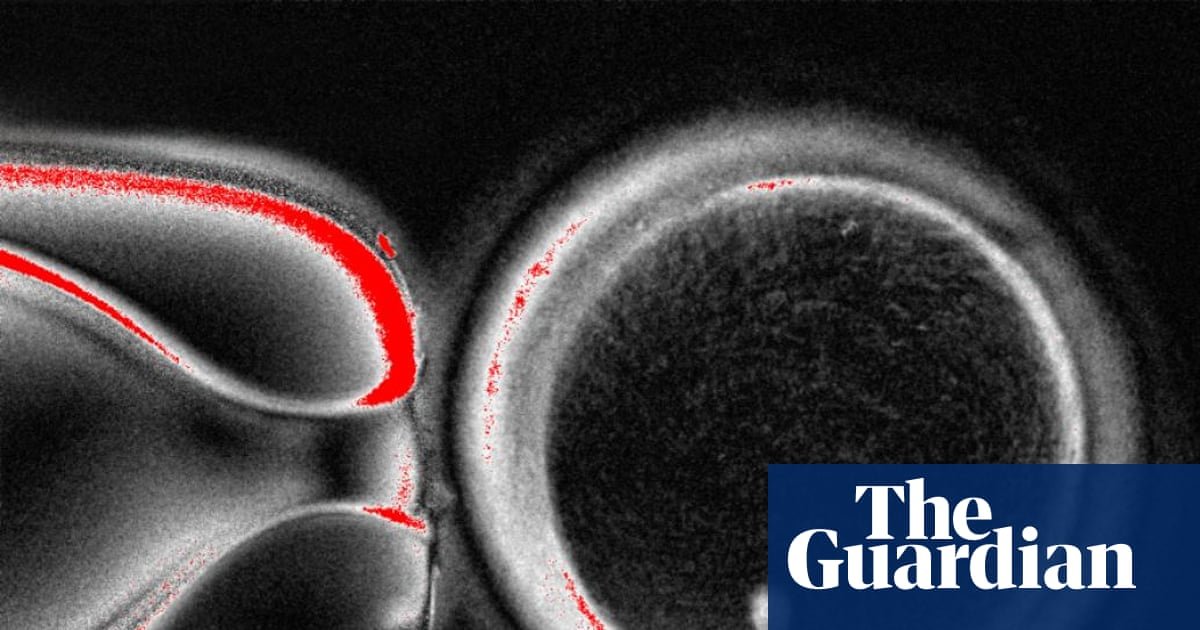
    A human egg created through somatic cell nuclear transfer, the process pioneered in the cloning of Dolly the sheep in the 1990s. Photograph: Mitalipov laboratory
    Share
    Facebook Twitter LinkedIn Pinterest Email

    Researchers have created human eggs from skin cells, potentially transforming IVF treatment for couples who have no other options.

    The work is at an early stage but if scientists can perfect the process it would provide genetically related eggs for women who are infertile because of older age, illness or medical treatment. The same procedure could be used to make eggs for same-sex male couples.

    “The largest group of patients who might benefit would be women of advanced maternal age,” said Prof Shoukhrat Mitalipov, who led the research at Oregon Health and Science University in Portland. “Another group are those who have been through chemotherapy because that can affect their ability to have viable eggs.”

    While women are expected to be the primary beneficiaries, skin cells used to make the eggs need not come from potential mothers. “We used female skin cells in this study, but you could use skin cells from males as well,” Mitalipov told the Guardian. “You could make eggs for men, and that way, of course, this would be applicable to same-sex couples.”

    The work draws on cloning pioneered in the 1990s at the Roslin Institute in Scotland. A team led by the late Ian Wilmut used somatic cell nuclear transfer to create Dolly the sheep. The process involved plucking the nucleus from an adult sheep cell and placing it into a sheep egg that had its own nucleus removed. The resulting egg was carried to term in Dolly’s surrogate mother.

    The Oregon team took a similar approach by collecting skin cells from women and removing the nucleus from each. The nucleus contains the 46 chromosomes that carry the 20,000 or so genes that comprise the human genetic code. Each skin cell nucleus was placed in a healthy donor egg that had its own nucleus removed.

    The major challenge the scientists faced was that healthy human eggs contain only 23 chromosomes. A further 23 arrive in the sperm on fertilisation and are needed for the fertilised egg to develop into an embryo and ultimately a baby.

    Writing in Nature Communications, the Oregon team described how they overcame the problem of excess chromosomes. After fertilising the eggs with sperm, they activated them using a compound called roscovitine. This caused the eggs to move roughly half of their chromosomes into a structure called a polar body, leaving the remaining chromosomes to pair up with those from the sperm.

    In a healthy, fertilised human egg the 23 chromosomes from the mother pair up with the 23 from the father. But the Oregon team found that the chromosomes in their eggs segregated and paired up randomly. This led to early-stage embryos with the wrong number of chromosomes and the wrong chromosome pairings.

    “These abnormal chromosome complements would not be expected to result in a healthy baby,” said Prof Paula Amato, a co-author of the study at Oregon. The team is working on ways to improve the process.

    Out of 82 eggs created at the Oregon lab, fewer than 10% developed to the stage when IVF embryos are typically transferred to the mother’s womb, suggesting that the process is not particularly efficient. None were cultured beyond six days.

    Mitalipov called the work a “proof of concept” with more challenges ahead. Perfecting the technique and demonstrating its safety in patients could take another decade. “I think it’s going to be harder than what we’ve done over the years thus far, but it’s not impossible,” he said.

    Other scientists praised the breakthrough. Prof Richard Anderson of the University of Edinburgh said: “Many women are unable to have a family because they have lost their eggs, which can occur for a range of reasons including after cancer treatment. The ability to generate new eggs would be a major advance. There will be very important safety concerns, but this study is a step toward helping many women have their own genetic children.”

    Prof Ying Cheong of the University of Southampton said: “In practice, clinicians are seeing more and more people who cannot use their own eggs, often because of age or medical conditions. While this is still very early laboratory work, in the future it could transform how we understand infertility and miscarriage and perhaps one day open the door to creating egg- or sperm-like cells for those who have no other options.”

    Prof Roger Sturmey of the University of Hull said the science was “impressive” but highlighted the need for “open dialogue” with the public about advances in reproductive research, adding: “Breakthroughs such as this impress upon us the need for robust governance, to ensure accountability and build public trust.”

    breakthrough cells eggs fertility Human Science skin Turned
    Share. Facebook Twitter Pinterest LinkedIn Tumblr Email
    Previous ArticleWhy are US Tomahawk missiles for Ukraine a ‘red line’ for Russia? | Donald Trump News
    Next Article Trump May Attempt to Tie Grant Allocation to Capitulation
    onlyplanz_80y6mt
    • Website

    Related Posts

    A moment that changed me: I felt hugely self conscious about my skin – until I had a revelation | Comedy

    September 16, 2026

    From ‘Ozempic breath’ to hair loss: sorting the science from the hype about weight loss jabs | Life and style

    September 12, 2026

    The Guardian view on skin cancer: fear the heat of the sun | Editorial

    September 7, 2026
    Add A Comment
    Leave A Reply Cancel Reply

    Top Posts

    The science influencers going viral on TikTok to fight misinformation

    February 17, 20262 Views

    We tried 15 lotions over three weeks. Here’s which our testers loved – and which left them high and dry | Life and style

    August 29, 20261 Views

    Salmonella cases in UK likely to rise until source of outbreak is found | Eggs

    August 29, 20261 Views
    Stay In Touch
    • Facebook
    • YouTube
    • TikTok
    • WhatsApp
    • Twitter
    • Instagram
    Latest Reviews

    At Chile’s Vera Rubin Observatory, Earth’s Largest Camera Surveys the Sky

    By onlyplanz_80y6mtJune 19, 2025

    SpaceX Starship Explodes Before Test Fire

    By onlyplanz_80y6mtJune 19, 2025

    How the L.A. Port got hit by Trump’s Tariffs

    By onlyplanz_80y6mtJune 19, 2025

    Subscribe to Updates

    Get the latest tech news from FooBar about tech, design and biz.

    Most Popular

    The science influencers going viral on TikTok to fight misinformation

    February 17, 20262 Views

    We tried 15 lotions over three weeks. Here’s which our testers loved – and which left them high and dry | Life and style

    August 29, 20261 Views

    Salmonella cases in UK likely to rise until source of outbreak is found | Eggs

    August 29, 20261 Views
    Our Picks

    A moment that changed me: I felt hugely self conscious about my skin – until I had a revelation | Comedy

    The Guardian view on Lucy Letby: Thirlwall should have waited for the pending case review | Editorial

    Thirlwall inquiry has left biggest questions around the Letby case unanswered | Lucy Letby

    Recent Posts
    • A moment that changed me: I felt hugely self conscious about my skin – until I had a revelation | Comedy
    • The Guardian view on Lucy Letby: Thirlwall should have waited for the pending case review | Editorial
    • Thirlwall inquiry has left biggest questions around the Letby case unanswered | Lucy Letby
    • Air pollution linked to higher suicide risk, international research suggests | Air pollution
    • British bosses to be forced to meet with employees who request flexible working | Employment law
    © 2026 naijaglobalnews. Designed by Pro.
    • About Us
    • Disclaimer
    • Get In Touch
    • Privacy Policy
    • Terms and Conditions

    Type above and press Enter to search. Press Esc to cancel.