
Close Menu

    Subscribe to Updates

    Get the latest creative news from FooBar about art, design and business.

    What's Hot

    The Pennsylvania Town Facing a Data Center Boom

    Zelenskyy addresses MPs and peers after Starmer tells him that Iran war won’t distract him from Ukraine – UK politics live | Politics

    Map: Small Earthquake Shakes Northern California

    Facebook X (Twitter) Instagram
    Facebook X (Twitter) YouTube LinkedIn
    Naija Global News |
    Tuesday, March 17
    • Business
    • Health
    • Politics
    • Science
    • Sports
    • Education
    • Social Issues
    • Technology
    • More
      • Crime & Justice
      • Environment
      • Entertainment
    Naija Global News |
    You are at:Home»Social Issues»Three-minute test helps identify people at greater risk of Alzheimer’s, trial finds | Medical research
    Social Issues

    Three-minute test helps identify people at greater risk of Alzheimer’s, trial finds | Medical research

    onlyplanz_80y6mtBy onlyplanz_80y6mtSeptember 1, 2025003 Mins Read
    Share Facebook Twitter Pinterest LinkedIn Tumblr Email
    Three-minute test helps identify people at greater risk of Alzheimer’s, trial finds | Medical research
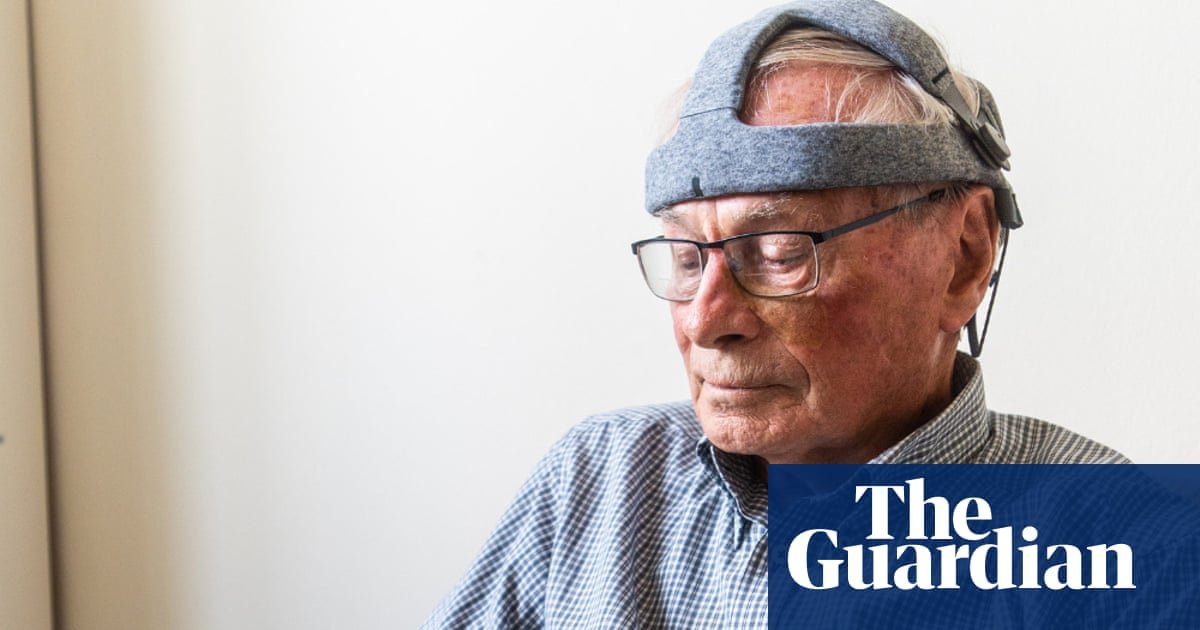
    The Fastball test is a form of EEG that uses small sensors on the scalp to record the brain’s electrical activity while people watch images on a screen. Photograph: Nikola Scanlon/Brace Dementia Research
    Share
    Facebook Twitter LinkedIn Pinterest Email

    A three-minute brainwave test can detect memory problems linked to Alzheimer’s disease long before people are typically diagnosed, raising hopes that the approach could help identify those most likely to benefit from new drugs for the condition.

    In a small trial, the test flagged specific memory issues in people with mild cognitive impairment, highlighting who was at greater risk of developing Alzheimer’s. Trials in larger groups are under way.

    The Fastball test is a form of electroencephalogram (EEG) that uses small sensors on the scalp to record the brain’s electrical activity while people watch a stream of images on a screen. The test detects memory problems by analysing the brain’s automatic responses to images the person sees before the test.

    “This shows us that our new passive measure of memory, which we’ve built specifically for Alzheimer’s disease diagnosis, can be sensitive to those individuals at very high risk but who are not yet diagnosed,” said Dr George Stothart, a cognitive neuroscientist at the University of Bath, where the test was developed.

    The trial, run with the University of Bristol, involved 54 healthy adults and 52 patients with mild cognitive impairment (MCI). People with MCI have problems with memory, thinking or language, but these are not usually severe enough to prevent them doing their daily activities.

    Before the test, volunteers were shown eight images and told to name them, but not specifically to remember them or look out for them in the test. The researchers then recorded the participants’ brain activity as they watched hundreds of images flash up on a screen. Each image appeared for a third of a second and every fifth picture was one of the eight they had seen before.

    Dr George Stothart from the University of Bath with John Stennard, one of the 54 healthy adults involved in the trial. Photograph: BRACE Dementia Research

    The scientists found that those with amnestic MCI, which largely affects a person’s memory for objects, had reduced responses to the test compared with healthy adults and those with non-amnestic MCI. People with amnestic MCI are many times more likely to develop Alzheimer’s disease than those with non-amnestic MCI.

    The test cannot identify who will definitely develop Alzheimer’s disease. But if larger studies confirm the findings, it could help doctors assess early on which patients are at high risk and could benefit most from new Alzheimer’s drugs such as donanemab and lecanemab.

    All of the tests were performed in people’s homes, which Stothart said was important for making them accessible and reducing people’s anxiety. Details are published in Brain Communications.

    Prof Vladimir Litvak, of UCL’s Queen Square Institute of Neurology, said it was “an early step towards developing a clinically useful test”. A crucial next step, he said, would be to determine whether it can predict how a person’s condition changes over time and inform decisions about their treatment.

    Dr Julia Dudley, of Alzheimer’s Research UK, said: “It’s encouraging to see studies exploring potential ways to detect memory problems earlier. New Alzheimer’s treatments are proving to be more effective when given at earlier stages in the disease, therefore earlier diagnosis is key for people to benefit from this.

    “Longer-term studies in larger, diverse groups of people are needed to find out if this technology can predict how memory problems will unfold over time. Memory impairment can also be linked to other health conditions, not just dementia. Future research should look at how other factors may influence brainwave test results and explore how these tests could work alongside other diagnosis tools like cognitive assessments and blood tests.”

    Alzheimers finds Greater helps identify Medical people research risk Test Threeminute trial
    Share. Facebook Twitter Pinterest LinkedIn Tumblr Email
    Previous ArticleFormer CDC leaders slam RFK Jr for endangering Americans’ health | Robert F Kennedy Jr
    Next Article Manchester City land Donnarumma from PSG as Ederson heads for exit | Manchester City
    onlyplanz_80y6mt
    • Website

    Related Posts

    PhD students are turning to side hustles to make ends meet, finds Nature poll

    March 17, 2026

    Brain implant allows people who are paralyzed to type using their thoughts at speed of texting

    March 17, 2026

    Maryland’s crabs are gluttonous cannibals, decades-long study finds

    March 16, 2026
    Add A Comment
    Leave A Reply Cancel Reply

    Top Posts

    Watch Lady Gaga’s Perform ‘Vanish Into You’ on ‘Colbert’

    September 9, 20251 Views

    Advertisers flock to Fox seeking an ‘audience of one’ — Donald Trump

    July 13, 20251 Views

    A Setback for Maine’s Free Community College Program

    June 19, 20251 Views
    Stay In Touch
    • Facebook
    • YouTube
    • TikTok
    • WhatsApp
    • Twitter
    • Instagram
    Latest Reviews

    At Chile’s Vera Rubin Observatory, Earth’s Largest Camera Surveys the Sky

    By onlyplanz_80y6mtJune 19, 2025

    SpaceX Starship Explodes Before Test Fire

    By onlyplanz_80y6mtJune 19, 2025

    How the L.A. Port got hit by Trump’s Tariffs

    By onlyplanz_80y6mtJune 19, 2025

    Subscribe to Updates

    Get the latest tech news from FooBar about tech, design and biz.

    Most Popular

    Watch Lady Gaga’s Perform ‘Vanish Into You’ on ‘Colbert’

    September 9, 20251 Views

    Advertisers flock to Fox seeking an ‘audience of one’ — Donald Trump

    July 13, 20251 Views

    A Setback for Maine’s Free Community College Program

    June 19, 20251 Views
    Our Picks

    The Pennsylvania Town Facing a Data Center Boom

    Zelenskyy addresses MPs and peers after Starmer tells him that Iran war won’t distract him from Ukraine – UK politics live | Politics

    Map: Small Earthquake Shakes Northern California

    Recent Posts
    • The Pennsylvania Town Facing a Data Center Boom
    • Zelenskyy addresses MPs and peers after Starmer tells him that Iran war won’t distract him from Ukraine – UK politics live | Politics
    • Map: Small Earthquake Shakes Northern California
    • Americans’ trust in the CDC’s vaccine recommendations declines markedly under Trump
    • Australia’s environment minister wants to ban fishers and drillers from more ocean – and avoid a culture war | Oceans
    © 2026 naijaglobalnews. Designed by Pro.
    • About Us
    • Disclaimer
    • Get In Touch
    • Privacy Policy
    • Terms and Conditions

    Type above and press Enter to search. Press Esc to cancel.