

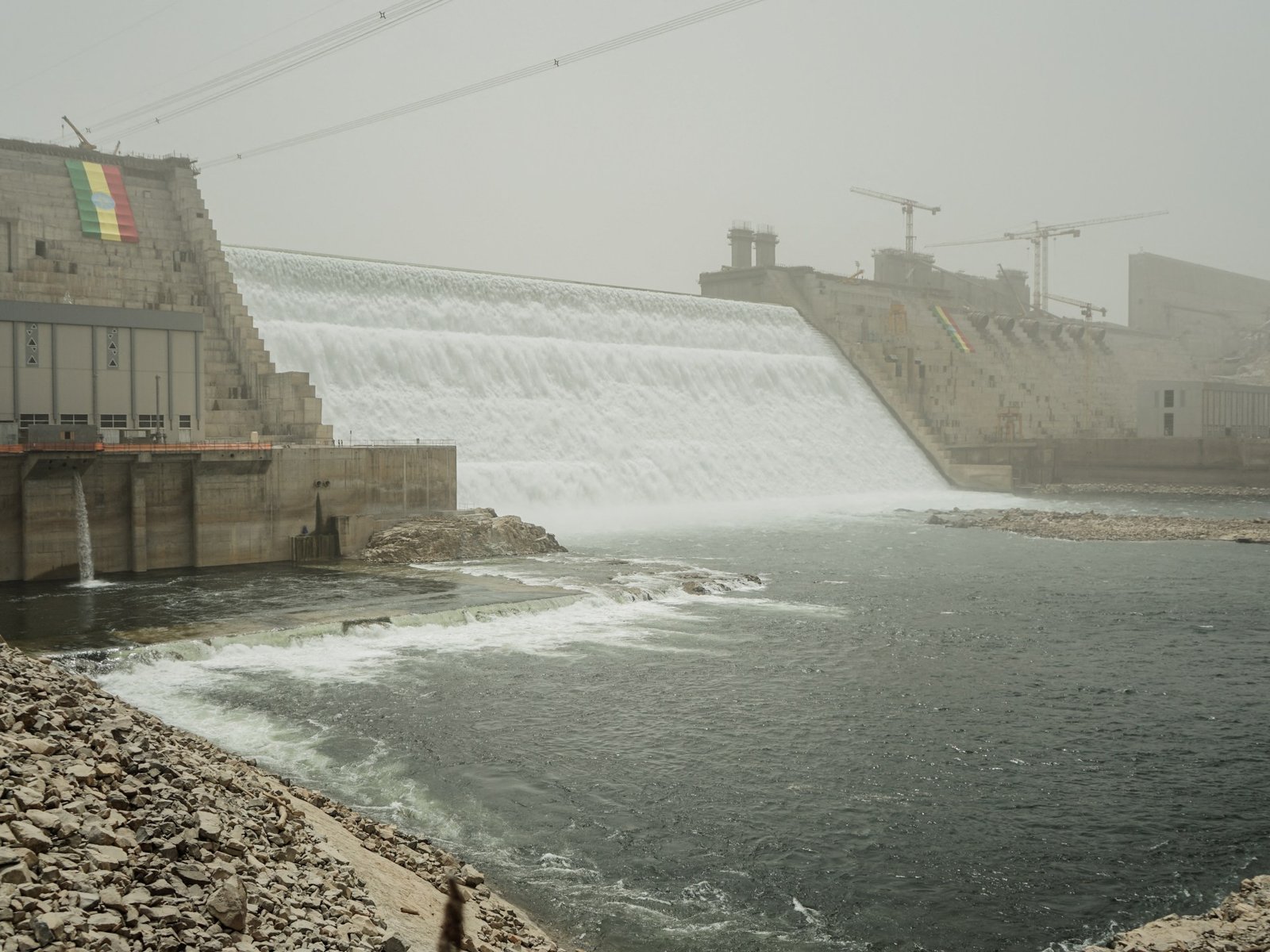
In a couple of weeks, the Grand Ethiopian Renaissance Dam (GERD), the biggest hydroelectric dam on the African continent, will be inaugurated. The construction of this dam has taken more than a decade and has cost nearly $5bn. The government and people of Ethiopia mobilised the funds for this national project from their meagre internal resources. No international financing was made available for this project.
While the construction of the dam has received some international media attention, the media coverage has not made clear the Ethiopian perspective. This is a modest attempt to rectify that problem.
The GERD is constructed on the Blue Nile, which Ethiopians call Abay. Abay means “big” or “major” in several Ethiopian languages. Abay is one of the main tributaries of the Nile River. Although many associate the Nile almost exclusively with Egypt, the river traverses 10 other African countries. Among these countries, Ethiopia holds a unique position because 86 percent of the Nile water that reaches Egypt originates from the Ethiopian highlands.
Abay is the biggest river in Ethiopia with a huge potential to boost overall socioeconomic transformation and development. It has been a long-held aspiration of Ethiopians to utilise this resource. The GERD is a national development project that fulfils this dream.
Despite its huge labour force and economic potential, Ethiopia has yet to make headway in its endeavour to industrialise. One critical factor that has held back this effort has been Ethiopia’s lack of energy. According to the latest figures, barely 55 percent of Ethiopians have access to electricity.
There is a huge demand and need for electricity in Ethiopia. Hence, the GERD is seen as our national ticket out of darkness and poverty. Necessity dictates that Ethiopia use this major resource as an instrument to spur growth and prosperity for the benefit of its 130-million-strong population, which is expected to reach 200 million by 2050.
The GERD is expected to generate about 5,150 megawatts of electricity and produce an annual energy output of 15,760 gigawatt hours. This will double Ethiopia’s energy output, which will not only light our homes but also power industries and cities and transform our economy. The GERD would also make it possible to increase our energy exports to neighbouring countries, thereby strengthening regional integration and interconnectedness.
The lower riparian states of the Nile would also derive immense benefit from the GERD because it would prevent flooding, sedimentation and water loss through evaporation. The very purpose of the GERD, which is generating electricity, requires that the water flows to lower riparian countries after hitting the enormous turbines that generate the electricity. The dam does not block or stop the river from flowing. Doing so would make electricity generation impossible and defeat the very purpose for which the dam was built.
So, you might ask, why are some lower riparian countries complaining about the construction of the dam? The reason for their objections emanates not from rational fear or legitimate concern. The objections are the result of an attitude shaped by a colonial-era water-sharing agreement concluded between Britain and Egypt in 1929 and its derivative agreement sealed in 1959 between Egypt and Sudan.
Ethiopia was not a party to any of these treaties. However, some Egyptians contend that the water-sharing formula enshrined in the colonial-era agreement, which excludes the remaining nine African nations from having any share of the Nile, is still valid and should be adhered to by all Nile riparian countries.
From an Ethiopian point of view, this anachronistic argument, often presented as “historic rights over the Nile” is unacceptable. While Britain is entitled to enter into any agreements regarding the River Thames, it does not have the right to dispose of the waters of the Nile or the Abay River. As we all recall, the late Egyptian President Gamal Abdel Nasser rejected Britain’s claims over the Suez Canal. For much stronger reasons, Ethiopian leaders have consistently rejected arguments based on colonial arrangements in which Ethiopia did not have a say.
The Ethiopian view is that the Nile is a shared natural resource. It should be used in a cooperative framework that would be beneficial for all riparian countries. The developmental aspirations and dreams of all nations are equally legitimate. The needs of some should not be prioritised over the needs of others.
A fair, just and inclusive arrangement that takes into account the realities of the 21st century is needed. Such an arrangement is already in place in the form of the Nile Basin Cooperative Framework Agreement, which is a contemporary, African-initiated treaty designed to promote sustainable management and equitable use of the Nile. This treaty has already been signed and ratified by Ethiopia, Burundi, Rwanda, Tanzania, Uganda and South Sudan.
Egypt should stop yearning for a bygone colonial era and join these Nile riparian countries in their joint effort to promote fair and equitable use of the Nile in a sustainable manner.
The views expressed in this article are the author’s own and do not necessarily reflect Al Jazeera’s editorial stance.
