

Who among us has not, in a moment of panic or curiosity, consulted the internet in search of solutions to a medical ailment?
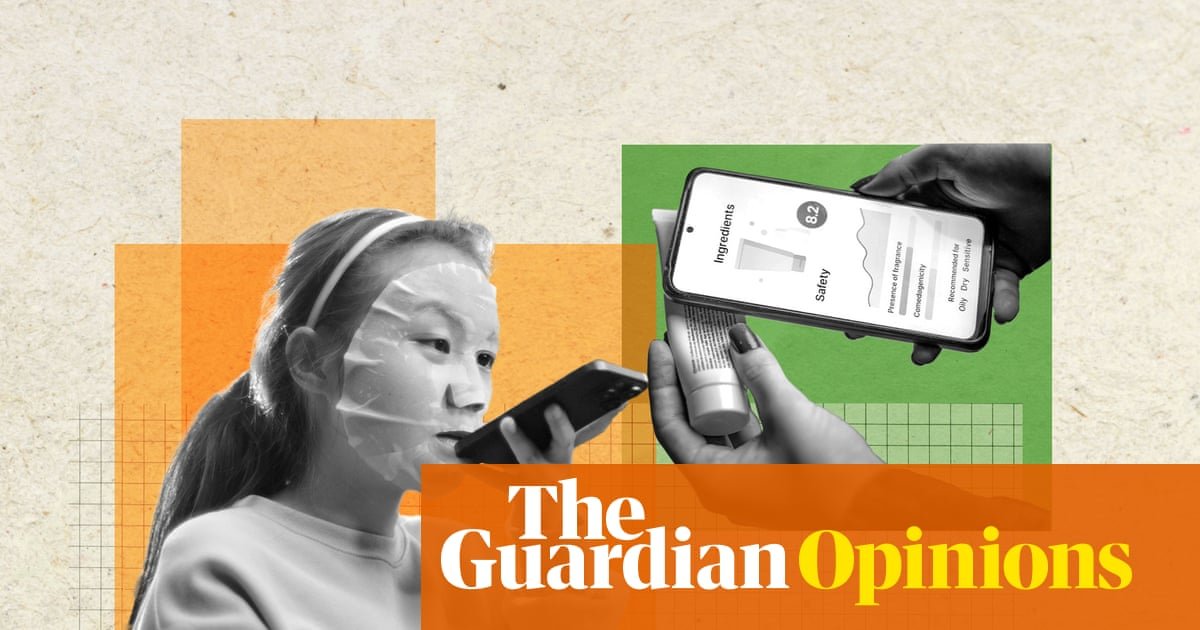
Increasingly, people are turning to AI for health advice, and skincare is no exception. Purpose-built apps promise to identify that rash, while people are sending selfies to AI chatbots seeking “full skincare analysis” and personalised regimens of treatments. On Reddit forums, people post before and after shots of the results from their AI-recommended skin routines.
Given the significant cost of seeing a dermatologist – about $230 out of pocket in Australia, on average, it’s no wonder some are taking skincare into their own hands by using AI as a tool. But too often the advice these chatbots provide isn’t spot on.
AI ‘doesn’t have a brain’
“I can understand the urge to upload photos,” says Dr Michelle Wong, a cosmetic chemist and science educator who runs Lab Muffin Beauty Science. But she cites the sci-fi writer Ted Chiang, who once described the output of ChatGPT “as a blurry Jpeg of all the text on the web”.
“If you keep that in mind, I guess you can avoid the pitfalls,” says Wong, who has warned of AI slop worsening scientific misinformation. “Most of the time you don’t see what sources they’re using” – whether chatbots have pulled skincare information from user-generated forums, dermatology websites or ill-evidenced blogs.
In the last six months Wong has come across people who were told by chatbots to use multiple skin products with the same active ingredient, such as vitamin A. Others “upload their routine and ask for what order to use [products] in”, to be given a “weird order – like, it tells you to use cleanser after serum, or sunscreen before a serum”.
In other instances, chatbots have advised consumers to use products that don’t exist, or products that supposedly do not contain an allergenic ingredient but actually do. “They’re very confident liars,” Wong says. “Try to remember it doesn’t have a brain.”
She cites previous research showing that an image-classification AI mistakenly identified rulers as a marker of skin cancer, because in the training data images of lesions with rulers next to them were more likely to be malignant.
For specific conditions, consulting a reputable dermatology website, such as DermNet, which has a large repository of skin images, is a “much better place to explore” than turning to AI, she says.
AI diagnosis problems
Consulting AI can produce its own problems. Dr Anita Lasocki, a dermatologist and practice principal at South Road Dermatology in Melbourne, has seen patients develop skin problems as result of treatments suggested by chatbots.
“Most commonly I see irritant contact dermatitis or a flare-up of rosacea, where patients have layered too many steps or active ingredients into their skincare routine – retinoids, exfoliating acids, vitamin C, overly rich moisturisers and so on – in the hope it would help their problem, but it ends up fuelling it or creating a new complication altogether.”
She adds: “The core issue is that an AI chatbot can’t provide an accurate diagnosis. Some of the general principles it suggests might be reasonable, but the specific advice may not apply to the person asking. As a result, patients often spend significant time and money on products or treatments that were never indicated for their actual problem.”
Associate Prof Deshan Sebaratnam, a dermatologist at the Skin Hospital in Sydney, agrees. “There are over 3,000 skin conditions in dermatology, and AI is not good at separating these at present,” he says.
For example, he says, a dry scaly rash could be eczema or psoriasis, which is treated with anti-inflammatories; ringworm or scabies – treated with antimicrobials; or less common conditions such as lupus or cutaneous lymphoma, a type of blood cancer involving the skin. Chatbots can’t carry out tests like skin swabs, scrapings or biopsies that may be required for accurate diagnosis.
In addition, he points out, “most medical images used for teaching are of white-skinned people, so AI is also not well equipped to make diagnoses in skin of colour when there is less good reference material for it to learn from”.
Consulting AI chatbots for skin advice may partly be driven by the significant cost of seeing a dermatologist and long wait times. “There is a worldwide shortage of dermatologists to meet the burden of skin disease, but this is particularly true in Australia,” Sebaratnam says. “Public dermatology appointments have long wait lists, but so do private dermatologists, and appointments usually cost hundreds out of pocket.”
Simple skincare solutions
“People could use AI to brainstorm problems, but at the end of day don’t put your trust in it,” Sebaratnam says. “No one understands your skin like a dermatologist.”
For those seeking a basic skincare routine, “simplicity is best”, Lasocki says. “In the morning: a cleanser may or may not be necessary. A light moisturiser is typically desired, particularly in dry weather or cooler climates. And a non-negotiable in Australia is SPF 50+ sunscreen on the face, year-round. Some patients like to add an antioxidant vitamin C serum underneath their sunscreen – it’s not compulsory, and in certain skin conditions it can actually be aggravating.”
She suggests a gentle cleanser in the evening. “Most can be bought at supermarkets or pharmacies for a reasonable price – look for one that’s fragrance-free, non-foaming, soap-free, and avoids essential oils. A simple moisturiser afterwards is sufficient for most people. For those with an intact skin barrier who want to optimise further, an over-the-counter or prescription retinol can be added – but it should be introduced slowly and carefully to minimise irritation.
“Not every patient needs active ingredients. For many, a moisturiser and sunscreen in the morning, and a cleanser and moisturiser at night, is all that’s required.”
Another good rule of thumb is to apply products in order of thinnest to thickest, Wong says: serums before moisturisers, sunscreen last, and make up on top. “The instructions on the packaging – that’s always going to override what [a chatbot] tells you.”
Donna Lu is an assistant editor, climate, environment and science at Guardian Australia. Antiviral is a fortnightly column that interrogates the evidence behind the health headlines and factchecks popular wellness claims
Share your experience
Share your experience
What health trend do you want examined?
Your responses, which can be anonymous, are secure as the form is encrypted and only the Guardian has access to your contributions. We will only use the data you provide us for the purpose of the feature and we will delete any personal data when we no longer require it for this purpose. For alternative ways to get in touch securely please see our tips guide.Show more
