

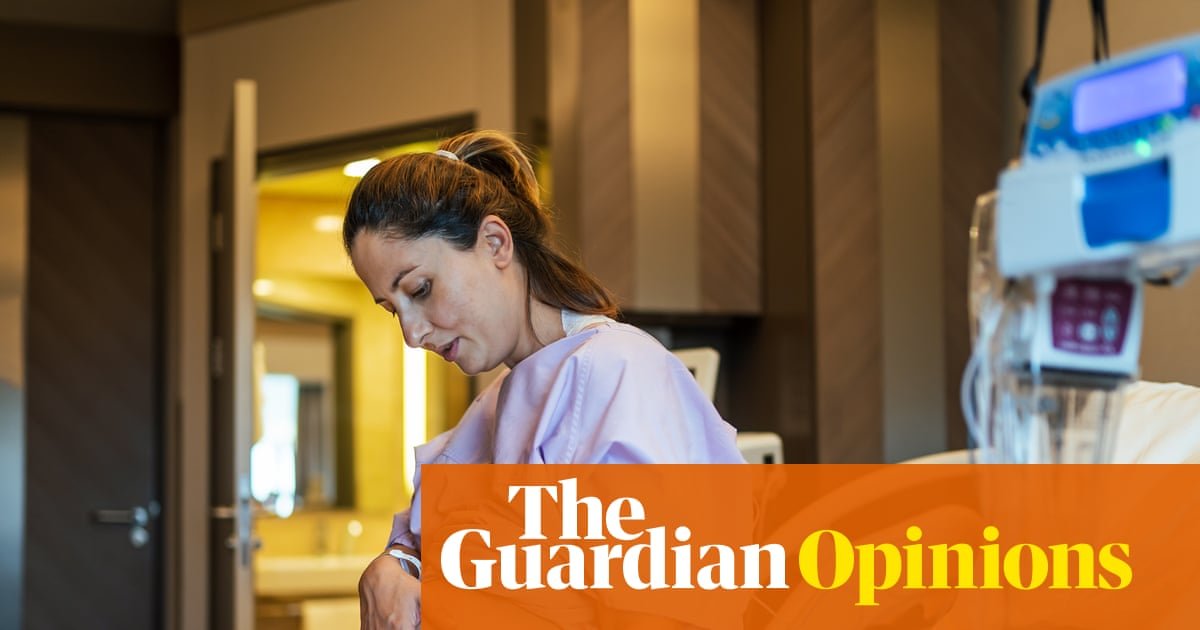
One thing nobody really prepares you for when you’re pregnant is how interested everyone suddenly becomes in your body. People ask if you’re planning on breastfeeding. Whether you’ll have an epidural. If you’re hoping for a water birth. Whether you’ll “try naturally”.
I’ve chosen to have a caesarean, and now that I’m getting closer to my due date, the question I get asked most is: “why?” The answer is because I want to.
I’m not writing this because I think everyone should have an elective caesarean. Far from it. Birth is unpredictable and there isn’t one right way to do it. But births through caesarean section, planned and unplanned, have overtaken natural vaginal births in England for the first time, according to NHS figures from 2024-25. I think it’s worth talking honestly about why I made my decision in this context, because I don’t think it happened in isolation.
Over the past few years, through my work, I have heard stories about birth that I will never forget. In February, I attended an event in parliament on birth trauma. I heard women speak about forceps injuries that left them with lifelong physical damage. One woman described repeatedly telling healthcare professionals that something didn’t feel right during her pregnancy, only to later discover there was no heartbeat. She even asked for a caesarean after being told her baby had died. Her request was refused.
What struck me wasn’t just how heartbreaking those stories were, it was how similar they were. Again and again, women said the same thing: “I wasn’t listened to.” Donna Ockenden’s report on maternity services at Nottingham University hospitals NHS trust made plain that this isn’t mere coincidence – this is an established pattern. She found that too many women experience a loss of autonomy and poor communication, and are excluded from decisions about their own care. Valerie Amos’s review of maternity services across England offered an equally damning indictment this week. She found maternity care had not adjusted to older motherhood and the stark rise in the number of women having caesarean sections.
Another report this year from the charity Birthrights revealed that many women feel under pressure to have medical procedures, including caesareans, during their maternity care. It found women are being repeatedly denied “genuine informed choice” in their birthing options. After everything I heard about maternity care in the UK, I started asking myself if I would really be listened to during birth.
There was another layer to it. Black and Asian women experience worse outcomes in pregnancy and childbirth than white women. As a British-Asian woman, I have known the statistics for years, but reading them while you are pregnant feels completely different. Statistics suddenly become personal.
Then there was the fact that my own maternity trust was included in the national maternity investigation. My own care has actually been, for the most part, incredibly positive. I’ve met kind midwives and healthcare professionals who have looked after me brilliantly. But knowing my trust was under investigation occupied a space in the back of my mind. It inevitably made me question how I could increase my chances of a good birth – no matter what that looked like.
skip past newsletter promotion
Sign up to Matters of Opinion
Guardian columnists and writers on what they’ve been debating, thinking about, reading, and more
after newsletter promotion
The thing I’ve found hardest about pregnancy is how much control you lose. You can’t control how your body changes. You can’t control how uncomfortable you become. You can’t control how your birth will unfold. People often say to me: “The birth never goes to plan anyway.” Maybe they are right. But if there was one decision I could make before everything became unpredictable, I wanted it to be mine. And for me, that was choosing a caesarean. Not because I think vaginal birth is wrong, not because I am “too posh to push”, not because I think every woman should do the same.
It was simply because, after everything I’d heard, everything I’d read and everything I’d experienced, it was the option that gave me the greatest sense of calm. Caesarean sections are major surgery and not without risk. But for me, giving birth in this way feels like a way of mitigating the many uncontrolled risks that the Ockenden report explores in such horrifying detail. This isn’t an argument against vaginal birth. It’s an argument for making sure women feel so safe, so listened to and so well supported that, whatever birth they choose, it genuinely feels like a choice and not the “least worst option”.
That’s what I hope maternity care in this country can become. I want a system where every woman, regardless of how she chooses to give birth, can go into labour with the confidence that she will be heard. Because surely that should be the minimum expectation, not the aspiration.
Do you have an opinion on the issues raised in this article? If you would like to submit a response of up to 300 words by email to be considered for publication in our letters section, please click here.
