

This is an on-site version of the White House Watch newsletter. You can read the previous edition here. Sign up for free here to get it on Tuesdays and Thursdays. Email us at whitehousewatch@ft.com
Good morning and welcome to White House Watch. In today’s edition, we’ll be digging into the economic fallout from the war in Iran, including:
How soaring petrol prices are testing voters’ patience
Why four of the biggest airlines are warning of billions in extra costs
What investors now say about the outlook for more rate cuts
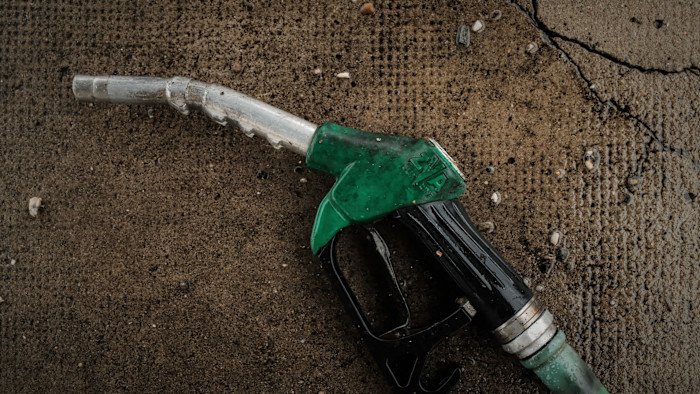
Donald Trump campaigned for the White House on a promise to lower prices for American consumers. But his war in Iran has sent petrol prices soaring and put the president on the back foot with price-sensitive voters here at home.
Petrol prices rose to $3.58 a gallon on Wednesday, according to motoring group AAA, up 20 per cent since the US president launched the war.
They are now higher than at any point in Trump’s two terms in office — a worrying indicator for a president who is desperate for his Republican Party to hold on to control of both chambers of Congress in this November’s midterm elections.
“Americans fill up 50 times a year. That’s 50 chances to regret their last vote,” Kevin Book, head of research at ClearView Energy Partners, told my colleague Myles McCormick.
Voters are already crying foul.
“I don’t understand why we’re in Iran,” Alexa Reese told our colleague Claire Jones at a Shell station in Nashville’s Green Hills neighbourhood, where petrol cost $3.40 on Wednesday. Reese said she had also noticed the rise in costs when she bought a recent plane ticket.
Trump and his Republican allies are betting that voters will be willing to place the blame elsewhere for the higher costs.
Jesse Brown, a retiree in Nashville, told Claire on Wednesday that he blamed energy companies rather than politicians for the price rises. “[Joe] Biden didn’t have control of the gas prices and neither does Trump,” he said. “Price gouging used to be illegal. I am not sure what happened to that.”
Trump, meanwhile, was in neighbouring Kentucky on Wednesday to tout his economic achievements, where he said his administration was “working to keep the oil flowing”.
But the president also warned the war was likely to continue for at least a little while longer, asking the crowd of his supporters: “We don’t want to leave early, do we?”
“Oil prices are already coming back down, and it’s going to come down,” Trump added. “But we’re not leaving until that job is finished.”
The latest headlines
The US has launched fresh investigations into trading partners including the EU, Japan and South Korea, as Trump looks to shore up his tariff wall after the Supreme Court struck down many of his previous levies.
US inflation held steady at 2.4 per cent in February, matching economists’ expectations, although the data was overshadowed by the energy shock unleashed by the war in the Middle East.
Four of the biggest US airlines risk paying an extra $11bn for jet fuel this year after their decision not to hedge their expected purchases left them exposed to soaring prices triggered by the Iran conflict.
Trump has announced plans for the first major refinery to be built in the US in almost half a century in the Texas city of Brownsville backed by Indian energy group Reliance Industries.
The FT was the first to report that JD Vance will embark on a fundraising tour this month, swinging through Texas and Tennessee to raise money for the Republican Party and burnish his own brand ahead of critical midterm elections in November.
What we’re hearing
Investors have trimmed bets on the number of interest rate cuts this year, as surging petrol prices and a softening jobs market complicate the Federal Reserve’s ability to boost the US economy while containing inflation.
Until very recently, many investors had predicted the Fed would make two cuts ahead of November’s midterms, when control of both chambers of Congress will be up for grabs.
But ahead of next week’s meeting of the Fed’s rate-setting Federal Open Market Committee, Claire Jones and Kate Duguid report that bets on Fed cuts have fallen, as traders in the futures market now see the US central bank only lowering interest rates once or twice this year, with the first cut not coming until September. Last week, that same market had priced in two or three cuts starting in July.
Joe Brusuelas, chief economist at RSM US, warned of the “risk of stagflation” — a situation in which growth slows and prices rise at the same time.
“All eyes will continue to be focused on the direction of energy prices and inflation,” Brusuelas said.
The Fed’s capacity to respond to recent economic shocks creates “a real stress test” for rate-setters if oil prices remain high, along with Trump’s trade and immigration policies if they continue to stop companies from hiring more workers, he added.
That is likely to lead to even more acrimony between the president and the central bank. Trump has for months railed against Fed chair Jay Powell, and repeatedly called on the central bank to cut short-term borrowing costs from their current level of 3.5 per cent to 3.75 per cent, to levels as low as 1 per cent.
Viewpoints
Any exit from the war in Iran will come too late for Trump, writes Edward Luce, arguing the US president has already done lasting damage to international trust in America.
We have repeatedly seen the US start wars on a whim that end up lengthy and ultimately catastrophic disasters, notes Martin Wolf as he unpacks the likely economic consequences of the war.
The US has become an agent of chaos in world energy markets, with a succession of foreign policy choices destabilising the industry, writes Stimson Center fellow Emma Ashford.
Iran is a crucial test case for the American way of war, argues Stanford University’s Jacquelyn Schneider.
China and Russia are exploiting the extraplanetary ambitions of less developed countries to capture the global space sector, warns Jana Robinson of the Prague Security Studies Institute.
Recommended newsletters for you
FT Alerts — Important breaking news plus exclusive FT scoops and investigations. Sign up here
US Top Stories — The latest US top stories, from markets to geopolitics. Sign up here
