
Close Menu

    Subscribe to Updates

    Get the latest creative news from FooBar about art, design and business.

    What's Hot

    At 56, I woke to silence: the strange, sudden loss that changed everything | Deafness and hearing loss

    Toronto’s snow mountains: towering peaks that refuse to melt and leave a toxic trail | Canada

    UK science leader on what’s wrong with the latest funding cuts

    Facebook X (Twitter) Instagram
    Facebook X (Twitter) YouTube LinkedIn
    Naija Global News |
    Wednesday, March 11
    • Business
    • Health
    • Politics
    • Science
    • Sports
    • Education
    • Social Issues
    • Technology
    • More
      • Crime & Justice
      • Environment
      • Entertainment
    Naija Global News |
    You are at:Home»Science»UK science leader on what’s wrong with the latest funding cuts
    Science

    UK science leader on what’s wrong with the latest funding cuts

    onlyplanz_80y6mtBy onlyplanz_80y6mtMarch 11, 2026004 Mins Read
    Share Facebook Twitter Pinterest LinkedIn Tumblr Email
    UK science leader on what's wrong with the latest funding cuts

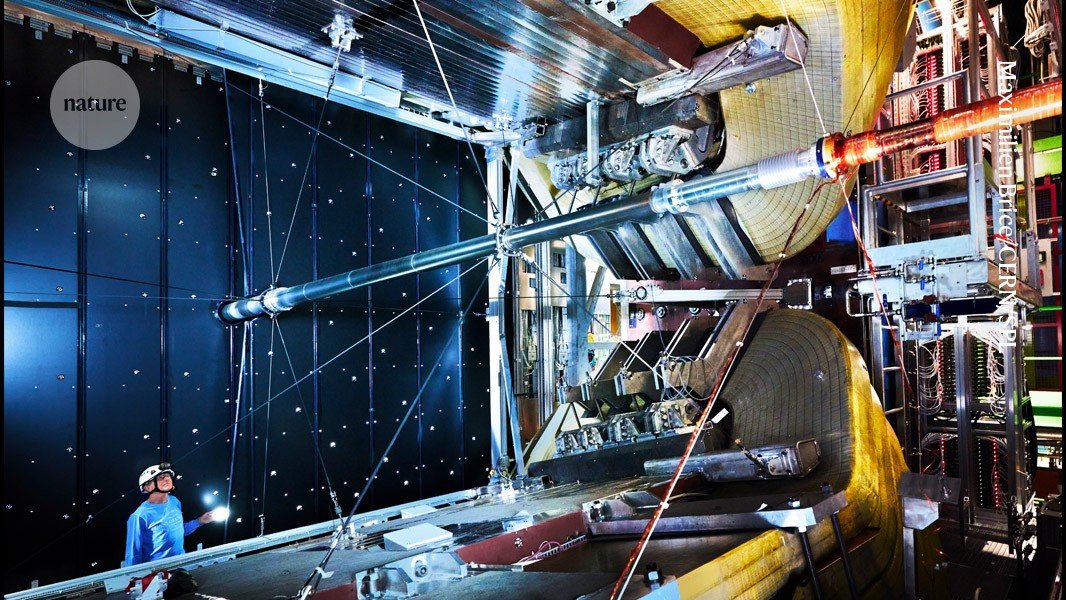
    The UK is considering withdrawing from funding the Large Hadron Collider beauty (LHCb) beam pipe at CERN. Credit: Maximilien Brice/CERN/SPL

    Share
    Facebook Twitter LinkedIn Pinterest Email

    The UK is considering withdrawing from funding the Large Hadron Collider beauty (LHCb) beam pipe at CERN. Credit: Maximilien Brice/CERN/SPL

    The United Kingdom’s largest research funder, UK Research and Innovation (UKRI), has suspended some grant review processes in medicine, biosciences, engineering and physical sciences. It is also ending or cutting investment in projects in particle physics, astronomy and nuclear physics. Part of the reason is that the government wants UKRI to prioritize studies that generate economic growth. Some of the biggest planned cuts are at the Science and Technology Facilities Council, the part of UKRI that funds UK physicists’ participation in international projects such as CERN Europe’s particle-physics laboratory near Geneva, Switzerland. Nuclear physicist Paul Howarth, who on 3 March assumed the role of president of the Institute of Physics (IoP) in London, tells Nature that the country’s scientists deserve a more responsible approach from their government.

    Are there fields that are especially under threat? Which area is your greatest concern?

    It feels, at the moment, that this move is overly burdensome on the key areas of particle physics, astronomy and nuclear physics, collectively known as PPAN, which are looking at 30% cuts. I would argue that those fields are of fundamental importance and key to physics as a whole. Also, from my point of view, those disciplines help to attract young people into physics in the first place. It doesn’t necessarily mean that they then spend a lifetime in those areas — but they can learn valuable skills and then go and work in other areas of the economy.

    Have any impacts of the cuts been modelled? What are the best and worst outcomes?

    Given where we are with the process, it’s just too early to say with any certainty. I would go one step further and say the government has not published those figures. The IoP is working with the scientific community to understand the impacts of the various levels of budget reductions they have been asked to consider, but given that the process is ongoing, it’s not yet possible to model things like job losses in any meaningful way yet: that will follow through, and we are planning to look at this whole area in much more detail in the months ahead.

    What is the IoP’s position?

    We would like to have a constructive dialogue with UKRI and the government.

    We want to understand the impact of these decisions, work with funding bodies and try to find a path that helps to maintain those critical disciplines and safeguards the future of physics departments. For example, some opportunities might be preserved if the government could signal that it will transition its priorities over several years. This would give an opportunity to physics departments to respond appropriately over time. Ongoing PhDs will be completed; international agreements might come to their end; and natural attrition could run its course, as some academics retire. That, managed over time, could be a lot less detrimental to UK physics capabilities. Notwithstanding, there needs to be a base level of funding for the PPAN disciplines anyway. When you switch off such capabilities, then you can’t rebuild them overnight. Also, there will be cases of senior researchers who will go overseas. Physicists at that level are highly mobile.

    We want to get these points across, while recognizing the budgetary pressures.

    If the government is willing to renege on the United Kingdom’s international commitments, could the country’s membership in international physics and astronomy collaborations, such as CERN or the European Southern Observatory, be at risk, too?

    I can’t speak on behalf of the government, but I think, from the view from our international colleagues, seeing the United Kingdom pull out does raise questions about how much the UK is a committed party going forward.

    cuts funding latest leader Science Whats wrong
    Share. Facebook Twitter Pinterest LinkedIn Tumblr Email
    Previous ArticleGerry Adams ‘as culpable as those who planted IRA bombs’, high court hears | Gerry Adams
    Next Article Toronto’s snow mountains: towering peaks that refuse to melt and leave a toxic trail | Canada
    onlyplanz_80y6mt
    • Website

    Related Posts

    Where did magic mushrooms come from? Scientists just got closer to an answer

    March 11, 2026

    Ultrasound repellers could keep hedgehogs off roads, scientists hope | Wildlife

    March 11, 2026

    How ‘Pele’s hair’ sprouts from erupting lava

    March 11, 2026
    Add A Comment
    Leave A Reply Cancel Reply

    Top Posts

    Watch Lady Gaga’s Perform ‘Vanish Into You’ on ‘Colbert’

    September 9, 20251 Views

    Advertisers flock to Fox seeking an ‘audience of one’ — Donald Trump

    July 13, 20251 Views

    A Setback for Maine’s Free Community College Program

    June 19, 20251 Views
    Stay In Touch
    • Facebook
    • YouTube
    • TikTok
    • WhatsApp
    • Twitter
    • Instagram
    Latest Reviews

    At Chile’s Vera Rubin Observatory, Earth’s Largest Camera Surveys the Sky

    By onlyplanz_80y6mtJune 19, 2025

    SpaceX Starship Explodes Before Test Fire

    By onlyplanz_80y6mtJune 19, 2025

    How the L.A. Port got hit by Trump’s Tariffs

    By onlyplanz_80y6mtJune 19, 2025

    Subscribe to Updates

    Get the latest tech news from FooBar about tech, design and biz.

    Most Popular

    Watch Lady Gaga’s Perform ‘Vanish Into You’ on ‘Colbert’

    September 9, 20251 Views

    Advertisers flock to Fox seeking an ‘audience of one’ — Donald Trump

    July 13, 20251 Views

    A Setback for Maine’s Free Community College Program

    June 19, 20251 Views
    Our Picks

    At 56, I woke to silence: the strange, sudden loss that changed everything | Deafness and hearing loss

    Toronto’s snow mountains: towering peaks that refuse to melt and leave a toxic trail | Canada

    UK science leader on what’s wrong with the latest funding cuts

    Recent Posts
    • At 56, I woke to silence: the strange, sudden loss that changed everything | Deafness and hearing loss
    • Toronto’s snow mountains: towering peaks that refuse to melt and leave a toxic trail | Canada
    • UK science leader on what’s wrong with the latest funding cuts
    • Gerry Adams ‘as culpable as those who planted IRA bombs’, high court hears | Gerry Adams
    • Where did magic mushrooms come from? Scientists just got closer to an answer
    © 2026 naijaglobalnews. Designed by Pro.
    • About Us
    • Disclaimer
    • Get In Touch
    • Privacy Policy
    • Terms and Conditions

    Type above and press Enter to search. Press Esc to cancel.