

March 2, 2026
3 min read
Add Us On GoogleAdd SciAm
Ring the Fish Doorbell to help migrating fish navigate a Dutch canal
A Dutch lock is closed for the spring, and its employees want you to tell them when migrating fish come knocking by ringing a digital doorbell
Live-stream viewers who spot a fish that wants to move through a lock in Utrecht, the Netherlands, can ring a “doorbell” to let operators know it’s time to open the gates.
In a canal in the Dutch city of Utrecht, fish are beginning to mass behind a lock called the Weerdsluis. Now, for the sixth year in a row, you can help them get the attention of the lock’s operators. The Fish Doorbell—or Visdeurbel in Dutch—is back.
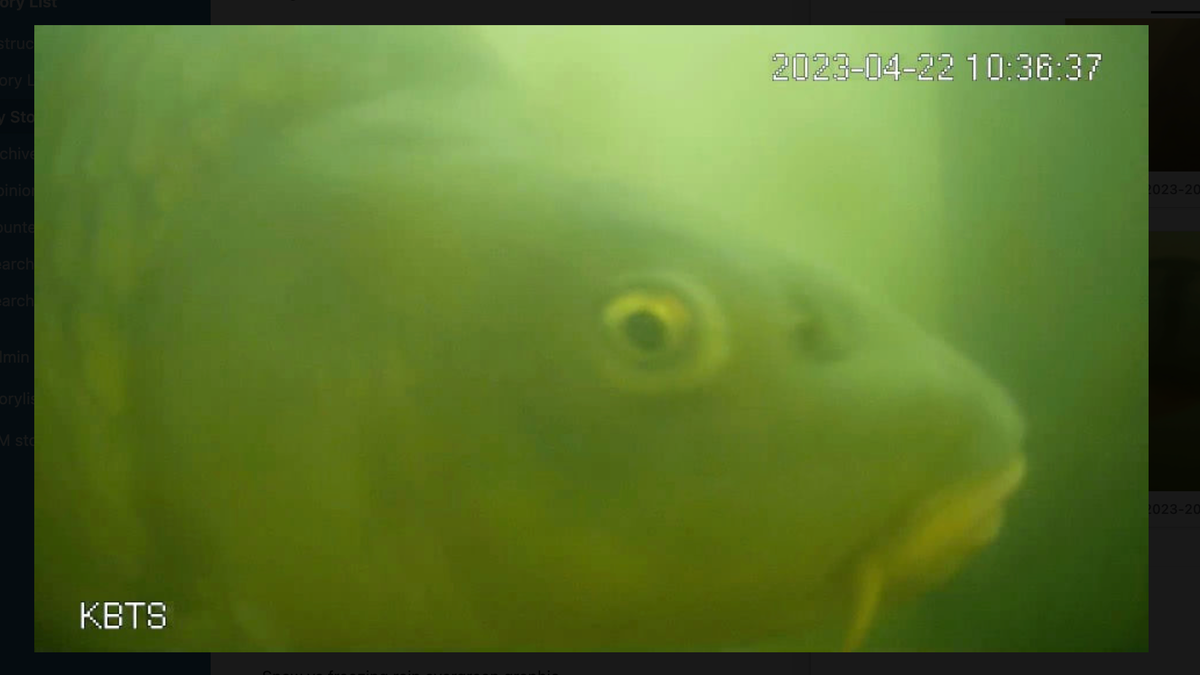
Started in 2021, this project allows viewers around the world to monitor the feed from an underwater camera. When they see a fish that wants to move through the lock, they can ring the doorbell and alert operators to the finned animal waiting outside.
“The project is a good mix of doing something for nature and for people to join and do something,” says Anne Nijs, an ecologist for the city of Utrecht and one of the Fish Doorbell’s originators.
On supporting science journalism
If you’re enjoying this article, consider supporting our award-winning journalism by subscribing. By purchasing a subscription you are helping to ensure the future of impactful stories about the discoveries and ideas shaping our world today.
Many fish species—including bleak, catfish, eels and pike—traverse the Netherlands’ numerous waterways in the spring to reach their spawning grounds upstream. Even as aquatic creatures are starting to fill the canals, however, ships are still sparse in the early spring, and the locks that allow movement through the water are often closed. This creates an obstacle for migrating fish, most of which start their journeys around this time of year, when the water is first starting to warm.
In Utrecht, until the lock’s gates open again, fish are stuck waiting nearby. For some, this means not being able to reach spawning grounds in time to lay eggs under favorable conditions. And for others, it means having no escape from roaming predators.
Operators and municipal employees had long wanted a way to let fish pass through the Weerdsluis, but it’s not as easy as pressing a button. The lock dates back to the 1600s and requires operators to manually turn an iron wheel for between 30 minutes and an hour. Because it’s such a big commitment, operators wanted a way to be sure there were fish at the gate. That’s when Nijs and ecologist Mark van Heukelum decided to give them a doorbell.
They placed an underwater camera on the lock. And every year since 2021, the ecologists have live streamed the footage to a website that allows people to tell lock operators when they have spotted a fish trying to get through. Nijs and van Heukelum never expected the doorbell to become a worldwide exercise in community science.
A perch fish captured with the underwater camera.
“We put flyers in the streets about the Fish Doorbell because we were afraid that maybe nobody would join, but … lots of people joined, [and] every year more” have done so, Nijs says.
Last year the site had more than 2.3 million unique visitors who pressed the doorbell a collective 200,000 times and let thousands of fish continue on their journeys.
Nijs says being able to ring the doorbell fills people with a “positive feeling,” and many people have told her about the calming effects of watching the canal’s fish. But the biggest benefit has been for the fish themselves. In the Netherlands—a country that is home to thousands of locks, dams and other human-made water control structures—the doorbell has been a way to balance humans’ and other creatures’ needs. And the project team says other countries that face similar challenges are already starting to consider their own creative solutions.
You can keep an eye out for fish and ring the doorbell here.
It’s Time to Stand Up for Science
If you enjoyed this article, I’d like to ask for your support. Scientific American has served as an advocate for science and industry for 180 years, and right now may be the most critical moment in that two-century history.
I’ve been a Scientific American subscriber since I was 12 years old, and it helped shape the way I look at the world. SciAm always educates and delights me, and inspires a sense of awe for our vast, beautiful universe. I hope it does that for you, too.
If you subscribe to Scientific American, you help ensure that our coverage is centered on meaningful research and discovery; that we have the resources to report on the decisions that threaten labs across the U.S.; and that we support both budding and working scientists at a time when the value of science itself too often goes unrecognized.
In return, you get essential news, captivating podcasts, brilliant infographics, can’t-miss newsletters, must-watch videos, challenging games, and the science world’s best writing and reporting. You can even gift someone a subscription.
There has never been a more important time for us to stand up and show why science matters. I hope you’ll support us in that mission.
