
Close Menu

    Subscribe to Updates

    Get the latest creative news from FooBar about art, design and business.

    What's Hot

    Buzzy UCSD Math Readiness Report Failed to Mention Calculator Ban

    Boss of World Economic Forum quits after links to Epstein revealed | Jeffrey Epstein

    The Guardian view on maternity care failures: NHS England must do better by mothers and babies | Editorial

    Facebook X (Twitter) Instagram
    Facebook X (Twitter) YouTube LinkedIn
    Naija Global News |
    Friday, February 27
    • Business
    • Health
    • Politics
    • Science
    • Sports
    • Education
    • Social Issues
    • Technology
    • More
      • Crime & Justice
      • Environment
      • Entertainment
    Naija Global News |
    You are at:Home»Science»Ultra-sensitive CAR T cells eliminate hard-to-treat tumours in mice
    Science

    Ultra-sensitive CAR T cells eliminate hard-to-treat tumours in mice

    onlyplanz_80y6mtBy onlyplanz_80y6mtFebruary 27, 2026003 Mins Read
    Share Facebook Twitter Pinterest LinkedIn Tumblr Email
    Ultra-sensitive CAR T cells eliminate hard-to-treat tumours in mice

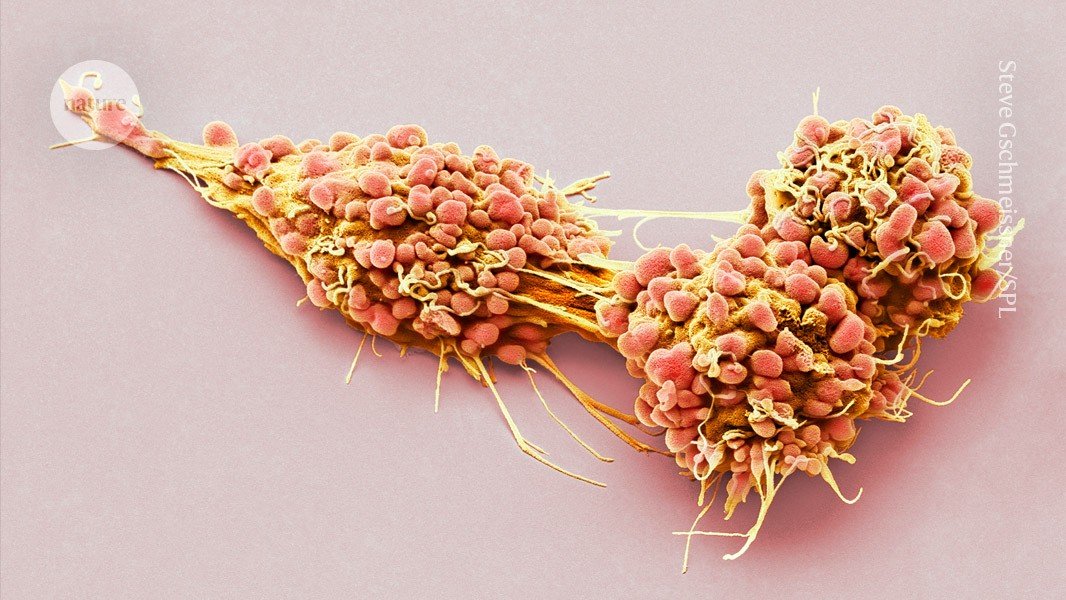
    Engineered immune cells can identify ovarian cancer cells (pictured) that might otherwise escape detection.Credit: Steve Gschmeissner/Science Photo Library

    Share
    Facebook Twitter LinkedIn Pinterest Email

    Engineered immune cells can identify ovarian cancer cells (pictured) that might otherwise escape detection.Credit: Steve Gschmeissner/Science Photo Library

    Immune cells engineered to detect extremely low levels of a target antigen have eliminated kidney, ovarian and pancreatic tumours in mice1 — a feat that has been near impossible using conventional CAR-T immunotherapies.

    Unlike blood cancers, solid tumours are hard to treat using CAR T cells because the tumours are dense, difficult to access and lack a common antigen target on every cell. At least, that’s been the story until now.

    A paradigm-shifting study published in Science today, overturns this theory by demonstrating that at least one antigen, CD70, is expressed on 100% of cancer cells in some solid tumours. However, it is often expressed at such low levels that the antigens cannot be detected through normal methods. The authors of the study are now planning to seek funding for a phase I safety trial in humans.

    “It’s a jump,” says Sophie Hanina, an immunologist at Columbia University Irving Medical Center in New York City who spearheaded the research. “It’s targeting the unseen.” Those kinds of jumps can only happen when they are guided by intuition, Hanina says.

    It was a hunch that led Hanina to double-check whether seemingly CD70-free cancer cells expressed residual amounts of the protein. She found that kidney tumours that were genetically engineered to lack CD70 seemed dark when using an optical imaging technique known as confocal microscopy. But tumours that were negative for CD70 on every other conventional test displayed a faint signal for the protein when using this imaging technique. This “hinted that there might be low-level expression retained”, she says.

    Hanina found that the levels of CD70 antigens were reduced – but not completely absent – in some cancer cells because they were being silenced.

    Antigen escape

    One of the many reasons that CAR-T-cell therapies fail in solid tumours is because of ‘antigen escape’ — in which the engineered immune cells attack all cancer cells that have high expression of a target antigen, but miss those with low or zero expression of that antigen, says Michel Sadelain, a co-author of the study and a cell engineer at Columbia University Irving Medical Center, who helped launch CAR-T-cell therapy in the 1990s.

    To tackle this problem, Sadelain’s laboratory invented an ultra-sensitive CAR T cell2 that can target cancer cells that have 10–50 times lower concentrations of antigens than those that can be treated with existing cellular therapies.

    Now the subject of a patent application, this innovative CAR T cell – called a CD70-targeted HLA-independent T cell (HIT) receptor – is a fusion between a synthetic CAR (or chimeric antigen receptor) and a natural T cell receptor. The CD70-targeted HIT receptor has the same receptiveness for CD70 but it also has enhanced internal signalling to make the T cell more responsive when it detects tiny amounts of this antigen.

    car cells Eliminate hardtotreat mice tumours Ultrasensitive
    Share. Facebook Twitter Pinterest LinkedIn Tumblr Email
    Previous ArticleIneos puts a new industrial spin on a morbid financial game
    Next Article The silencer and the White House Farm murders: is this the evidence that could free Jeremy Bamber? | Jeremy Bamber
    onlyplanz_80y6mt
    • Website

    Related Posts

    Cells in the body remember obesity. Here’s what that means for weight loss

    February 27, 2026

    Giving stem cells in utero to babies with spina bifida boosts quality of life, trial finds | Medical research

    February 27, 2026

    study reveals ancient procreation pattern

    February 27, 2026
    Add A Comment
    Leave A Reply Cancel Reply

    Top Posts

    Watch Lady Gaga’s Perform ‘Vanish Into You’ on ‘Colbert’

    September 9, 20251 Views

    Advertisers flock to Fox seeking an ‘audience of one’ — Donald Trump

    July 13, 20251 Views

    A Setback for Maine’s Free Community College Program

    June 19, 20251 Views
    Stay In Touch
    • Facebook
    • YouTube
    • TikTok
    • WhatsApp
    • Twitter
    • Instagram
    Latest Reviews

    At Chile’s Vera Rubin Observatory, Earth’s Largest Camera Surveys the Sky

    By onlyplanz_80y6mtJune 19, 2025

    SpaceX Starship Explodes Before Test Fire

    By onlyplanz_80y6mtJune 19, 2025

    How the L.A. Port got hit by Trump’s Tariffs

    By onlyplanz_80y6mtJune 19, 2025

    Subscribe to Updates

    Get the latest tech news from FooBar about tech, design and biz.

    Most Popular

    Watch Lady Gaga’s Perform ‘Vanish Into You’ on ‘Colbert’

    September 9, 20251 Views

    Advertisers flock to Fox seeking an ‘audience of one’ — Donald Trump

    July 13, 20251 Views

    A Setback for Maine’s Free Community College Program

    June 19, 20251 Views
    Our Picks

    Buzzy UCSD Math Readiness Report Failed to Mention Calculator Ban

    Boss of World Economic Forum quits after links to Epstein revealed | Jeffrey Epstein

    The Guardian view on maternity care failures: NHS England must do better by mothers and babies | Editorial

    Recent Posts
    • Buzzy UCSD Math Readiness Report Failed to Mention Calculator Ban
    • Boss of World Economic Forum quits after links to Epstein revealed | Jeffrey Epstein
    • The Guardian view on maternity care failures: NHS England must do better by mothers and babies | Editorial
    • The silencer and the White House Farm murders: is this the evidence that could free Jeremy Bamber? | Jeremy Bamber
    • Ultra-sensitive CAR T cells eliminate hard-to-treat tumours in mice
    © 2026 naijaglobalnews. Designed by Pro.
    • About Us
    • Disclaimer
    • Get In Touch
    • Privacy Policy
    • Terms and Conditions

    Type above and press Enter to search. Press Esc to cancel.