
Close Menu

    Subscribe to Updates

    Get the latest creative news from FooBar about art, design and business.

    What's Hot

    The Africa exception: the slavery reparations debate was once ‘unthinkable’. Now it is unavoidable | Race

    New study casts doubt on reliability of mental health diagnosis interviews | Mental health

    Ebola spread in central Africa could match 2014 record outbreak, US health officials say | Africa

    Facebook X (Twitter) Instagram
    Facebook X (Twitter) YouTube LinkedIn
    Naija Global News |
    Saturday, June 6
    • Business
    • Health
    • Politics
    • Science
    • Sports
    • Education
    • Social Issues
    • Technology
    • More
      • Crime & Justice
      • Environment
      • Entertainment
    Naija Global News |
    You are at:Home»Science»study reveals ancient procreation pattern
    Science

    study reveals ancient procreation pattern

    onlyplanz_80y6mtBy onlyplanz_80y6mtFebruary 27, 2026003 Mins Read
    Share Facebook Twitter Pinterest LinkedIn Tumblr Email
    study reveals ancient procreation pattern

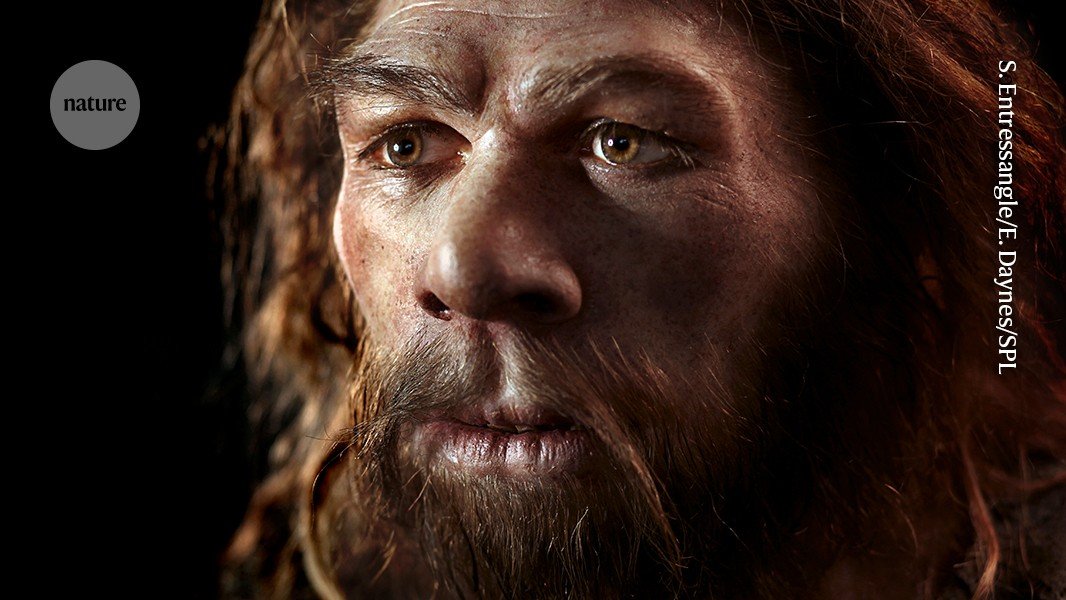
    It is unclear why male Neanderthals (artist’s impression) paired off with female Homo sapiens more than the opposite.Credit: S. Entressangle/E. Daynes/SPL

    Share
    Facebook Twitter LinkedIn Pinterest Email

    It is unclear why male Neanderthals (artist’s impression) paired off with female Homo sapiens more than the opposite.Credit: S. Entressangle/E. Daynes/SPL

    Prehistoric sexual proclivities helped to shape the human genome, according to a study1 of genetic material from three female Neanderthal specimens. The analysis suggests that female Homo sapiens and male Neanderthals (Homo neanderthalensis) mated more often than did male H. sapiens and female Neanderthals.

    The findings show how behaviour can shape human evolution, says study co-author Alexander Platt, an evolutionary geneticist at the University of Pennsylvania in Philadelphia. Human geneticists have often taken a “bizarrely clinical approach” when looking at ancient genomes. But “these are all people, and we know that people have bias, and we know people have preferences”, he says.

    The study was published in Science on 26 February.

    Genetic desert

    Determining how people behaved in the past is a tall order. In recent years, some studies2,3 have used genetics to uncover how historical events such as colonization and slavery have shaped the genomes of people living today. But this approach rarely extends past modern history.

    Modern humans can have up to 4% Neanderthal DNA. But this genetic material is not distributed equally. Some parts of the H. sapiens genome, including most of the X chromosome, lack any Neanderthal ancestry. These regions are known as ‘Neanderthal deserts’.

    Mum’s a Neanderthal, Dad’s a Denisovan: First discovery of an ancient-human hybrid

    There are two main theories for the existence of these deserts. The first holds that Neanderthal genetic variants were disadvantageous for both anatomically modern humans and for Neanderthals themselves and were thus quickly purged from the human population.

    The second holds that the Neanderthal versions of certain genes were disadvantageous to modern humans but worked perfectly well for Neanderthals, and vice versa. If this were the case, then Neanderthals with some human ancestry would be expected to have their own DNA deserts devoid of human ancestry.

    Most studies on Neanderthal DNA deserts examine modern human genomes. But Platt and his team wanted to look at the flip side of the story and see how human DNA was integrated into Neanderthals’ genomes. They analysed the genomes of three female Neanderthals who lived 122,000, 80,000 and 52,000 years ago. All had distant human ancestry.

    The team found human DNA deserts across most of the genome — with one glaring exception. The Neanderthal X chromosome had, on average, 62% more human DNA than non-sex chromosomes. This DNA didn’t seem to confer any advantage, because most of it was located in non-protein-coding parts of the genome.

    Non-random assortment

    Ancient Pattern procreation Reveals study
    Share. Facebook Twitter Pinterest LinkedIn Tumblr Email
    Previous ArticleThe companies behind China’s dancing, joking robots
    Next Article Send provision and student loans: will Labour’s changes backfire? – podcast | Politics
    onlyplanz_80y6mt
    • Website

    Related Posts

    New study casts doubt on reliability of mental health diagnosis interviews | Mental health

    June 6, 2026

    Big tobacco uses cigarette playbook to help sell ultra-processed foods, journal reveals | Ultra-processed foods

    June 3, 2026

    Weight-loss drugs may prevent thousands of knee replacements, study suggests | Osteoarthritis

    June 3, 2026
    Add A Comment
    Leave A Reply Cancel Reply

    Top Posts

    Watch Lady Gaga’s Perform ‘Vanish Into You’ on ‘Colbert’

    September 9, 20251 Views

    Advertisers flock to Fox seeking an ‘audience of one’ — Donald Trump

    July 13, 20251 Views

    A Setback for Maine’s Free Community College Program

    June 19, 20251 Views
    Stay In Touch
    • Facebook
    • YouTube
    • TikTok
    • WhatsApp
    • Twitter
    • Instagram
    Latest Reviews

    At Chile’s Vera Rubin Observatory, Earth’s Largest Camera Surveys the Sky

    By onlyplanz_80y6mtJune 19, 2025

    SpaceX Starship Explodes Before Test Fire

    By onlyplanz_80y6mtJune 19, 2025

    How the L.A. Port got hit by Trump’s Tariffs

    By onlyplanz_80y6mtJune 19, 2025

    Subscribe to Updates

    Get the latest tech news from FooBar about tech, design and biz.

    Most Popular

    Watch Lady Gaga’s Perform ‘Vanish Into You’ on ‘Colbert’

    September 9, 20251 Views

    Advertisers flock to Fox seeking an ‘audience of one’ — Donald Trump

    July 13, 20251 Views

    A Setback for Maine’s Free Community College Program

    June 19, 20251 Views
    Our Picks

    The Africa exception: the slavery reparations debate was once ‘unthinkable’. Now it is unavoidable | Race

    New study casts doubt on reliability of mental health diagnosis interviews | Mental health

    Ebola spread in central Africa could match 2014 record outbreak, US health officials say | Africa

    Recent Posts
    • The Africa exception: the slavery reparations debate was once ‘unthinkable’. Now it is unavoidable | Race
    • New study casts doubt on reliability of mental health diagnosis interviews | Mental health
    • Ebola spread in central Africa could match 2014 record outbreak, US health officials say | Africa
    • Removing ‘invisibility cloaks’ and safely skipping chemo: new weapons in war on cancer shared at US conference | Cancer research
    • The right’s culture war over prostate cancer screening is damaging trust in medicine | Polly Toynbee
    © 2026 naijaglobalnews. Designed by Pro.
    • About Us
    • Disclaimer
    • Get In Touch
    • Privacy Policy
    • Terms and Conditions

    Type above and press Enter to search. Press Esc to cancel.