

February 26, 2026
3 min read
Add Us On GoogleAdd SciAm
The surprising scientific value of roadkill
Scientists have used the tragic reality of roadkill to study the spread of invasive species, track animals’ dining habits and even discover new species
Claudio Beduschi/REDA/Universal Images Group via Getty Images
In the dead of night, a car rolled to a stop on an Australian highway in front of Christa Beckmann, a bespectacled woman who was kneeling on the side of the road. She remembers the confusion on the driver’s face when they saw that she was collecting dead frogs.
“They were like, ‘What the eff are you doing?’ And I explained. It was kind of fun watching all the expressions go across their face,” she says.
Beckmann is a wildlife ecologist at RMIT University in Australia. At the time, she was studying how raptors ate frogs and invasive cane toads killed by cars. To get a full picture of which amphibians the birds went for and when, she collected them in the wee hours of the night and placed them in trays filled with sand alongside the road. Then the birds would swoop in and scoop up their warty breakfast, and she was able to observe the telltale footprints they left behind in the trays.
On supporting science journalism
If you’re enjoying this article, consider supporting our award-winning journalism by subscribing. By purchasing a subscription you are helping to ensure the future of impactful stories about the discoveries and ideas shaping our world today.
While combing through relevant past research for her work, Beckmann noticed a pattern: a lot of other researchers also used roadkill in their studies. Her curiosity led her to recently publish a comprehensive literature review describing the ways that people have put roadkill to use—and in some cases, innovated new research methods. She found more than 300 examples in which researchers made scientific lemonade out of lemons: roadkill helped them chart where species are, acquire specimens more ethically and even discover new species.
“I was really impressed with just the huge diversity of research topics that people were using roadkill for,” Beckmann says. “It could become a source of inspiration for other researchers.”
Some of the more common uses of roadkill in the papers Beckmann evaluated were to help scientists simply figure out exactly what animals were present in an area, evaluate the presence of disease among wildlife or study animal anatomy. Roadkill can show what was going on in an animal’s body when it died, says Christopher Lepczyk, a conservation biologist at Auburn University, who wasn’t involved with the review. It has also been used to determine the spread of invasive species—or even to find new ones, such as a reptile in Brazil called a worm lizard and a rodent in India.
Many studies like these don’t need to use roadkill to be successful. But scientists, including Beckmann, argue that using casualties from the road can be a more ethical alternative to trapping wild animals or euthanizing them to sample tissues. When using animals in study methods, researchers are asked to consider if live animals can be reduced or replaced. “I think [roadkill] is a fantastic ethical source of samples,” Beckmann says.
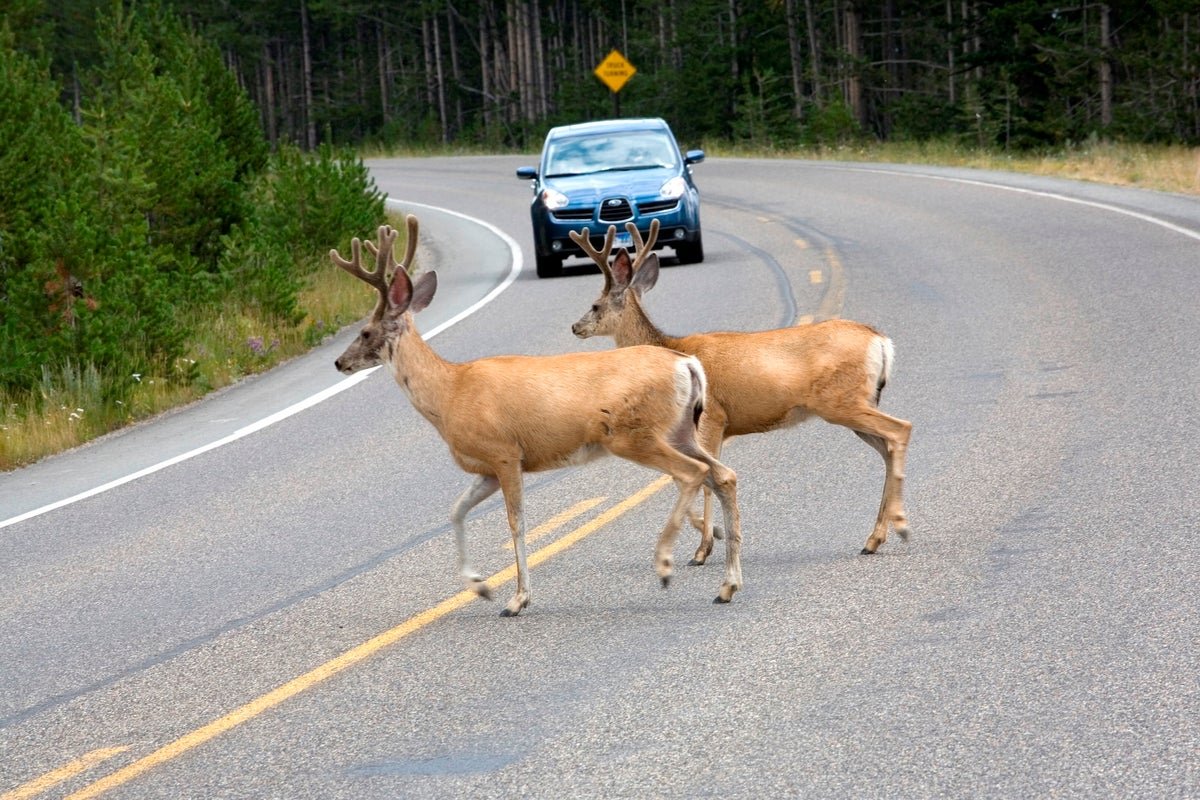
Of course, just because roadkill is useful for science doesn’t mean it’s not a problem. Each year millions of animals are killed by vehicles in the U.S. alone. A 2016 study found that 20 percent of the world’s land was within one kilometer of a road, and researchers estimate that that percentage has only grown. “We have this massive network of basically guillotines going along the roads,” says Fraser M. Shilling, director of the Road Ecology Center at the University of California, Davis.
Shilling doesn’t doubt that the excess animal carcasses present valuable research opportunities for wildlife ecologists. But researchers should seek out roadkill “only if it replaces potentially injurious or mortal ways of sampling animals,” he says. The ultimate aim, according to Shilling and Beckmann, should be to protect living animals.
“We should make use of this resource, if we can, from ethical perspectives,” Beckmann says. “But I would prefer not to have that resource available. I would much rather that we were not seeing the carnage on the roads that we do.”
It’s Time to Stand Up for Science
If you enjoyed this article, I’d like to ask for your support. Scientific American has served as an advocate for science and industry for 180 years, and right now may be the most critical moment in that two-century history.
I’ve been a Scientific American subscriber since I was 12 years old, and it helped shape the way I look at the world. SciAm always educates and delights me, and inspires a sense of awe for our vast, beautiful universe. I hope it does that for you, too.
If you subscribe to Scientific American, you help ensure that our coverage is centered on meaningful research and discovery; that we have the resources to report on the decisions that threaten labs across the U.S.; and that we support both budding and working scientists at a time when the value of science itself too often goes unrecognized.
In return, you get essential news, captivating podcasts, brilliant infographics, can’t-miss newsletters, must-watch videos, challenging games, and the science world’s best writing and reporting. You can even gift someone a subscription.
There has never been a more important time for us to stand up and show why science matters. I hope you’ll support us in that mission.
