

February 11, 2026
3 min read
Add Us On GoogleAdd SciAm
This ancient South American kingdom ran on bird poop
Maize farmers in Peru’s Chincha Valley were fertilizing their crops with seabird poop as early as the year 1250
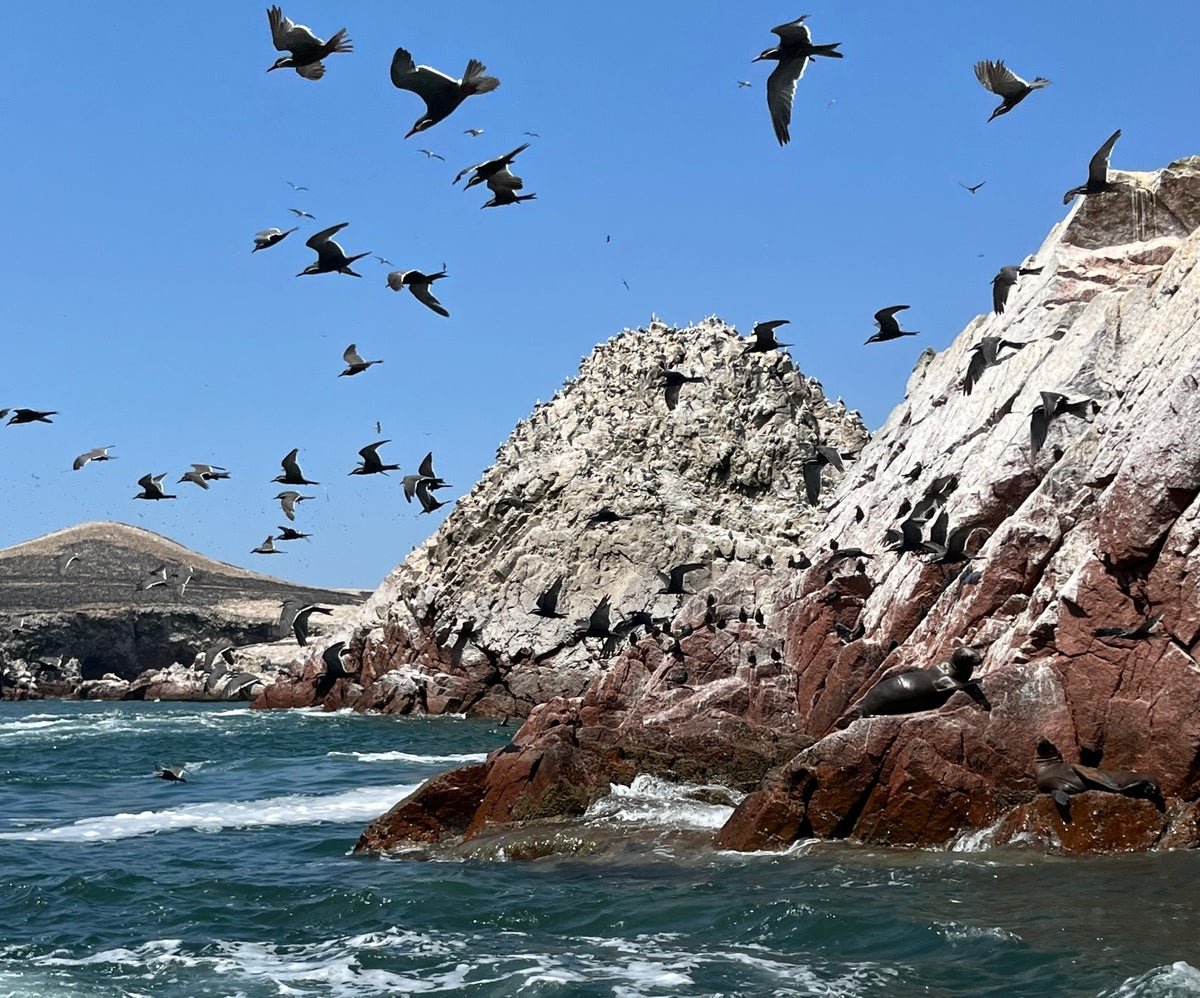
The Isla Balletas is a guano-rich island south of the Chincha Islands.
Thirteen miles off the coast of Peru lies a trio of islands with mountainous piles of guano, nicknamed “white gold.” This seabird poop mixed with other waste is such a powerful nitrogen deposit that in the late 1800s it spurred much of the U.S.’s imperial acquisitions.
But guano was a known and valued resource long before the U.S. came on the scene. Now new research published February 11 in PLOS One offers evidence that a Peruvian civilization thriving before the rise of the Inca Empire in the early 1400s was applying guano from those islands to its maize crops by at least 1250.
Sniffing out centuries-old traces of seabird poop is perhaps not the most glamorous endeavor, but it’s the sort of clue that archaeologists treasure for what it can tell them about long-lost peoples.
On supporting science journalism
If you’re enjoying this article, consider supporting our award-winning journalism by subscribing. By purchasing a subscription you are helping to ensure the future of impactful stories about the discoveries and ideas shaping our world today.
“The origins of fertilization are important because soil management allowing large-scale crop production would have been key to allowing population growth” and developing a trade in crops, says study co-author Emily Milton, an environmental archaeologist at the Smithsonian Institution’s National Museum of Natural History.
And archaeologists have long known that people living in Peru’s Chincha Valley were able to do exactly that but with little detail as to how, says Jordan Dalton, an archaeologist at the State University of New York at Oswego, who studies the region but was not involved in the new research. “We know that they were a wealthy coastal polity—they had interactions and traded and competed with their neighbors—but we don’t really understand the nature of those social relationships and what kind of goods they were trading,” she says. “There’s a lot that we need to fill in to really understand.”
Maize cobs from Chincha Valley in Peru.
In the new work, Milton and her colleagues examined the ratio of different isotopes—forms of atoms with differing numbers of uncharged neutrons in their nucleus—of carbon, nitrogen and sulfur in maize cobs archaeologists had uncovered from the Chincha Valley. The general technique is an archaeological staple but has been more regularly applied to animal bones than plant material and has rarely considered sulfur, Milton notes.
The team’s interpretation of the analysis, in conjunction with factors such as the presence of seabird iconography in the region, suggests that local societies were fertilizing with a specifically marine fertilizer by 1250.
It’s not necessarily surprising, but it’s valuable information about local agricultural technology, Dalton says. “There are obviously different types of fertilizers that one can use, but guano is the top of the top because it’s so rich in nitrogen,” she says. She’s also curious for future work to address how better access to guano might have made some communities more prosperous and powerful, for example.
The decorative handle of a tall Peruvian digging implement dating from between 1200 and 1535.
The Met Museum 1979.206.1025
The work could also inform archaeologists working far beyond the Chincha Valley, Milton says. Scientists use isotopic analyses to understand the diets of ancient peoples and animals because focusing on either side of the surf-and-turf platter leaves different chemical signatures. But fertilizing terrestrial crops with marine material may muddle that work.
“When people start adding sea bird guano to crops, it creates this sort of false marine signal in terrestrial food products,” Milton says. “You might get something that is [in the camel family], which should look terrestrial, but isotopically it could look like it’s, like, a shark or some kind of marine food.”
It’s Time to Stand Up for Science
If you enjoyed this article, I’d like to ask for your support. Scientific American has served as an advocate for science and industry for 180 years, and right now may be the most critical moment in that two-century history.
I’ve been a Scientific American subscriber since I was 12 years old, and it helped shape the way I look at the world. SciAm always educates and delights me, and inspires a sense of awe for our vast, beautiful universe. I hope it does that for you, too.
If you subscribe to Scientific American, you help ensure that our coverage is centered on meaningful research and discovery; that we have the resources to report on the decisions that threaten labs across the U.S.; and that we support both budding and working scientists at a time when the value of science itself too often goes unrecognized.
In return, you get essential news, captivating podcasts, brilliant infographics, can’t-miss newsletters, must-watch videos, challenging games, and the science world’s best writing and reporting. You can even gift someone a subscription.
There has never been a more important time for us to stand up and show why science matters. I hope you’ll support us in that mission.
