

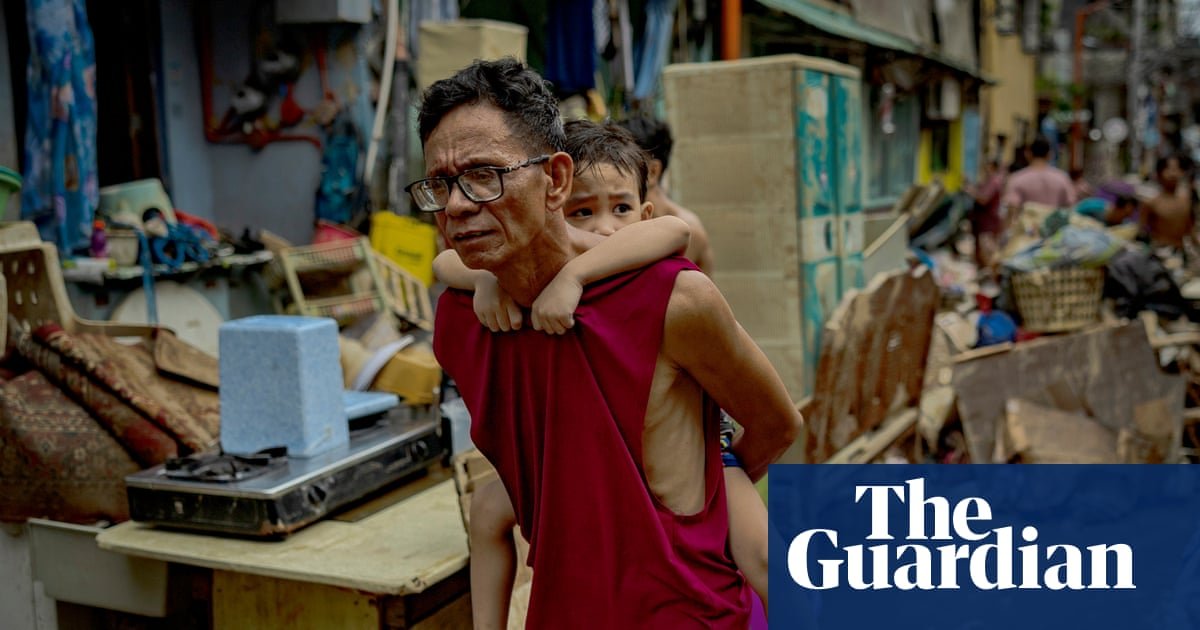
The climate crisis should be declared a global public health emergency by the World Health Organization, or millions more people will die unnecessarily, leading international experts have said.
The independent pan-European commission on climate and health, which was convened by the WHO, concluded the climate crisis was such a worldwide threat to health that the WHO should declare it “a public health emergency of international concern” (Pheic).
The international spread of vector-borne disease, such as dengue and chikungunya, as well as the health impacts of extreme weather events, global heating, food insecurity and air pollution make a Pheic necessary, said the commission’s report, which will be presented to European ministers on Sunday before the WHO’s world health assembly starts on Monday.
Pheics are the highest level of health alert. Previous declarations include infectious diseases such as Covid and Mpox. While declaring one would not on its own reverse climate change, it would trigger the kind of coordinated international response that the scale of the health crisis demands but has not yet materialised.
The 11-strong independent commission, which includes former health and climate ministers, said: “Far from being a fading priority or fake news, climate change poses an immediate and long-term threat to health, economic, food, water, environmental, personal, community and national security.”
Andrew Haines and Katrin Jakobsdóttir, the commission’s chief scientific adviser and chair respectively. Photograph: WHO/Hedinn Halldorsson
In an interview with the Guardian, Katrín Jakobsdóttir, a former prime minister of Iceland who chaired the commission, said: “The climate crisis may not be a pandemic, but it’s still a public health emergency that threatens humanity’s very health and survival. And if we don’t act more quickly and comprehensively, many millions more people could die or face life-changing illness.”
Sir Andrew Haines, a professor of environmental change and public health at the London School of Hygiene & Tropical Medicine, and the commission’s chief scientific adviser, said: “WHO has already recognised that climate change is a major threat to global health. What we’re asking for is a step further.”
He added: “If we carry on emitting at current rates, that will accelerate the risks to health for both current and future generations including: more people suffering and dying from excess heat, floods and infectious diseases, air pollution from wildfires, more preterm births and more food insecurity.”
The commission also urged governments to stop subsidising fossil fuels, which are directly responsible for 600,000 premature deaths a year in Europe alone. The region spends about €444bn (£387bn) a year on subsidies for oil and gas production, the report said. In 12 European countries, fossil fuel subsidies exceeded 10% of national health expenditure in 2023 and in four exceeded the entire health budget, the report observed.
“This is not a sustainable energy policy. It’s really more of a public health failure,” Jakobsdóttir said. “And it’s one that could get a lot worse. New subsidies for fossil fuels as well as countries considering redrilling in the wake of the Iran crisis would be catastrophic for health.
“European governments are subsidising the very industries responsible for their own citizens’ premature deaths. We need health leaders to really step into the climate debate and not just be on the receiving end of it.”
The commission urged governments to stop subsidising fossil fuels, which are responsible for 600,000 premature deaths a year in Europe. Photograph: Christopher Furlong/Getty Images
The report also called for measures to tackle disinformation, greater use of national climate health impact assessments, as well as recognition that climate change was also a mental health crisis.
Jakobsdóttir said: “The way to challenge climate scepticism and misinformation is simple: make it personal. Climate change is not happening somewhere else, to someone else, in the future. It is shortening lives in European cities right now. It is filling hospitals. It is driving anxiety and stress and other mental health issues. And the policies that would fix it – clean air, active travel, insulated homes, sustainable food – are exactly the policies that make people healthier and happier today.
“When the health argument and the climate argument are the same argument, it becomes very hard to oppose.”
The report also recommended that countries’ healthcare systems needed to become more resilient to the rapidly changing environment in order to try to adapt as much as possible.
“Every country needs to be aware of where its health facilities are situated, how likely it is to be flooded and how they would deal with an extreme and prolonged heatwave,” Haines said, pointing out that hospitals were often built on floodplains and frequently were not energy efficient.
“Even in the UK, which is a temperate country, we know that many hospitals struggle when it comes to extreme heat,” he added. “Many of the buildings were designed before climate change.”
The healthcare sector accounts for 5% of global emissions worldwide, so needs to prioritise adaptation to become more resilient, the report concluded.
Members of the emergency military unit try to extinguish a wildfire in Ourense province, Spain, in August 2025. Photograph: Pablo Blázquez Domínguez/Getty Images
Responding to the recommendations, Dr Hans Kluge, the WHO’s regional director for Europe, said: “The conflicts in Ukraine and the Middle East have clearly shown what fossil fuel dependency really means – not just higher bills, but strained or broken health systems, disrupted food and fuel supplies and societies under pressure.
“The case for acting on climate now is not just environmental. It is a security argument, a health argument and an economic argument, all at once. And it is a moral imperative.”
Kluge added: “The decisions taken by governments today will determine the disease burden carried by people who are currently in primary school. It now falls to the rest of us to act on their recommendations and protect future generations. I commit to ensuring that climate change is treated as the health emergency it is across the 53 member states of the WHO European region.”
Johan Rockström, the director of the Potsdam Institute for Climate Impact Research, welcomed the report. He said: “The current state of the planet, where we are breaching multiple planetary boundaries, and which manifests itself as public health threats impacting millions of people across the world, provides ample scientific evidence that climate change should be declared a public health emergency of international concern.”
