

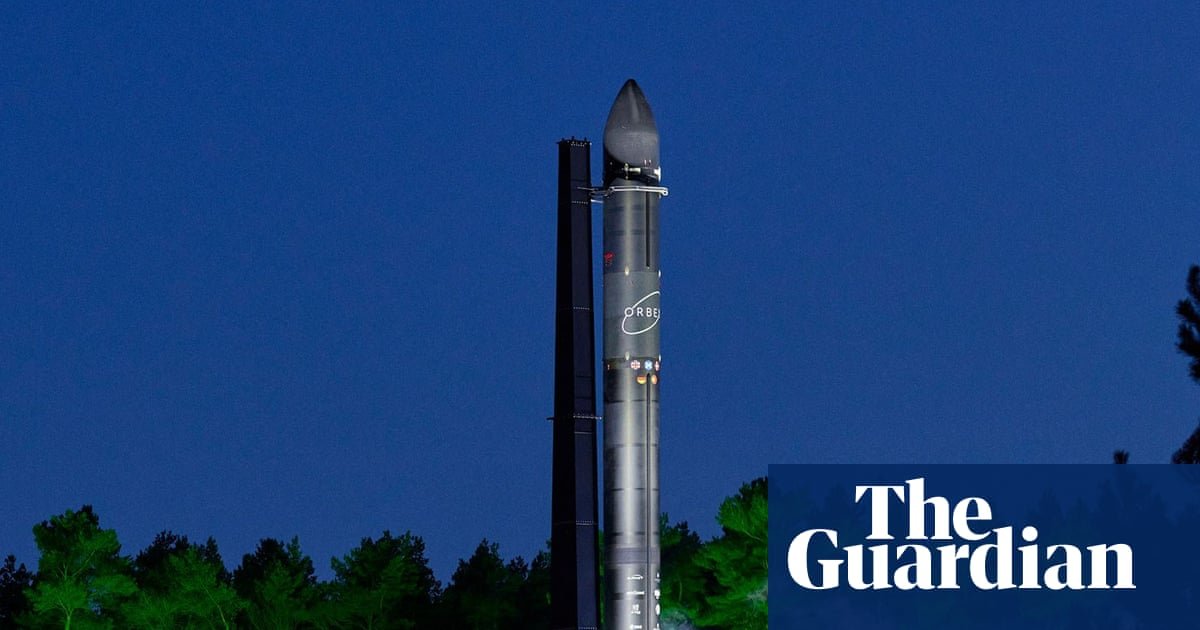
A British space company hoping to launch the first homegrown rocket from Scotland is on the brink of collapse, threatening 150 jobs and throwing doubt over the UK’s extraterrestrial ambitions.
Orbex, which is based in the Scottish Highlands, is lining up administrators as hopes fade that it will strike a rescue deal or raise funds, despite having been handed £26m in government loans last year.
The startup had planned to launch a rocket from a base on the Shetland Islands and was “on the cusp” of holding its first test flights in 2026, according to its chief executive, Phil Chambers.
The company had also been in talks to raise fresh cash from the Treasury-backed National Wealth Fund, but that deal fell through at an “early stage” of discussions late last year, a source with knowledge of the situation said.
Launch plans were also hit by repeated delays and Orbex eventually turned to a potential German buyer, The Exploration Company, which is developing a reusable spacecraft. On Wednesday, Orbex said it had examined several merger and acquisition options in an effort to stay afloat but none of had come to fruition.
“Disappointing doesn’t come close to describing how we feel about this moment,” Chambers said. “We have been successfully developing a sustainable, world-class sovereign space launch capability for the UK and were on the cusp of our first test flights later this year.”
He added: “It is no secret that designing and building space rockets to enable a launch service is a capital-intensive, highly advanced process with a long development cycle that creates a ‘scale-up’ funding gap. Institutional support is a crucial to bridge this gap and we have worked tirelessly to try to find both funding or rescue solutions.”
Peter Kyle, the business secretary, approved £20m of taxpayer-funded loans to Orbex in January 2025, hailing its plan to launch small satellites into orbit as one that would “transform the UK space industry”.
At the time, Dr Paul Bate, who steps down as chief executive of the UK Space Agency next month, said Orbex would “inspire a new generation to reach for the stars”.
Last summer, Liz Kendall, the technology secretary, handed a further £6m loan to the startup, designed to help it pursue a £150m contract with the European Space Agency to aid the development of alternatives to Elon Musk’s SpaceX in the US.
Orbex was planning to launch small satellites into orbit using its 19-metre long, low-carbon rockets. It had initially been developing its own home spaceport on the A’Mhòine peninsula in the Highlands, but was eventually forced to shelve the project and relocate its planned launches to SaxaVord, a base on the Shetland Islands.
The launch would have been the first from UK soil since the British billionaire Richard Branson’s failed Virgin Orbit mission in 2023.
A government spokesperson said: “We remain committed to supporting our dynamic space sector. We recognise this will be a very worrying time for staff at Orbex. Space launch is a highly competitive sector, and it has always been the case that some companies will succeed, while others will fail.
“We will be setting out more details about our plans for developing key national space capabilities, including launch, in due course. Any decisions will be focused on ensuring maximum impact for taxpayers’ money.”
