

February 9, 2026
2 min read
Add Us On GoogleAdd SciAm
Bad Bunny’s Super Bowl halftime show highlighted Puerto Rico’s power grid. Here’s why
Bad Bunny performed part of the Super Bowl halftime show from a power-line-themed set, drawing attention to the problem of widespread blackouts in Puerto Rico
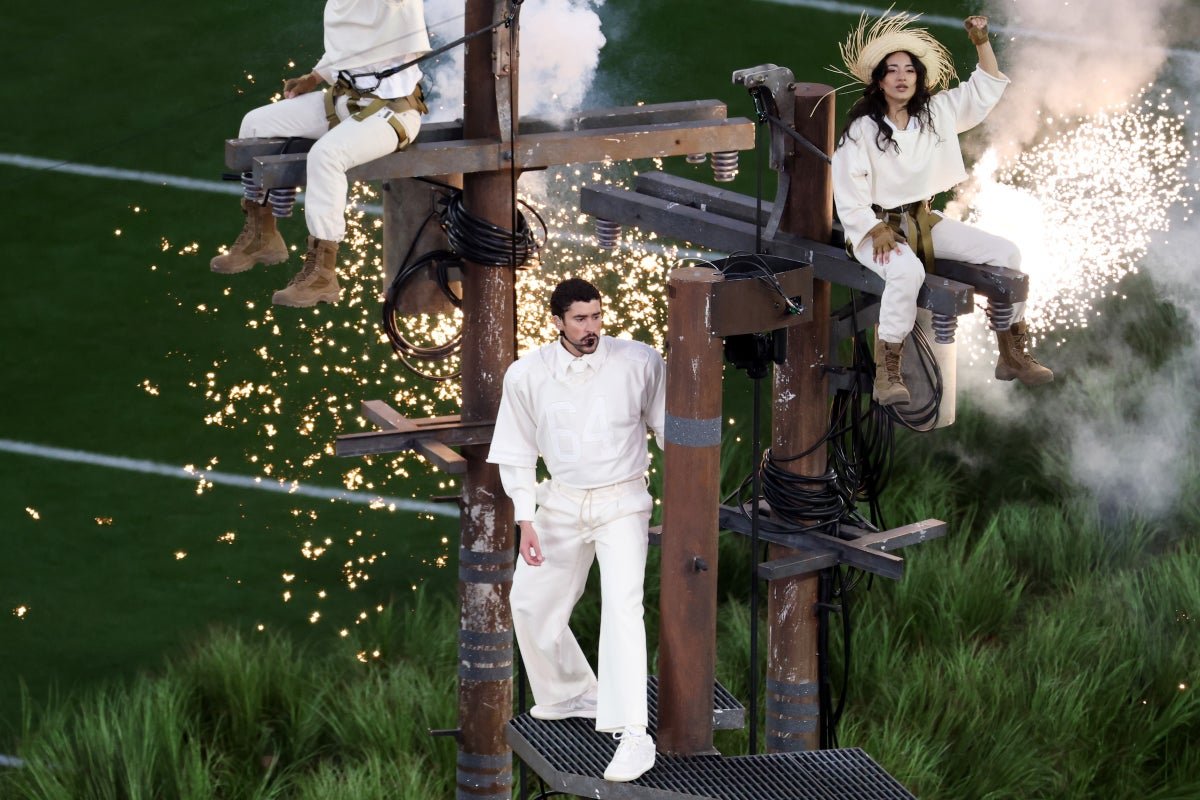
Bad Bunny performs at the halftime show of the 2026 Super Bowl.
Ishika Samant/Getty Images
Dancing linemen who dangled from power poles during the Super Bowl halftime show by Puerto Rican singer Bad Bunny were a pointed reference to the island’s power grid, which has been hit hard by a series of hurricanes and, experts agree, is in dire need of modernization.
In the past year, however, Trump administration appointees at the Department of Energy have canceled $815 million of a $1-billion fund meant to bolster the island’s grid against storms and outages.
In 2017 Hurricane Maria destroyed 80 percent of the island’s transmission and distribution lines, and this led to months-long power outages. In 2022 Hurricane Fiona again knocked out power for more than 80 percent of the island’s residents. Widespread blackouts have become a regular feature of life in Puerto Rico. There “electricity problems are an everyday problem,” said Max Lainfiesta, then a member of the Islands Energy Program at the nonprofit Rocky Mountain Institute, to Scientific American in 2022.
On supporting science journalism
If you’re enjoying this article, consider supporting our award-winning journalism by subscribing. By purchasing a subscription you are helping to ensure the future of impactful stories about the discoveries and ideas shaping our world today.
After Hurricane Fiona, Congress passed an appropriations bill that delivered funds to the territory with the aim of building a resilient, distributed energy system for the island. The Trump administration canceled the majority of the funding this past spring, however. And in January the administration delivered a death blow to a program that was meant to deploy backup solar and storage systems at hospitals and at 30,000 homes of rural, low-income and medically vulnerable people, according to Latitude Media. Further cuts, such as the dissolution of the DOE’s Grid Deployment Office, which was responsible for managing the appropriated funds, have also left the future of Puerto Rico’s grid in question.
Administration appointees cited the reliance on renewable power as the reason for the cuts and blamed renewables for the island’s electricity reliability problems. Local advocates say that individual solar backup systems are critical to protect residents from repeated outages.
The Puerto Rico Electric Power Authority is also $9 billion in debt, and negotiations over repayment restructuring with BlackRock Financial Management and other creditors crumbled last August after the Trump administration fired all but one member of the federal board that had been overseeing the negotiations, according to CNN.
It’s not the first time that Bad Bunny (whose real name is Benito Antonio Martínez Ocasio) has called out Puerto Rico’s grid problems. In 2022 he released a mini documentary, entitled El Apagón (Spanish for “the power outage”), that decried the unreliability of the power system. According to Politico, the singer also spent hundreds of thousands of dollars on an advertising campaign to oust prostatehood politicians. Puerto Rico is a U.S. commonwealth; Bad Bunny supports the Puerto Rican independence movement.
The advertising effort fell short, with Jenniffer González, a prostatehood conservative, winning the governorship. González has said that the solar installation money will be redirected to fixing power generation, transmission and distribution, according to the news outlet El Nuevo Día, but the DOE has not clarified how the funds for the canceled grants will be distributed.
It’s Time to Stand Up for Science
If you enjoyed this article, I’d like to ask for your support. Scientific American has served as an advocate for science and industry for 180 years, and right now may be the most critical moment in that two-century history.
I’ve been a Scientific American subscriber since I was 12 years old, and it helped shape the way I look at the world. SciAm always educates and delights me, and inspires a sense of awe for our vast, beautiful universe. I hope it does that for you, too.
If you subscribe to Scientific American, you help ensure that our coverage is centered on meaningful research and discovery; that we have the resources to report on the decisions that threaten labs across the U.S.; and that we support both budding and working scientists at a time when the value of science itself too often goes unrecognized.
In return, you get essential news, captivating podcasts, brilliant infographics, can’t-miss newsletters, must-watch videos, challenging games, and the science world’s best writing and reporting. You can even gift someone a subscription.
There has never been a more important time for us to stand up and show why science matters. I hope you’ll support us in that mission.
