

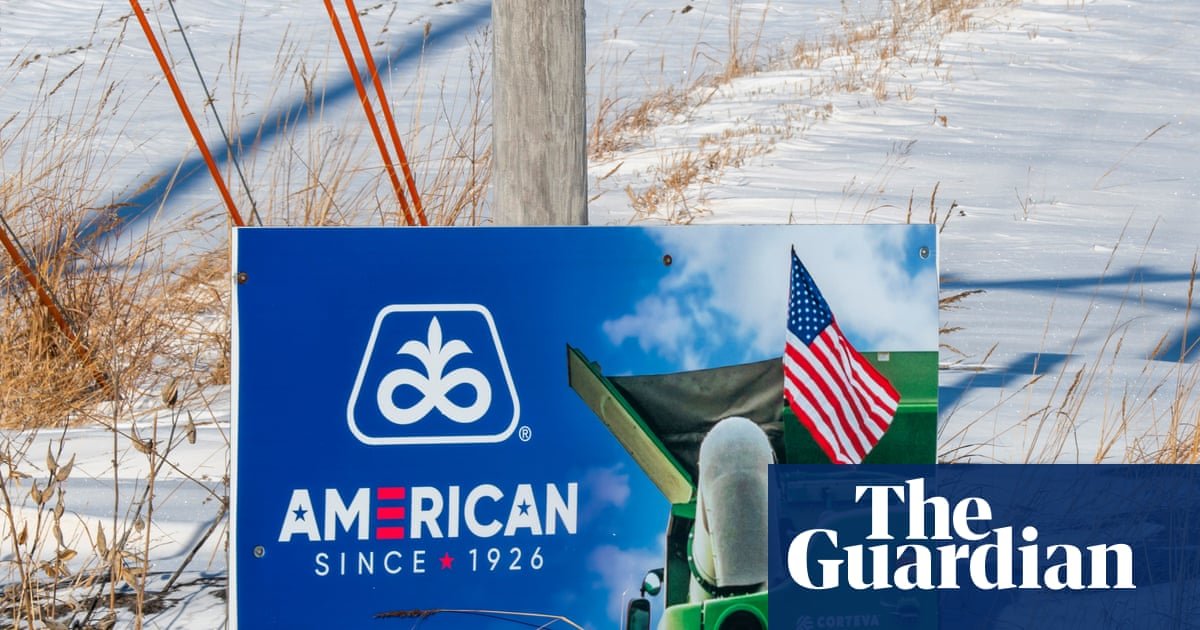
The chemical giant Corteva will stop producing Enlist Duo, a herbicide considered to be among the most dangerous still used in the US by environmentalists because it contains a mix of Agent Orange and glyphosate, which have both been linked to cancer and widespread ecological damage.
The US military deployed Agent Orange, a chemical weapon, to destroy vegetation during the Vietnam war, causing serious health problems among soldiers and Vietnamese residents.
Glyphosate, meanwhile, is a highly controversial and toxic herbicide ingredient that has prompted similar litigation. Both are banned or severely restricted in many industrialized countries.
Despite the risks of combining the substances, the US Environmental Protection Agency has twice approved it for use on food crops. The compound is annually spread on around 4.5m acres of fields in which corn, soybeans and genetically engineered cotton are grown.
The move will bring to an end a decade of litigation and public pressure campaigns to ban Enlist Duo, and advocates are “celebrating it as a win”, said Kristina Sinclair, a staff attorney with the Center for Food Safety (CFS) non-profit, which is a lead plaintiff in the lawsuit.
“After over a decade of legal battles, rather than try to rebut our arguments in court, the manufacturer pulled Enlist Duo from the market,” Sinclair said. “Our food system never should have been doused in this toxic cocktail, and now never will be again.”
Corteva did not immediately respond to a request for comment, and Sinclair said it was unclear why the company decided to pull Enlist Duo. Corteva reported selling more than $1bn in Enlist products in 2022. The Agent Orange chemical 2,4-D will still be used in Enlist One, and a lawsuit that asks a judge to invalidate its approval will continue.
2,4-D works by attacking the roots and leaves of weeds and causing them to produce unwanted cells, not unlike inducing cancer, to kill or hobble them. The substance is considered a “possible” carcinogen by the World Health Organization, and, among other human health effects, it is linked to non-Hodgkin lymphoma, birth defects, respiratory problems, Parkinson’s disease and reproductive harms.
It is also thought to harm hundreds of endangered species, including butterflies, birds, fish, deer, panthers and bats, the CFS wrote in its court filings. The suit additionally alleges the product’s approval threatens to increase the spread of new herbicide-resistant weeds because the EPA failed to properly mitigate risks. That forces farmers to manage new “superweeds”.
The EPA first approved Enlist Duo in 2014, prompting a lawsuit from the CFS and others arguing that the agency violated federal law by failing to ensure the herbicide would not cause “unreasonable adverse effects on the environment”, as required under the nation’s pesticide laws. At that time, the EPA declared, without engaging in legally mandated Endangered Species Act consultation, that the chemical cocktail would cause no harm to any endangered species.
A federal court invalidated Enlist Duo’s EPA approval in 2020, but the agency in 2022 reapproved it for seven years of use. Advocates argued that the EPA based its health and environmental impact assessments on earlier usage levels, which dramatically underestimate the threat.
The EPA’s reapproval of Enlist Duo despite the court’s finding is emblematic of a broader, flawed philosophy at the agency’s pesticide division, said Nathan Donley, environmental health director with the Center for Biological Diversity, which has been involved in the suits. The agency always looks for “tweaks”, he said.
“Whenever the courts find flaws with their approach, there’s never a moment of reflection, there’s never an acknowledgment that their process is faulty, there’s simply a scramble to figure out the quickest workaround to get it reapproved,” Donley said.
“Getting pesticides to market is always the goal for the EPA – and when that’s the driving force of a country’s regulator, there’s only so much you can expect from them,” Donley added.
