

February 4, 2026
1 min read
Add Us On GoogleAdd SciAm
NASA document reveals new Artemis II moon mission target launch dates for March
NASA quietly updated its potential launch windows for its delayed moon mission. The agency is apparently now targeting March 6 to 11
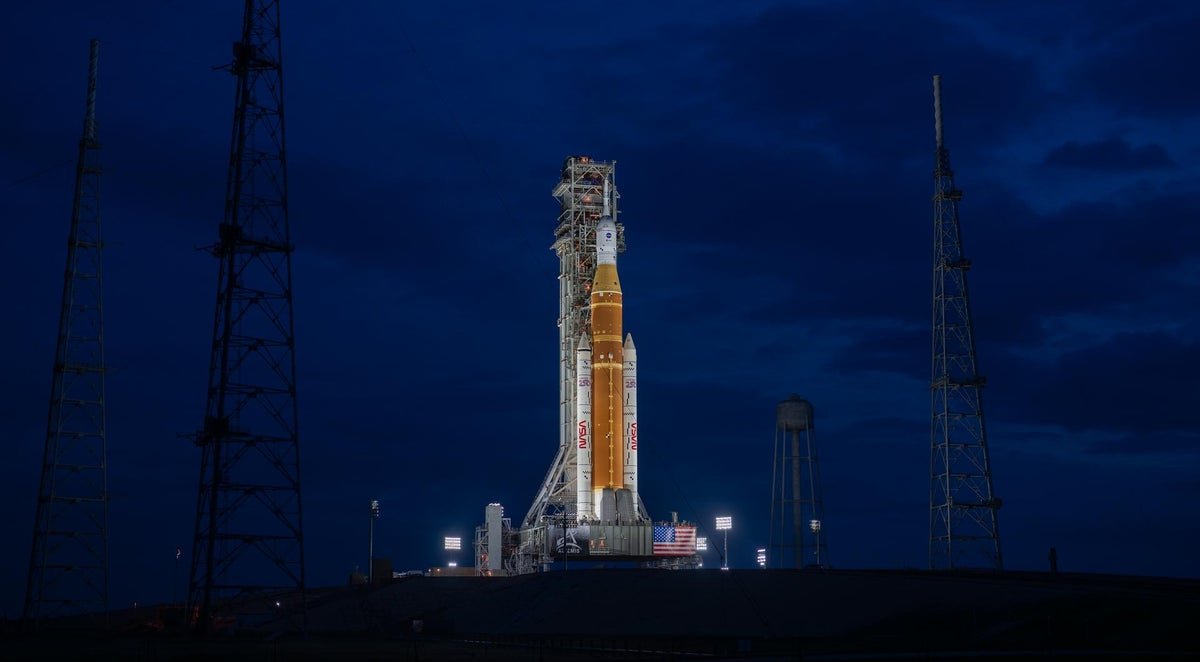
A NASA document showing the potential launch windows for its Artemis II moon mission appears to have been quietly updated on Tuesday, with the agency highlighting March 6 to 9 and March 11 as possible target dates.
NASA had already indicated that Artemis II would slip to a March launch date after a critical test of the mission’s spacecraft—the so-called wet dress rehearsal—went awry on Monday. In response to a request for comment, the agency confirmed the updated document detailing the early March dates was accurate.
During the test, the Space Launch System (SLS) sprang hydrogen fuel leaks—a problem that plagued the mission’s predecessor, Artemis I. Despite trying to stem the leaks using techniques learned from Artemis I, however, NASA engineers still have some work ahead to fix the SLS problem. And the spacecraft’s capsule, designed to ferry a crew of four astronauts in a loop around the moon and back, encountered problems with a recently replaced valve.
On supporting science journalism
If you’re enjoying this article, consider supporting our award-winning journalism by subscribing. By purchasing a subscription you are helping to ensure the future of impactful stories about the discoveries and ideas shaping our world today.
When, exactly, Artemis II will launch depends on a successful rehearsal in which NASA will attempt to fuel the rocket again and test its systems without the crew onboard. The rehearsal’s date is yet to be determined.
If that goes to plan, then we could see the agency’s next mission to the moon launch in about a month. If not, NASA’s documentation shows the agency could target early April instead.
Editor’s Note (2/4/26): This article was updated after posting to include comment from NASA.
It’s Time to Stand Up for Science
If you enjoyed this article, I’d like to ask for your support. Scientific American has served as an advocate for science and industry for 180 years, and right now may be the most critical moment in that two-century history.
I’ve been a Scientific American subscriber since I was 12 years old, and it helped shape the way I look at the world. SciAm always educates and delights me, and inspires a sense of awe for our vast, beautiful universe. I hope it does that for you, too.
If you subscribe to Scientific American, you help ensure that our coverage is centered on meaningful research and discovery; that we have the resources to report on the decisions that threaten labs across the U.S.; and that we support both budding and working scientists at a time when the value of science itself too often goes unrecognized.
In return, you get essential news, captivating podcasts, brilliant infographics, can’t-miss newsletters, must-watch videos, challenging games, and the science world’s best writing and reporting. You can even gift someone a subscription.
There has never been a more important time for us to stand up and show why science matters. I hope you’ll support us in that mission.
