

February 2, 2026
1 min read
Add Us On GoogleAdd SciAm
New chicken-sized dinosaur baffles paleontologists
The tiny Foskeia pelendonum was a plant-eating dinosaur with a “weird” anatomy, scientists say
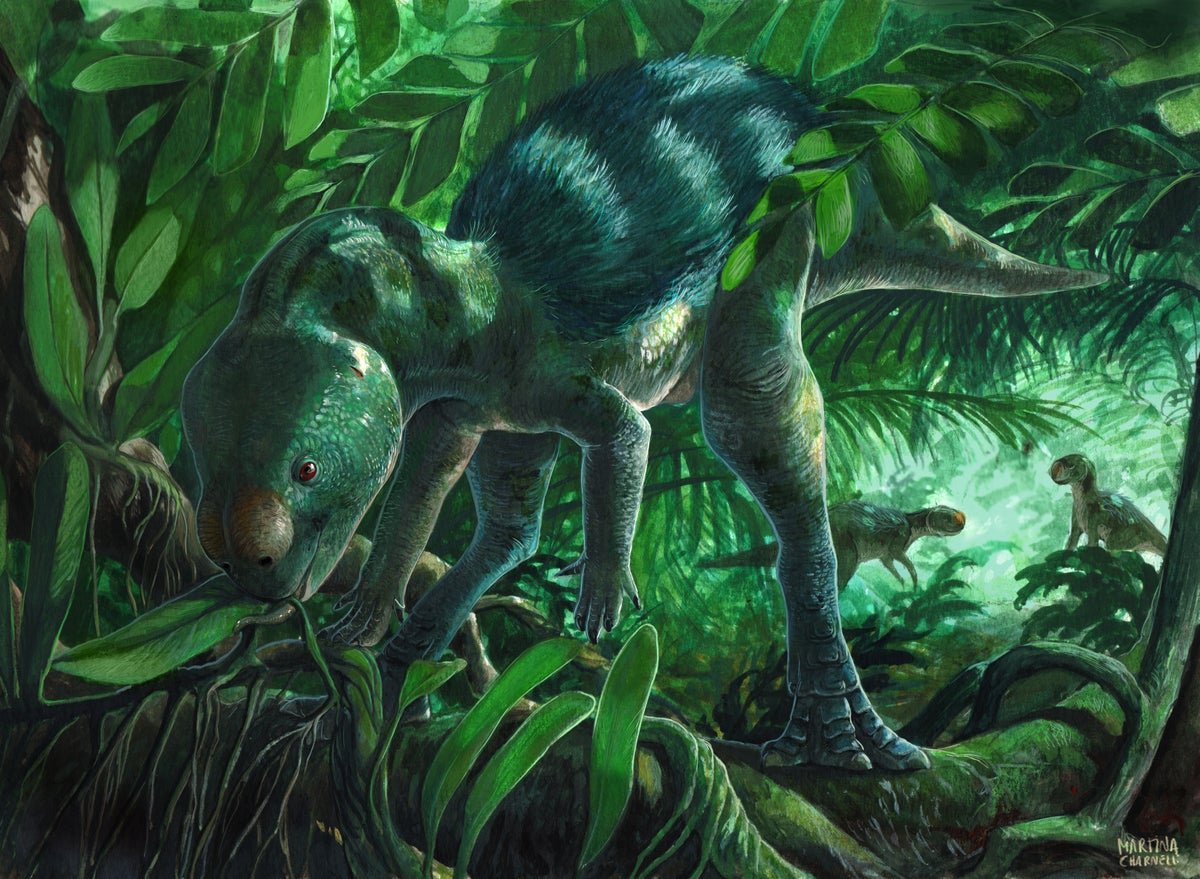
A reconstruction of the dinosaur Foskeia pelendonum.
A tiny plant-eating dinosaur that was about the same size of a chicken and occupied what’s now northern Spain some 125 million years ago is baffling scientists.
The Early Cretaceous creature is described in a new paper published on Sunday in Papers in Paleontology.
The dinosaur, Foskeia pelendonum—named for the Greek words for “light” and “foraging”—was about half a meter long, with an unusual skull and teeth that suggest a “novel mode of feeding” behavior, the authors write.
On supporting science journalism
If you’re enjoying this article, consider supporting our award-winning journalism by subscribing. By purchasing a subscription you are helping to ensure the future of impactful stories about the discoveries and ideas shaping our world today.
“Its anatomy is weird in precisely the kind of way that rewrites evolutionary trees,” said Penélope Cruzado-Caballero, an associate professor at the University of La Laguna in Spain and an author of the paper, in a statement.
The growth trajectory of F. pelendonum compared with an adult chicken.
The new species could help paleontologists better understand the lineage of the ornithischians, or “bird-hipped” dinosaurs.
“From the beginning, we knew these bones were exceptional because of their minute size,” said Fidel Torcida Fernández-Baldor, a co-author of the new research and director of the Dinosaur Museum in Salas de los Infantes, Spain, who first discovered the fossils, in the same statement. “It is equally impressive how the study of this animal overturns global ideas on ornithopod dinosaur evolution.”
It’s Time to Stand Up for Science
If you enjoyed this article, I’d like to ask for your support. Scientific American has served as an advocate for science and industry for 180 years, and right now may be the most critical moment in that two-century history.
I’ve been a Scientific American subscriber since I was 12 years old, and it helped shape the way I look at the world. SciAm always educates and delights me, and inspires a sense of awe for our vast, beautiful universe. I hope it does that for you, too.
If you subscribe to Scientific American, you help ensure that our coverage is centered on meaningful research and discovery; that we have the resources to report on the decisions that threaten labs across the U.S.; and that we support both budding and working scientists at a time when the value of science itself too often goes unrecognized.
In return, you get essential news, captivating podcasts, brilliant infographics, can’t-miss newsletters, must-watch videos, challenging games, and the science world’s best writing and reporting. You can even gift someone a subscription.
There has never been a more important time for us to stand up and show why science matters. I hope you’ll support us in that mission.
