
Close Menu

    Subscribe to Updates

    Get the latest creative news from FooBar about art, design and business.

    What's Hot

    £99,987 and counting: graduates trapped by ballooning student loans | Student finance

    UK ‘could lose generation of scientists’ with cuts to projects and research facilities | Science

    Dow Jones hits 50,000 milestone amid tech gains and hopes of lower interest rates | Dow Jones

    Facebook X (Twitter) Instagram
    Facebook X (Twitter) YouTube LinkedIn
    Naija Global News |
    Saturday, February 7
    • Business
    • Health
    • Politics
    • Science
    • Sports
    • Education
    • Social Issues
    • Technology
    • More
      • Crime & Justice
      • Environment
      • Entertainment
    Naija Global News |
    You are at:Home»Science»Catch a falling star: cosmic dust may reveal how life began, and a Sydney lab is making it from scratch | Astronomy
    Science

    Catch a falling star: cosmic dust may reveal how life began, and a Sydney lab is making it from scratch | Astronomy

    onlyplanz_80y6mtBy onlyplanz_80y6mtFebruary 1, 2026004 Mins Read
    Share Facebook Twitter Pinterest LinkedIn Tumblr Email
    Catch a falling star: cosmic dust may reveal how life began, and a Sydney lab is making it from scratch | Astronomy
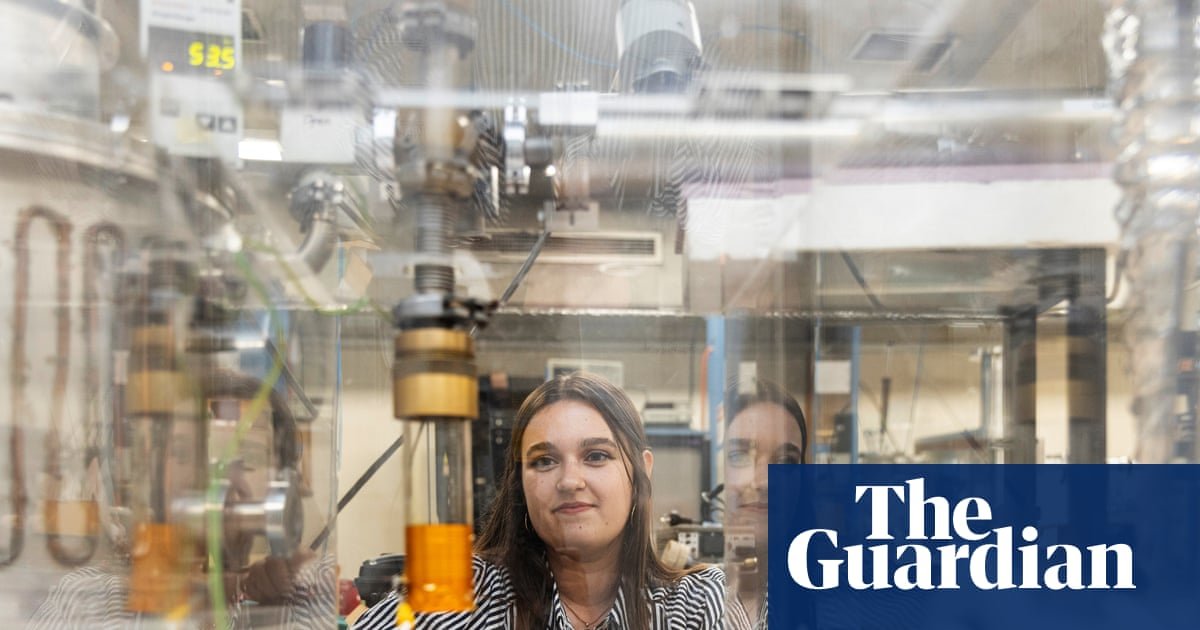
    Linda Losurdo, a PhD student who is working on reverse-engineering cosmic dust in the University of Sydney lab to shed light on the building blocks of life. Photograph: University of Sydney
    Share
    Facebook Twitter LinkedIn Pinterest Email

    How does one acquire star dust? One option, as the Perry Como song suggests, is to catch a falling star and put it in your pocket, so to speak: thousands of tonnes of cosmic dust bombard the Earth each year, mostly vaporising in the atmosphere.

    The asteroid and comet fragments that don’t burn up – known as meteorites and micrometeorites if they hit Earth – provide scientists with valuable clues about the cosmos. It’s why planetary scientists in the UK, kitted in ghostbusters-like vacuum backpacks, have scoured cathedral roofs for microscopic specks of the space stuff.

    Another option is to recreate a bit of the universe in a bottle.

    Linda Losurdo, a PhD candidate in materials and plasma physics at the University of Sydney, has done exactly that, producing cosmic dust in the lab from scratch. It’s a feat she hopes will help shed new light on how life began on Earth.

    Cosmic dust is thought to originate from dying stars. A star at the end of its life gets “very hot and heavy around the outer part”, Losurdo said. Breaking apart under its own pressure, it “start[s] to belch out … huge waves of carbon”.

    “What is found around the envelopes of giant, dying stars [is] quite similar to what is found in meteorites,” Losurdo said.

    Cosmic dust contains organic compounds of carbon, hydrogen, oxygen and nitrogen – known collectively as CHON molecules, which form the chemical building blocks of life.

    Astrophysicist Dr Sara Webb described Losurdo’s work as ‘a really beautiful method’ to produce something similar to ‘what we think interstellar dust is like’. Photograph: University of Sydney

    Scientists still debate whether the earliest CHON molecules formed locally on Earth, arrived later as particles from comets and asteroids, or were delivered during the early stages of our solar system forming – or some combination of the three.

    Sign up: AU Breaking News email

    Recreating cosmic dust in the lab may help answer questions about how meteorites hitting Earth came to contain the organic matter that they do, Losurdo said. “We’re really interested in how we can better predict where the types of dust that we find in meteorite samples came from.”

    Cosmic dust emits a distinctive infrared fingerprint, a unique pattern of light that reveals its chemical structure.

    In the lab, Losurdo used such patterns to reverse-engineer the dust, first using a vacuum to recreate the near-empty conditions of space in a glass tube.

    To the tube, she and her supervisor, Prof David McKenzie of the University of Sydney, introduced a mixture of nitrogen, carbon dioxide and acetylene gas – “the types of gases that you would find around giant dying stars”.

    “We’re then able to apply a very high voltage – around 10,000 volts – and … it energises the gas,” Losurdo said – creating a type of plasma, the fourth state of matter. “That is our dust analogue.”

    Dr Sara Webb, an astrophysicist at Swinburne University who was not involved in the research, said: “All of these types of dust particles were the building blocks for our life here on Earth. We wouldn’t be here without them.”

    “We know that they exist out there in the universe, all scattered throughout the place, but we obviously can’t go and grab a bit of the dust from the interstellar medium, even though we would love to.”

    Webb described Losurdo’s work as “a really beautiful method” to produce something similar to “what we think interstellar dust is like”.

    “One very exciting possibility, which is probably further down the track is … to use this kind of simulated cosmic dust in other organic chemistry experiments, to simulate early life formation on different types of planets,” Webb said.

    Losurdo emphasised that “what we’re making is not representative of every single environment in the universe”.

    “What we’re trying to do is to take a snapshot of something that is physically plausible and see if what we make compares to the real thing.”

    The research was published in the Astrophysical Journal of the American Astronomical Society.

    Astronomy Began catch Cosmic Dust Falling Lab life Making Reveal scratch star Sydney
    Share. Facebook Twitter Pinterest LinkedIn Tumblr Email
    Previous ArticleIndonesia Lifts Ban on Grok After New Assurances From X Corp
    Next Article The long-term cost of high student debt is not just for graduates | Heather Stewart
    onlyplanz_80y6mt
    • Website

    Related Posts

    UK ‘could lose generation of scientists’ with cuts to projects and research facilities | Science

    February 7, 2026

    First ‘practical PhDs’ awarded in China — for products rather than papers

    February 6, 2026

    Katharine Burr Blodgett’s brilliant career began at the ‘House of Magic’

    February 6, 2026
    Add A Comment
    Leave A Reply Cancel Reply

    Top Posts

    Watch Lady Gaga’s Perform ‘Vanish Into You’ on ‘Colbert’

    September 9, 20251 Views

    Advertisers flock to Fox seeking an ‘audience of one’ — Donald Trump

    July 13, 20251 Views

    A Setback for Maine’s Free Community College Program

    June 19, 20251 Views
    Stay In Touch
    • Facebook
    • YouTube
    • TikTok
    • WhatsApp
    • Twitter
    • Instagram
    Latest Reviews

    At Chile’s Vera Rubin Observatory, Earth’s Largest Camera Surveys the Sky

    By onlyplanz_80y6mtJune 19, 2025

    SpaceX Starship Explodes Before Test Fire

    By onlyplanz_80y6mtJune 19, 2025

    How the L.A. Port got hit by Trump’s Tariffs

    By onlyplanz_80y6mtJune 19, 2025

    Subscribe to Updates

    Get the latest tech news from FooBar about tech, design and biz.

    Most Popular

    Watch Lady Gaga’s Perform ‘Vanish Into You’ on ‘Colbert’

    September 9, 20251 Views

    Advertisers flock to Fox seeking an ‘audience of one’ — Donald Trump

    July 13, 20251 Views

    A Setback for Maine’s Free Community College Program

    June 19, 20251 Views
    Our Picks

    £99,987 and counting: graduates trapped by ballooning student loans | Student finance

    UK ‘could lose generation of scientists’ with cuts to projects and research facilities | Science

    Dow Jones hits 50,000 milestone amid tech gains and hopes of lower interest rates | Dow Jones

    Recent Posts
    • £99,987 and counting: graduates trapped by ballooning student loans | Student finance
    • UK ‘could lose generation of scientists’ with cuts to projects and research facilities | Science
    • Dow Jones hits 50,000 milestone amid tech gains and hopes of lower interest rates | Dow Jones
    • RFK, Jr. just claimed the keto diet can cure schizophrenia. Here’s what the science says
    • People with dementia are still people, with joys and interests of their own | Dementia
    © 2026 naijaglobalnews. Designed by Pro.
    • About Us
    • Disclaimer
    • Get In Touch
    • Privacy Policy
    • Terms and Conditions

    Type above and press Enter to search. Press Esc to cancel.