

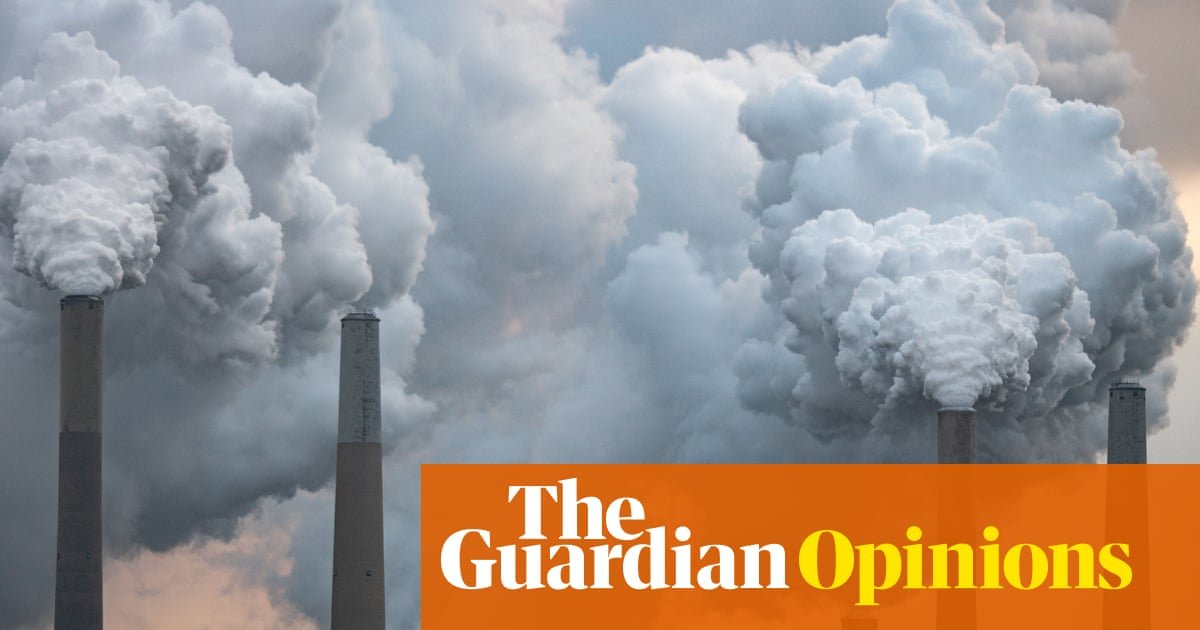
A few months ago, Marjorie Taylor Greene, then a Georgia representative, held a hearing on her bill to ban research on “geoengineering”, which refers to technological climate interventions, such as using reflective particles to reflect away sunlight. The hearing represented something of a first – a Republican raising alarm bells about human activity altering the health of the planet. Of course, for centuries, people have burned fossil fuels to power and feed society, emitting greenhouse gases that now overheat the planet.
Unfortunately, her hearing waved past an urgent debate that policymakers are confronting around the world: after centuries of accidental fossil-fuel geoengineering, should we deliberately explore interventions to cool the planet and give the energy transition breathing room?
For some, even asking this question is taboo. On the right, Greene is not alone: anti-vaxxers and chemtrail conspiracy theorists are pushing to criminalize research across states and on Capitol Hill. On the left, some argue it’s a “moral hazard” even to acknowledge we might need tools beyond mitigation.
But two inconvenient truths should force us to reject geoengineering research bans and reappraise climate strategy. First, the Earth’s climate system appears more sensitive to greenhouse gases than once hoped. Second, we are not reducing those gases nearly fast enough. Not only do we need research on other tools; we need it sooner than we thought.
Catastrophic impacts and dangerous feedback loops are becoming more likely, yet we continue to plan as if business as usual can hold. The math of solving the problem was already daunting, even before federal attacks on climate regulations and research. As longtime climate advocates and former public officials, we believe it’s time for a more honest conversation about what lies ahead – and what must now be done to prepare.
We’ve each spent decades working on emissions reduction and clean-energy policy. We still believe mitigation is essential and must accelerate. But the conviction that mitigation will be sufficient – on its own, and in time – is no longer tenable.
We have already altered the planet. Through greenhouse-gas release, we’ve disrupted Earth’s energy balance, triggered feedback loops, and pushed key systems closer to collapse. In effect, we have already geoengineered the climate – just without intention, governance or regard for consequences.
Scientists are increasingly alarmed. James Hansen, a foundational figure in climate science, has warned that the likelihood of a much hotter Earth is accelerating. In addition to wrapping the planet in heat-trapping gases, reflective ice is disappearing, clouds are shifting, and particulate pollution is increasing. The planet is, quite literally, darkening.
As warming quickens, so do the risks of irreversible damage. We would never simply stand by and hope for the best if this were any other threat of this scale. Yet we have no global plan beyond hoping mitigation goes faster.
We are not being honest – with ourselves or the public – about how little we’ve done to prepare for worst-case scenarios. Holistic planning to manage these risks and drive energy transition and land-use reform is not a distraction; it is the necessary next step in responsible climate action.
Cutting greenhouse gases remains the only long-term solution, and there are positive signs we are constraining the growth rate of human-made emissions. But we started late, and our changed climate may mean that natural carbon cycles stop mopping up half of what we emit. If that happens, our ability to avert dangerous impacts is vastly reduced.
We need a broader, more inclusive plan. That means significantly expanding investments in adaptation, resilience and emergency preparedness. It also means exploring, with care and rigor, potential interventions that might reduce peak warming or slow dangerous feedbacks. And it means rejecting efforts to dismantle research when we most need answers.
Some ideas – such as reflecting sunlight with particles or brightening marine clouds to counteract the darkening under way – would be temporary interventions that could buy time and head off enormous consequences. We must start by developing credible options, then discard those that won’t work while maturing those that might. We are not calling for deployment of any climate intervention. We are calling for truly knowing our options so policymakers can make informed choices instead of emergency decisions.
A serious research program is how the world gains real choices. To shut down inquiry is to close off the path to knowledge we need to separate the reckless from the responsible. The alternative is far worse: a future where decisions are made in crisis, under pressure, and without preparation.
Some argue that even discussing climate interventions creates a “moral hazard”. But refusing to consider potentially life-saving options is not moral clarity – it’s moral failure. Climate justice means protecting people from suffering. That requires a plan that integrates mitigation, adaptation and risk reduction together. This work will have to be done. The only question is when, and by whom. Right now, we still have a window to shape it in ways that are safe, just, and globally inclusive. We need more leaders, more funders and more governments to engage – not to replace existing climate strategies, but to complement and complete them.
It’s easy to dismiss ideas; the harder work is to identify which approaches might actually help, and to prepare before an escalating crisis forces our hand.
Craig Segall is the former deputy executive officer and assistant chief counsel of the California Air Resources Board. He is also former senior vice-president of Evergreen Action and a longtime climate advocate. He has academic seats at the University of Edinburgh, New York University, and the University of California at Berkeley The opinions in this piece are his own.
Baroness Bryony Worthington was created a life peer in 2011, giving her a seat in the UK’s House of Lords where she served as Shadow Energy Minister She has over 25 years of experience working on climate, energy and environmental policy in the NGO and public sectors, and in the private sector.
