
Close Menu

    Subscribe to Updates

    Get the latest creative news from FooBar about art, design and business.

    What's Hot

    The Guardian view on weight-loss jabs and addiction: there is too much moralising about these remarkable medicines | Editorial

    Beyond the strait: why attacks on Kargh Island could keep oil prices high | Oil

    Mining made this US tribal area a toxic wasteland. This Indigenous nation brought it back to life | Native Americans

    Facebook X (Twitter) Instagram
    Facebook X (Twitter) YouTube LinkedIn
    Naija Global News |
    Sunday, March 15
    • Business
    • Health
    • Politics
    • Science
    • Sports
    • Education
    • Social Issues
    • Technology
    • More
      • Crime & Justice
      • Environment
      • Entertainment
    Naija Global News |
    You are at:Home»Environment»Jellyfish and Sea Anemones Sleep Just Like Us
    Environment

    Jellyfish and Sea Anemones Sleep Just Like Us

    onlyplanz_80y6mtBy onlyplanz_80y6mtJanuary 8, 2026003 Mins Read
    Share Facebook Twitter Pinterest LinkedIn Tumblr Email
    Jellyfish and Sea Anemones Sleep Just Like Us

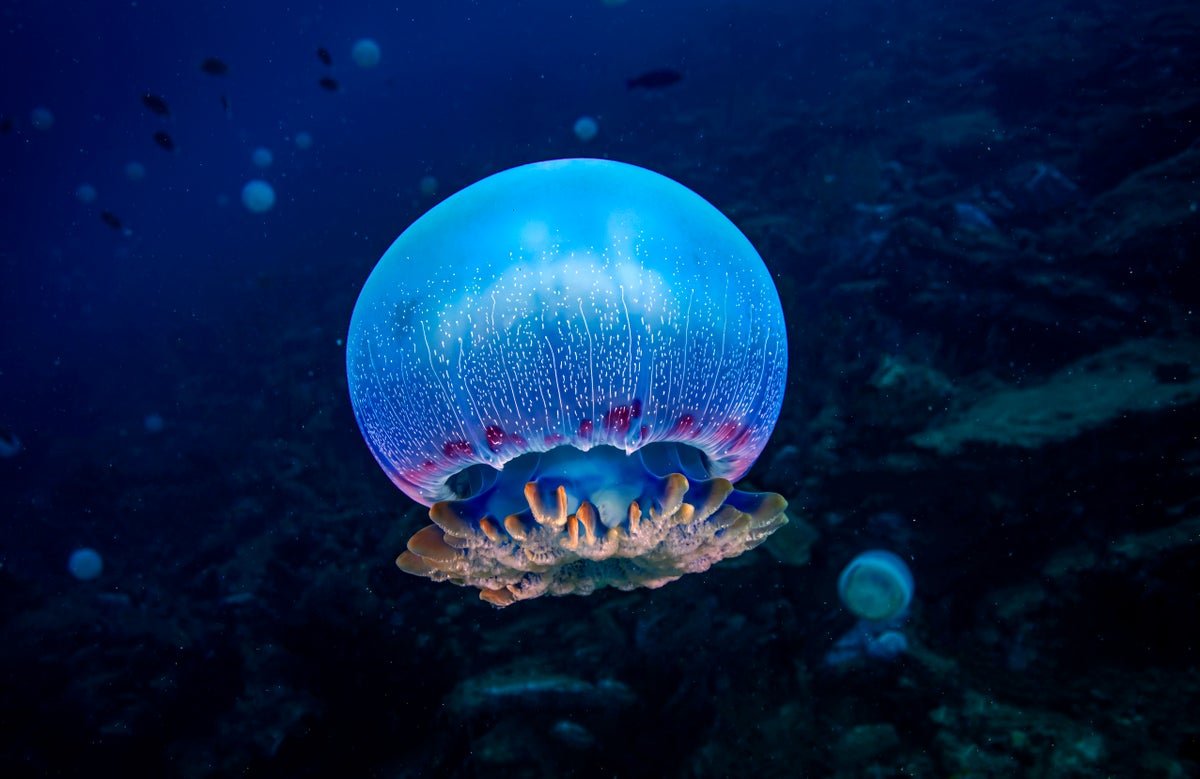
    Humberto Ramirez via Getty Images

    Share
    Facebook Twitter LinkedIn Pinterest Email

    January 8, 2026

    2 min read

    Add Us On GoogleAdd SciAm

    Jellyfish and Sea Anemones Sleep Just Like Us

    Sea anemones and jellyfish don’t have brains, but the way their neurons behave during sleep shows some surprising similarities to humans

    By Claire Cameron edited by Andrea Thompson

    Humberto Ramirez via Getty Images

    Jellyfish and sea anemones are curious creatures: these organisms evolved without a brain and, as scientists discovered only in the past few years, don’t need one to sleep. The animals do, however, have neurons—nerve cells that appear interconnected throughout their body. And now a new study shows that how these animals sleep is surprisingly similar to humans, suggesting that sleep may have evolved before even the most primitive brains.

    The findings, published on Tuesday in Nature Communications, also help answer one of science’s prevailing mysteries: Why do animals sleep? They add to past evidence from other animals and humans that sleep provides a “window” for maintenance on the brain and body, helping to repair DNA damage and maintain neuronal health.

    “This confirms that sleep allows a window for key housekeeping tasks,” says Philippe Mourrain, an associate professor of psychiatry and behavioral sciences at Stanford University, who studies sleep. Mourrain was not involved in the new study.

    On supporting science journalism

    If you’re enjoying this article, consider supporting our award-winning journalism by subscribing. By purchasing a subscription you are helping to ensure the future of impactful stories about the discoveries and ideas shaping our world today.

    The new work shows this function of sleep has been conserved across evolution, he says, from the animals, such as primates, that have one of the most complex brains to cnidarians, such as jellyfish, which have none.

    Curiously, the study finds that jellyfish appear to enter a sleeplike state for around eight hours a day and generally at night—a schedule many humans might recognize. Sea anemones also appear to sleep for around a third of the day.

    The researchers also showed that when these animals’ neurons incurred additional damage induced by the team they slept more, a finding that Mourrain says gives clues to what makes us fall asleep in the first place.

    It’s Time to Stand Up for Science

    If you enjoyed this article, I’d like to ask for your support. Scientific American has served as an advocate for science and industry for 180 years, and right now may be the most critical moment in that two-century history.

    I’ve been a Scientific American subscriber since I was 12 years old, and it helped shape the way I look at the world. SciAm always educates and delights me, and inspires a sense of awe for our vast, beautiful universe. I hope it does that for you, too.

    If you subscribe to Scientific American, you help ensure that our coverage is centered on meaningful research and discovery; that we have the resources to report on the decisions that threaten labs across the U.S.; and that we support both budding and working scientists at a time when the value of science itself too often goes unrecognized.

    In return, you get essential news, captivating podcasts, brilliant infographics, can’t-miss newsletters, must-watch videos, challenging games, and the science world’s best writing and reporting. You can even gift someone a subscription.

    There has never been a more important time for us to stand up and show why science matters. I hope you’ll support us in that mission.

    Anemones jellyfish sea Sleep
    Share. Facebook Twitter Pinterest LinkedIn Tumblr Email
    Previous ArticleRevealed: the crypto entrepreneur linked to illegal weight-loss drug operation | Weight-loss drugs
    Next Article Videos Contradict Trump Administration Account of ICE Shooting in Minneapolis
    onlyplanz_80y6mt
    • Website

    Related Posts

    Mining made this US tribal area a toxic wasteland. This Indigenous nation brought it back to life | Native Americans

    March 15, 2026

    How a ‘vacuum cleaner turned the other way’ became a popular solution to snoring disorders | Sleep

    March 15, 2026

    Scientists revive activity in frozen mouse brains for the first time

    March 15, 2026
    Add A Comment
    Leave A Reply Cancel Reply

    Top Posts

    Watch Lady Gaga’s Perform ‘Vanish Into You’ on ‘Colbert’

    September 9, 20251 Views

    Advertisers flock to Fox seeking an ‘audience of one’ — Donald Trump

    July 13, 20251 Views

    A Setback for Maine’s Free Community College Program

    June 19, 20251 Views
    Stay In Touch
    • Facebook
    • YouTube
    • TikTok
    • WhatsApp
    • Twitter
    • Instagram
    Latest Reviews

    At Chile’s Vera Rubin Observatory, Earth’s Largest Camera Surveys the Sky

    By onlyplanz_80y6mtJune 19, 2025

    SpaceX Starship Explodes Before Test Fire

    By onlyplanz_80y6mtJune 19, 2025

    How the L.A. Port got hit by Trump’s Tariffs

    By onlyplanz_80y6mtJune 19, 2025

    Subscribe to Updates

    Get the latest tech news from FooBar about tech, design and biz.

    Most Popular

    Watch Lady Gaga’s Perform ‘Vanish Into You’ on ‘Colbert’

    September 9, 20251 Views

    Advertisers flock to Fox seeking an ‘audience of one’ — Donald Trump

    July 13, 20251 Views

    A Setback for Maine’s Free Community College Program

    June 19, 20251 Views
    Our Picks

    The Guardian view on weight-loss jabs and addiction: there is too much moralising about these remarkable medicines | Editorial

    Beyond the strait: why attacks on Kargh Island could keep oil prices high | Oil

    Mining made this US tribal area a toxic wasteland. This Indigenous nation brought it back to life | Native Americans

    Recent Posts
    • The Guardian view on weight-loss jabs and addiction: there is too much moralising about these remarkable medicines | Editorial
    • Beyond the strait: why attacks on Kargh Island could keep oil prices high | Oil
    • Mining made this US tribal area a toxic wasteland. This Indigenous nation brought it back to life | Native Americans
    • Row over tuition fees cut for European students threatens Starmer’s EU reset | Brexit
    • How a ‘vacuum cleaner turned the other way’ became a popular solution to snoring disorders | Sleep
    © 2026 naijaglobalnews. Designed by Pro.
    • About Us
    • Disclaimer
    • Get In Touch
    • Privacy Policy
    • Terms and Conditions

    Type above and press Enter to search. Press Esc to cancel.