

Good morning and welcome to FirstFT Asia. In today’s newsletter:
Goldman stops Hong Kong bankers from using Claude
Oil tops $120 as Trump signals extended Hormuz stand-off
Apple’s next CEO confronts break from China playbook
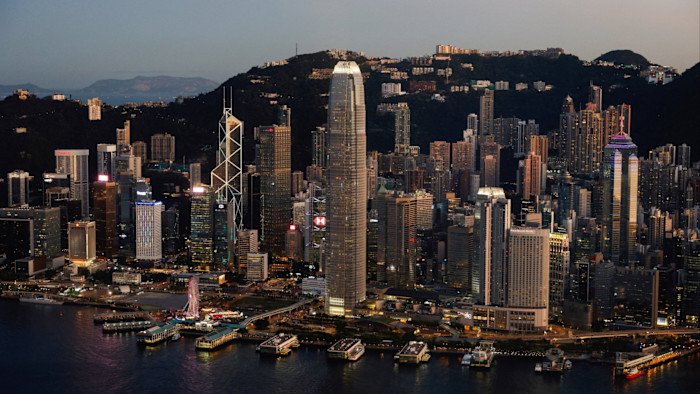
We begin in Hong Kong, where Goldman Sachs has stopped its bankers from using Anthropic’s AI models, in the latest sign of how the emerging technology is brushing up against US-China tensions.
What we know: Employees of the Wall Street bank in the Chinese territory were unable to access Claude models either directly or via the in-house AI platforms as of a few weeks ago, according to four sources familiar with the situation. The new curb came as a result of the US bank taking a strict interpretation of its contract with Anthropic following a consultation with the Silicon Valley start-up, said one person familiar with Goldman’s move.
Western AI models such as OpenAI’s ChatGPT and Claude are banned in mainland China as part of the so-called Great Firewall. But Hong Kong has long operated mostly outside of Chinese censors and restrictions on usage are imposed by the US AI companies themselves.
What’s at stake? American AI companies are wary of usage of their models in China in part due to the threat of “distillation” in which local actors could train new models through intensive usage of foreign ones.
The new curb on Goldman bankers’ usage of Claude could also represent a challenge for Hong Kong as a revived financial and knowledge hub if employees, especially those who use Claude for coding and financial modelling, are unable to access the most advanced models and risk falling behind other teams or organisations.
Read more about Goldman’s new AI restrictions in Hong Kong.
Tech earnings: Meta signalled further plans to boost its spending on AI this year, ending its shares about 5 per cent lower, while Google, Microsoft and Amazon reported strong cloud computing growth. Follow the Big Tech results with our live blog.
Beijing’s tech intervention: China’s abrupt order to Meta to unwind its $2bn deal for an emerging AI champion has made clear the growing power of a Mao-era regulator.
Here’s what else we’re keeping tabs on today:
Economic data: Japan reports March industrial production and retail sales figures. Taiwan publishes first-quarter GDP data.
Results: Apple, Samsung and SK Hynix report earnings.
Five more top stories
1. Brent crude oil surged to its highest price since 2022 after Donald Trump said he did “not want to” end his blockade of the Strait of Hormuz, deepening a global energy crisis triggered by the US war in Iran. The global oil benchmark rose as much as 8.1 per cent to $120.27 a barrel in its eighth consecutive session of gains, the longest streak in almost four years.
Costs of war: Trump’s Iran war has cost the US $25bn, driven primarily by the military’s use of munitions, according to the Pentagon.
2. Investors are betting on a prolonged boom for memory chipmakers amid voracious AI demand that has prompted customers to lock in multiyear contracts with SK Hynix and Samsung Electronics. Hynix said the “structural shift” differs from past booms because customers are prioritising security of supplies over price amid an acute shortage.
3. Elon Musk told a jury yesterday that he was “a fool” to provide initial funding for OpenAI, claiming he believed the $850bn ChatGPT maker would remain a non-profit organisation. The billionaire was testifying in federal court in Oakland, California, as the first witness in his lawsuit against Sam Altman, OpenAI and its largest shareholder Microsoft.
4. A Chinese wind turbine maker has accused the UK of “politicisation” in its decision to ban its products from being used in the country. The UK government ruled last month that Ming Yang Smart Energy could not deploy its products in offshore projects in the country, citing national security concerns.
Related news: Dependence on Chinese green technology is making European countries vulnerable to national security risks, new research warns.
5. A Chinese sovereign wealth fund is considering a sale of its stake in Heathrow airport partly over concerns about the rising cost of developing a third runway at the London hub. The Chinese Investment Corporation, which is backed by Beijing, has put its 10 per cent stake in Heathrow on “active watch” and is mulling a sale.
News in-depth
Mamata Banerjee, centre, chief minister of West Bengal © Subrata Biswas/FT
For 15 years, chief minister Mamata Banerjee has led one of India’s biggest states, West Bengal, where she has defied the Hindu nationalist policies of Prime Minister Narendra Modi and his Bharatiya Janata Party. But analysts say support for the BJP is rising in Banerjee’s hometown of Kolkata, where Modi is hoping to seize the commercial and cultural capital in this month’s state assembly election.
We’re also reading . . .
Apple’s China strategy: Rising memory costs and Trump’s pressure to invest in US manufacturing will force the incoming chief executive to make tough early decisions.
A banker’s $52mn coup: After years of complaints, JPMorgan told Vis Raghavan he was out of a job. Three days later, Citi hired him.
Australia’s blood bank: In the wake of the Bondi Beach massacre last year, a shortage of blood donors became startlingly clear, writes Nic Fildes.
Chart of the day
Emerging market stocks have recovered all of their losses from the early stages of the Iran war to hit an all-time high, as a dizzying rally for a handful of Asian chipmaking giants underscores the tech sector’s growing sway over the asset class.
Take a break from the news . . .
Robotaxis have in recent years benefited from broader advances in artificial intelligence, allowing autonomous vehicles to “generalise” their experiences to new cities and situations — and even to predict a pedestrian’s next steps.
