

Unlock the Editor’s Digest for free
Roula Khalaf, Editor of the FT, selects her favourite stories in this weekly newsletter.
The one thing that unites South Africans of all colours is the Springboks rugby team. Such is their dominance of the sport — last month in Cardiff they trounced Wales 73-0 — that South Africans say their reserve squad could beat most international sides.
Many fans put success down to rugby’s evolution from a white-only sport to a genuinely multiracial endeavour. South African rugby has been so “transformed” — a word the African National Congress uses to mean overcoming the grim legacy of apartheid — that affirmative action is no longer necessary. A squad, picked purely on merit, is automatically multiracial.
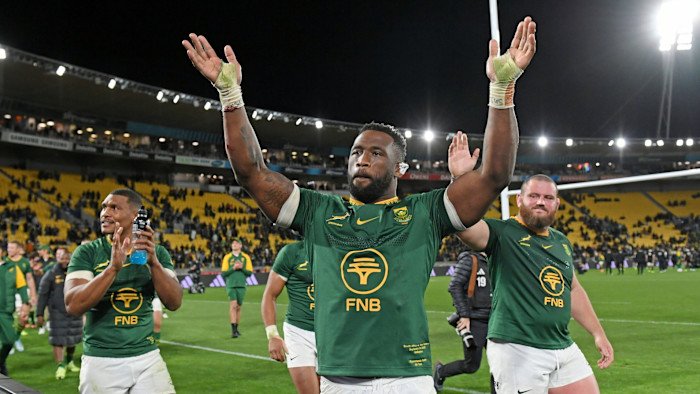
The Springboks’ most celebrated players include Siya Kolisi, the inspirational captain, who is Black and from an impoverished township in the Eastern Cape. Sacha Feinberg-Mngomezulu, the brilliant fly-half, has a Zulu mother and a father of Jewish heritage. The 50-plus member squad named this year by Johan “Rassie” Erasmus, the Afrikaner head coach who has led the team to successive World Cup victories, contains players from South Africa’s Black, white and so-called Coloured communities.
The Springboks are a case study of what successful Black empowerment looks like. Where once players were selected from among 4.5mn white people, today they are drawn from the entirety of South Africa’s 65mn population.
“It’s almost an idealised image of the South Africa that Nelson Mandela dreamt of, which in all other respects has fallen catastrophically short,” John Carlin, author of the book Playing the Enemy that became the film Invictus about the 1995 World Cup victory, told me.
Carlin relates the story of how Mandela got South Africa’s Black majority behind a team that had once epitomised white privilege. Instead of shunning the Springboks — many in the ANC wanted to change their name to the Proteas after the King Protea, a national flower — he embraced them, pulling on the green jersey in an inspired act of nation building.
What have the Springboks got right that South Africa has got wrong? One way of answering this question is to look through the prism of Black Economic Empowerment, a set of policies instituted by the ANC to try to right the wrongs of apartheid by expanding access to jobs, skills and business ownership.
In the post-apartheid period, such positive discrimination was both morally and strategically necessary. Without the safety valve of an opportunity to lift themselves up, South Africans’ commitment to capitalism and institutions such as an independent central bank would have quickly disintegrated.
BEE helped create a sizeable Black middle class. But it has palpably failed to transform the country into a merit-based economy in which people of all races can compete on a level playing field. Inequality as measured by the Gini coefficient is as stark as it was under apartheid. Unemployment among the country’s Black youth is above 60 per cent. Not much in the way of empowerment there.
BEE has done better at creating niche winners than it has at spreading opportunity. The mining industry, through strong equity transfer laws, has created several Black billionaires in rand terms. But foreign investment in mining has shrivelled.
Elon Musk is wrong to call positive discrimination “openly racist” given South Africa’s history. But the practical impact of a requirement that his Starlink company relinquish 30 per cent of its equity to Black ownership is he does not invest, depriving ordinary South Africans, especially in rural communities, of transformational technology.
Rules on procurement that favour Black-owned businesses have also spawned inefficiencies by creating a raft of intermediaries whose main function is to add a mark-up. That has bled into outright corruption as a class of “tenderpreneurs” fleece the taxpayer for their own enrichment.
Tellingly, many ordinary South Africans have wised up to the system’s abuses, even though it is implemented in their name. A recent poll found that a majority believes BEE has “gone far enough” and should be phased out.
South African rugby has done a better job. It has benefited from a 20-year sports ministry plan to spot and nurture talent. Teams of scouts scour the country, including the Black townships, looking for raw potential. Young players can hone their skills through scholarships to the schools that excel in rugby.
Contrast that with the state education system, perhaps the ANC’s biggest catastrophe, which has failed in its duty to mould generations of skilled South Africans ready to take their place in a competitive workforce.
The quality of rugby during the apartheid period was high. The trick the Springboks have pulled off is to make it even better. During apartheid, there were also pockets of economic excellence, albeit ones born of self-sufficiency in the face of sanctions and serving only a fraction of the population. But rather than building on these, the tendency post-1994 has been to run them into the ground.
david.pilling@ft.com
