
Close Menu

    Subscribe to Updates

    Get the latest creative news from FooBar about art, design and business.

    What's Hot

    Southern Oregon Gets Help, Portland State Plans to Cut

    Oil shock, nuclear doubts, climate‑change-driven hail, and new insights on the aging-gut-brain connection

    More than 100 Labour MPs call on PM to stop assisted dying bill being blocked | Assisted dying

    Facebook X (Twitter) Instagram
    Facebook X (Twitter) YouTube LinkedIn
    Naija Global News |
    Monday, March 16
    • Business
    • Health
    • Politics
    • Science
    • Sports
    • Education
    • Social Issues
    • Technology
    • More
      • Crime & Justice
      • Environment
      • Entertainment
    Naija Global News |
    You are at:Home»Science»Bizarre Ecosystem Discovered More Than Two Miles beneath Arctic Ocean
    Science

    Bizarre Ecosystem Discovered More Than Two Miles beneath Arctic Ocean

    onlyplanz_80y6mtBy onlyplanz_80y6mtDecember 25, 2025004 Mins Read
    Share Facebook Twitter Pinterest LinkedIn Tumblr Email
    Bizarre Ecosystem Discovered More Than Two Miles beneath Arctic Ocean

    UiT / Ocean Census / REV Ocean

    Share
    Facebook Twitter LinkedIn Pinterest Email

    December 25, 2025

    2 min read

    Add Us On GoogleAdd SciAm

    Bizarre Ecosystem Discovered More Than Two Miles beneath Arctic Ocean

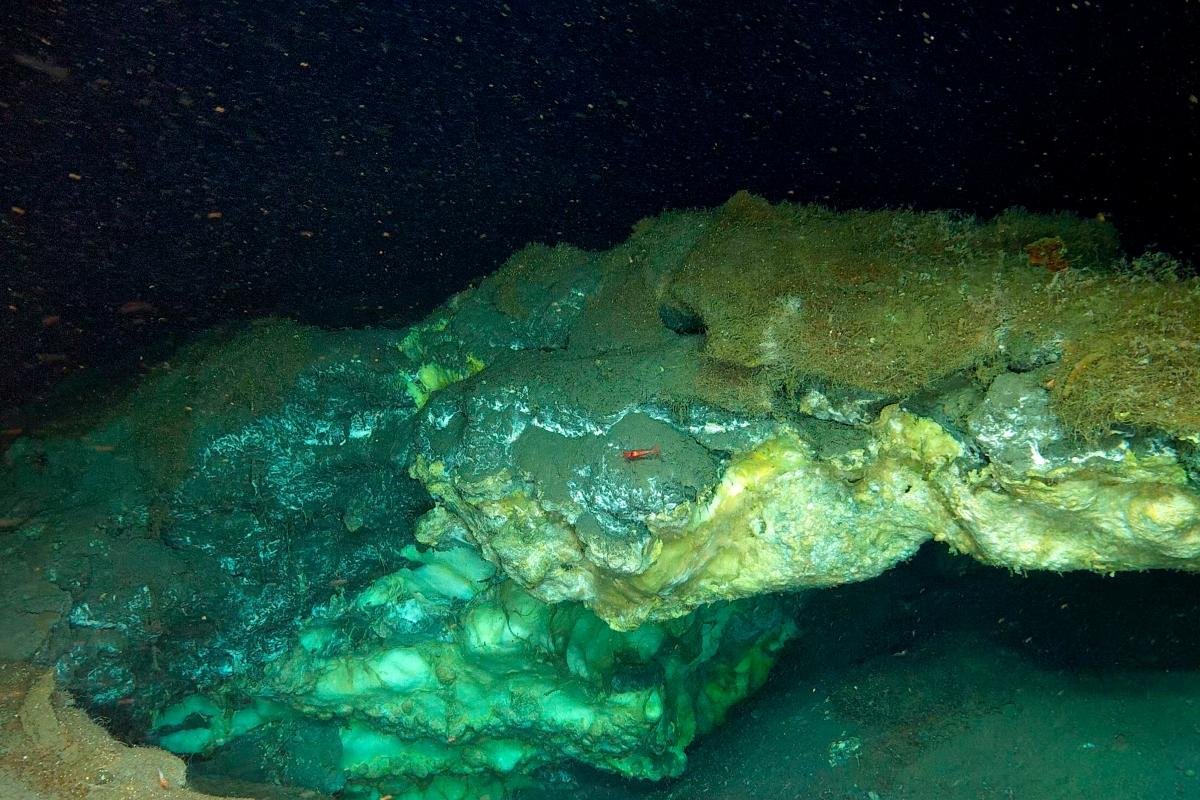
    Dynamic mounds made of methane at a depth of some 3,640 meters act like “frozen reefs” for a bizarre array of deep-sea creatures, new observations reveal

    By Claire Cameron edited by Jeanna Bryner

    UiT / Ocean Census / REV Ocean

    Deep down in the Arctic Ocean, life becomes bizarre. One might suppose that at its greatest depths, the icy, dark water would be inhospitable to much—but a new discovery reminds us that that is far from the case.

    Off the coast of Greenland, the deep seafloor is littered with towering mounds made of crystallized methane and other gases. Known as the Freya hydrate mounds, these structures act like a “frozen reef,” a haven for creatures that have evolved to live in environments unlike any other on Earth.

    In a new paper published in Nature Communications, scientists document the deepest ever found of these mounds, at 3,640 meters—or some 2.26 miles—below the surface. The discovery was made as part of the Ocean Census Arctic Deep–EXTREME24 expedition to explore and research the Arctic environment and document ocean life using tools such as underwater robots.

    On supporting science journalism

    If you’re enjoying this article, consider supporting our award-winning journalism by subscribing. By purchasing a subscription you are helping to ensure the future of impactful stories about the discoveries and ideas shaping our world today.

    Incredibly, the mounds, which are also known as gas hydrate cold seeps, release methane gas flares some 3,300 meters up into the water—the tallest such flares ever recorded. Over time the mounds collapse and reform, a dynamic process that the researchers say gives insights into the Arctic’s various ecosystems.

    UiT / Ocean Census / REV Ocean

    “These are not static deposits,” Giuliana Panieri, a study co-author and a professor at the Arctic University of Norway, said in a statement about the new research. “They are living geological features, responding to tectonics, deep heat flow, and environmental change.”

    Gathered at the mounds are chemosynthetic creatures—life that has evolved to depend not on sun-powered photosynthesis for food but on chemical reactions instead. Some of the creatures seen at the Freya mounds are also found at hydrothermal vents, or fissures in the seafloor through which hot, chemical-laden water erupts, the researchers said, suggesting these ecosystems may be more intertwined than previously thought.

    “The links that we have found between life at this seep and hydrothermal vents in the Arctic indicate that these island-like habitats on the ocean floor will need to be protected from any future impacts of deep-sea mining in the region,” said Jon Copley, a study co-author and a professor at the University of Southampton in England, in the same statement.

    It’s Time to Stand Up for Science

    If you enjoyed this article, I’d like to ask for your support. Scientific American has served as an advocate for science and industry for 180 years, and right now may be the most critical moment in that two-century history.

    I’ve been a Scientific American subscriber since I was 12 years old, and it helped shape the way I look at the world. SciAm always educates and delights me, and inspires a sense of awe for our vast, beautiful universe. I hope it does that for you, too.

    If you subscribe to Scientific American, you help ensure that our coverage is centered on meaningful research and discovery; that we have the resources to report on the decisions that threaten labs across the U.S.; and that we support both budding and working scientists at a time when the value of science itself too often goes unrecognized.

    In return, you get essential news, captivating podcasts, brilliant infographics, can’t-miss newsletters, must-watch videos, challenging games, and the science world’s best writing and reporting. You can even gift someone a subscription.

    There has never been a more important time for us to stand up and show why science matters. I hope you’ll support us in that mission.

    Arctic beneath Bizarre Discovered ecosystem miles Ocean
    Share. Facebook Twitter Pinterest LinkedIn Tumblr Email
    Previous ArticleRescue helicopter crashes, killing five on Tanzania’s Mount Kilimanjaro | Transport News
    Next Article Inside the US’s psychedelic church boom, where taking drugs is legal | Drugs
    onlyplanz_80y6mt
    • Website

    Related Posts

    Oil shock, nuclear doubts, climate‑change-driven hail, and new insights on the aging-gut-brain connection

    March 16, 2026

    Can you solve it? Are you a match for the dinkiest mag in maths?

    March 16, 2026

    Little liars: babies younger than one practise deceit, study suggests | Children

    March 16, 2026
    Add A Comment
    Leave A Reply Cancel Reply

    Top Posts

    Watch Lady Gaga’s Perform ‘Vanish Into You’ on ‘Colbert’

    September 9, 20251 Views

    Advertisers flock to Fox seeking an ‘audience of one’ — Donald Trump

    July 13, 20251 Views

    A Setback for Maine’s Free Community College Program

    June 19, 20251 Views
    Stay In Touch
    • Facebook
    • YouTube
    • TikTok
    • WhatsApp
    • Twitter
    • Instagram
    Latest Reviews

    At Chile’s Vera Rubin Observatory, Earth’s Largest Camera Surveys the Sky

    By onlyplanz_80y6mtJune 19, 2025

    SpaceX Starship Explodes Before Test Fire

    By onlyplanz_80y6mtJune 19, 2025

    How the L.A. Port got hit by Trump’s Tariffs

    By onlyplanz_80y6mtJune 19, 2025

    Subscribe to Updates

    Get the latest tech news from FooBar about tech, design and biz.

    Most Popular

    Watch Lady Gaga’s Perform ‘Vanish Into You’ on ‘Colbert’

    September 9, 20251 Views

    Advertisers flock to Fox seeking an ‘audience of one’ — Donald Trump

    July 13, 20251 Views

    A Setback for Maine’s Free Community College Program

    June 19, 20251 Views
    Our Picks

    Southern Oregon Gets Help, Portland State Plans to Cut

    Oil shock, nuclear doubts, climate‑change-driven hail, and new insights on the aging-gut-brain connection

    More than 100 Labour MPs call on PM to stop assisted dying bill being blocked | Assisted dying

    Recent Posts
    • Southern Oregon Gets Help, Portland State Plans to Cut
    • Oil shock, nuclear doubts, climate‑change-driven hail, and new insights on the aging-gut-brain connection
    • More than 100 Labour MPs call on PM to stop assisted dying bill being blocked | Assisted dying
    • Three-quarters of nine-month-olds in England have ‘daily screen time’ | Children’s health
    • Can you solve it? Are you a match for the dinkiest mag in maths?
    © 2026 naijaglobalnews. Designed by Pro.
    • About Us
    • Disclaimer
    • Get In Touch
    • Privacy Policy
    • Terms and Conditions

    Type above and press Enter to search. Press Esc to cancel.