

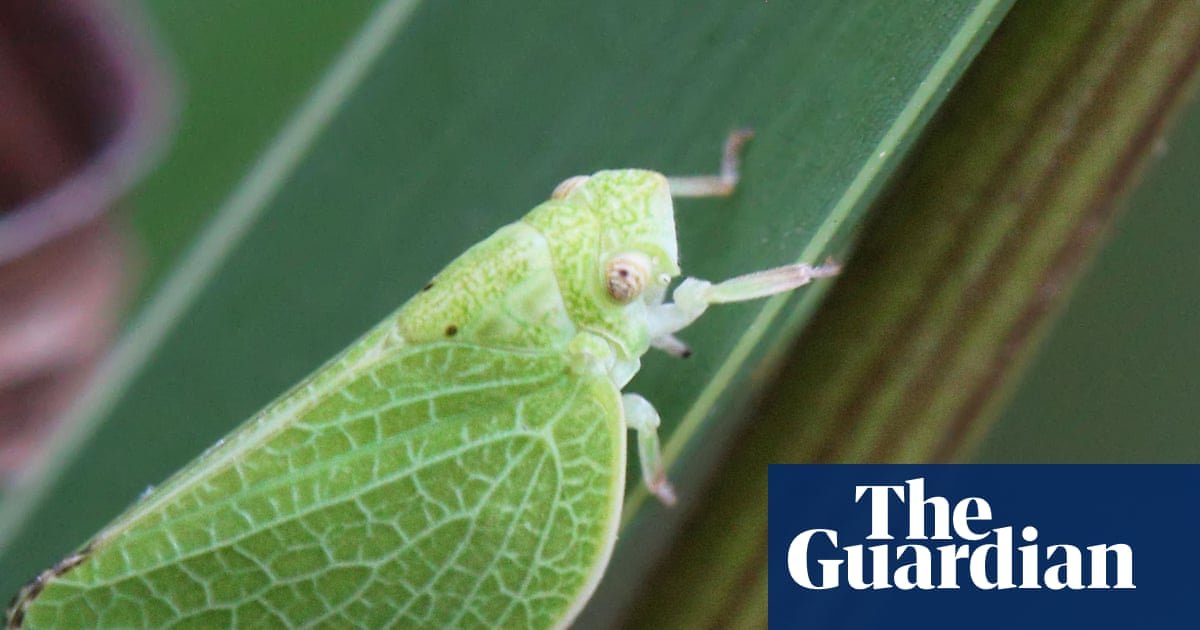
The destruction of food supplies by crop pests is being supercharged by the climate crisis, with losses expected to surge, an analysis has concluded.
Researchers said the world was lucky to have so far avoided a major shock and was living on borrowed time, with action needed to diversify crops and boost natural predators of pests.
The key global crops, wheat, rice and maize, are expected to see the losses to pests increase by about 46%, 19% and 31% respectively when global heating reaches 2C, the scientists said.
Global heating is helping insects such as aphids, planthoppers, stem borers, caterpillars and locusts thrive. Greater warmth enables pests to develop faster, produce more generations each year and attack crops for longer as winters shorten. Rising temperatures are also helping pests invade places further from the equator and on higher ground that were previously too cold.
As a result, the climate-driven flourishing of pests will be worst in temperate places, such as Europe and the US, the researchers said. Temperatures may have already hit a limit for some insects in the tropics, they said, although the cutting of croplands into tropical forests is supporting more pests.
Pest movement is also being accelerated via food exports along global trade networks. In parallel, the destruction of natural habitats and heavy use of pesticides and fertilisers is crippling the natural predators of pests, while the expansion of farmland creates new areas for crop pests to infest.
Pests and diseases destroy about 40% of global crop production, “creating a major challenge for global food security”, the scientists said. The direct impact of the climate crisis on wheat, rice and maize is predicted to cut yields by 6-10% for every 1C of global heating.
“The world is focused on these major grains – wheat, rice, maize, soybean – and it’s a very simplified and vulnerable system,” said Prof Dan Bebber, from the University of Exeter, UK. Monocultures – large areas growing a single crop variety – could be wiped out by a single pest. “We’ve been lucky so far. But with the multiple threats of climate change and numerous pests and diseases, we need to start thinking about a resilient system to feed everyone.”
“The green revolution, with simplification, plant breeding, massive use of fertiliser and fungicide and pesticide, has saved millions of people from hunger,” he said. “But that was in a world where we weren’t warming rapidly, where pests and pathogens were only just starting their global journey, and where the negative impacts on soils and biodiversity weren’t coming back to bite us. We were living on borrowed time but we’re heading towards crunch time, and we need to do things differently.”
The analysis, published in the journal Nature Reviews Earth & Environment by Bebber and international colleagues, is a conservative assessment of the increased pest damage to crops due to the climate crisis as it focused on insects and key grain crops, and did not include microbial diseases, fungi and nematodes and the whole range of foods that are grown.
Crop pests have evolved alongside the plants they target, which provide high quality food sources, and can reproduce and disperse rapidly. They have often developed pesticide resistance.
Intensive agriculture’s use of fertilisers and irrigation boosts the quality and quantity of the plants, meaning crop pests are much less affected by the destruction of natural habitats which has seen many wild insect populations plummet.
Rising temperatures can cause sudden impacts, the analysis said, with small temperature rises allowing insects to produce another generation within a season. “When the Colorado potato beetle manages to get through another life cycle, that causes big problems,” said Bebber.
The climate crisis is increasing heat levels but also causing greater downpours of rain in places. These can wash away small pests, the analysis said, but the wetter conditions benefit the pests overall. First, as small creatures, insects are at high risk of drying out, and second, evaporation of rainwater cools the local environment, protecting them from heat.
The scientists said environmentally-friendly pest protection can be achieved by restoring natural habitats to boost the numbers of parasitic wasps and other natural pest predators.
“Our ever simpler agricultural systems are vulnerable but are maintained by fungicides and pesticides, which is OK as long as they work,” Bebber said. “But we’ve got the evolution of pesticide resistance and we’ve got to think hard now about whether we want to use diversification as a strategy to help make our systems more resilient.”
Diversification could also include growing different varieties of a crop together and integrating crop and animal farming. Examples of the latter include traditional systems in Japan where ducks eat the snails and insects that attack rice and in the UK where sheep grazing on winter wheat remove leaves affected by fungal disease.
The analysis also said that artificial intelligence can boost crop protection by analysing field and weather data to predict infestations and devise strategies to tackle them.
