
Close Menu

    Subscribe to Updates

    Get the latest creative news from FooBar about art, design and business.

    What's Hot

    Elon Musk’s SpaceX reportedly mulling a merger with xAI

    Map: 4.2-Magnitude Earthquake Shakes Montana

    Small risk of severe acute pancreatitis with weight-loss jabs, UK regulator warns | Weight-loss drugs

    Facebook X (Twitter) Instagram
    Facebook X (Twitter) YouTube LinkedIn
    Naija Global News |
    Thursday, January 29
    • Business
    • Health
    • Politics
    • Science
    • Sports
    • Education
    • Social Issues
    • Technology
    • More
      • Crime & Justice
      • Environment
      • Entertainment
    Naija Global News |
    You are at:Home»Environment»Growing Number of Satellites Will Leave Streaks on Photos from Space Telescopes
    Environment

    Growing Number of Satellites Will Leave Streaks on Photos from Space Telescopes

    onlyplanz_80y6mtBy onlyplanz_80y6mtDecember 5, 2025002 Mins Read
    Share Facebook Twitter Pinterest LinkedIn Tumblr Email
    Growing Number of Satellites Will Leave Streaks on Photos from Space Telescopes

     / 

    ← →

    Share
    Facebook Twitter LinkedIn Pinterest Email

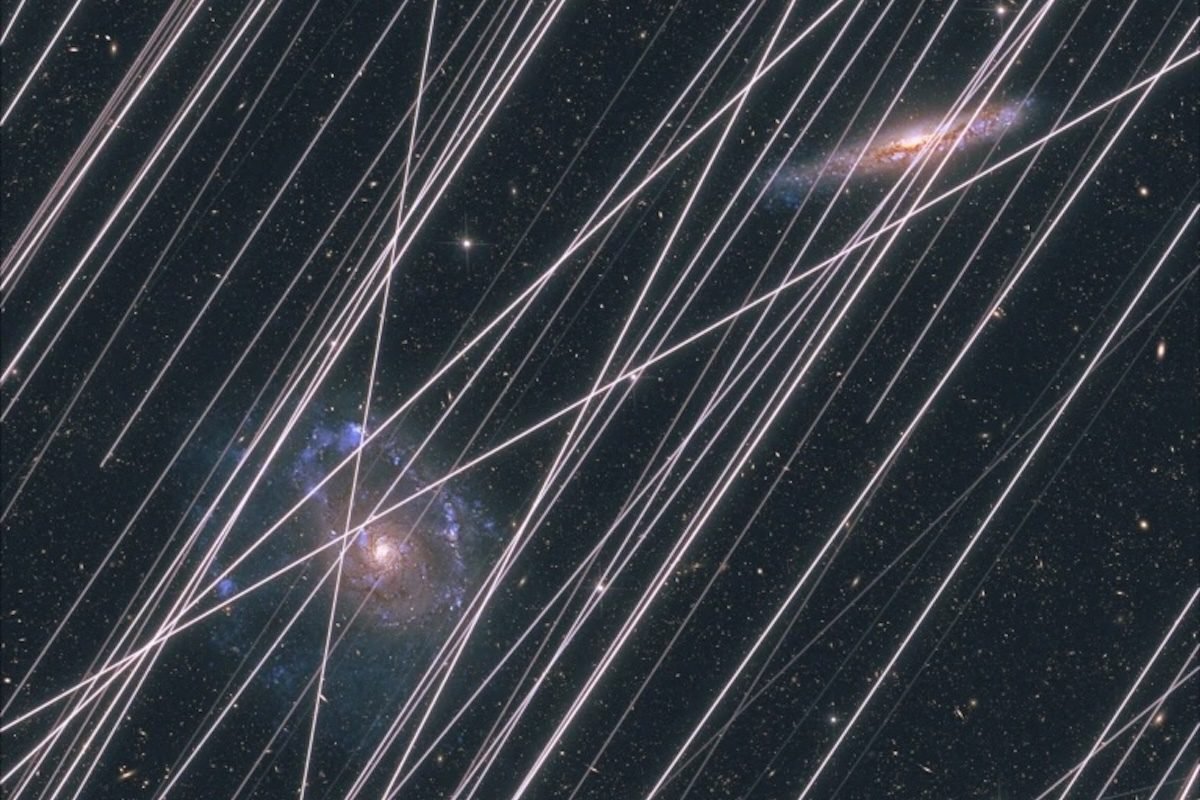
    The growing number of satellites overhead may soon obscure photos taken by the Hubble Space Telescope and other orbiting observatories. New research finds that passing satellites could leave streaks on up to 96 percent of images.

    Already, satellites are leaving streaks on photos taken using telescopes on Earth. Now, as SpaceX and other firms look to build out huge networks of communications satellites, the skies are set to grow far more crowded. A decade ago, there were around 1,200 active satellites orbiting the Earth. Today, there are roughly 12,000. Another 560,000 are currently planned for launch, researchers say.

    To understand what the satellite surge will mean for space observatories, researchers at NASA simulated the view from four telescopes in low-Earth orbit: the NASA observatories Hubble and SPHEREx, which are now in operation; China’s Xuntian Space Telescope, which will launch next year; and the E.U. ARRAKIHS mission, which is set to launch in 2030.

    With more than half a million satellites overhead, researchers found, streaks of light would taint between 40 percent and 96 percent of photos. They note that a single photo could be marked by as many as 92 streaks. The findings were published in Nature.

    While it is unlikely that every planned launch will take place, scientists warn that the growing number of satellites will produce poorer imagery, fewer discoveries, and may obscure views of asteroids headed for Earth. “If your images look like they’re filled with asteroids, it’s very possible that you’ll miss a real one,” lead author Alejandro Borlaff, an astrophysicist at the NASA Ames Research Center, told Nature.

    The growing number of satellites also poses other risks. As Yale Environment 360 recently reported, scientists are increasingly concerned about emissions from rocket launches and from payloads burning up as they fall back to Earth. “Both of these processes are producing pollutants that are being injected into just about every layer of the atmosphere,” Eloise Marais, an atmospheric scientist at University College London, told e360.

    ALSO ON YALE E360

    Scientists Warn of Emissions Risks from the Surge in Satellites

    Growing leave Number Photos satellites space Streaks telescopes
    Share. Facebook Twitter Pinterest LinkedIn Tumblr Email
    Previous ArticleFantasy Football 2025 Week 14 DFS lineups
    Next Article Netflix agrees $83bn takeover of Warner Bros Discovery
    onlyplanz_80y6mt
    • Website

    Related Posts

    Elon Musk’s SpaceX reportedly mulling a merger with xAI

    January 29, 2026

    Organic salmon certifier forced to share findings amid claims consumers misled | Food

    January 29, 2026

    Polar Bears Are Thriving on This Arctic Island, Even as Sea Ice Dwindles

    January 29, 2026
    Add A Comment
    Leave A Reply Cancel Reply

    Top Posts

    Watch Lady Gaga’s Perform ‘Vanish Into You’ on ‘Colbert’

    September 9, 20251 Views

    Advertisers flock to Fox seeking an ‘audience of one’ — Donald Trump

    July 13, 20251 Views

    A Setback for Maine’s Free Community College Program

    June 19, 20251 Views
    Stay In Touch
    • Facebook
    • YouTube
    • TikTok
    • WhatsApp
    • Twitter
    • Instagram
    Latest Reviews

    At Chile’s Vera Rubin Observatory, Earth’s Largest Camera Surveys the Sky

    By onlyplanz_80y6mtJune 19, 2025

    SpaceX Starship Explodes Before Test Fire

    By onlyplanz_80y6mtJune 19, 2025

    How the L.A. Port got hit by Trump’s Tariffs

    By onlyplanz_80y6mtJune 19, 2025

    Subscribe to Updates

    Get the latest tech news from FooBar about tech, design and biz.

    Most Popular

    Watch Lady Gaga’s Perform ‘Vanish Into You’ on ‘Colbert’

    September 9, 20251 Views

    Advertisers flock to Fox seeking an ‘audience of one’ — Donald Trump

    July 13, 20251 Views

    A Setback for Maine’s Free Community College Program

    June 19, 20251 Views
    Our Picks

    Elon Musk’s SpaceX reportedly mulling a merger with xAI

    Map: 4.2-Magnitude Earthquake Shakes Montana

    Small risk of severe acute pancreatitis with weight-loss jabs, UK regulator warns | Weight-loss drugs

    Recent Posts
    • Elon Musk’s SpaceX reportedly mulling a merger with xAI
    • Map: 4.2-Magnitude Earthquake Shakes Montana
    • Small risk of severe acute pancreatitis with weight-loss jabs, UK regulator warns | Weight-loss drugs
    • Organic salmon certifier forced to share findings amid claims consumers misled | Food
    • White House Border Czar Asks Minnesota for More Access to Jails
    © 2026 naijaglobalnews. Designed by Pro.
    • About Us
    • Disclaimer
    • Get In Touch
    • Privacy Policy
    • Terms and Conditions

    Type above and press Enter to search. Press Esc to cancel.