

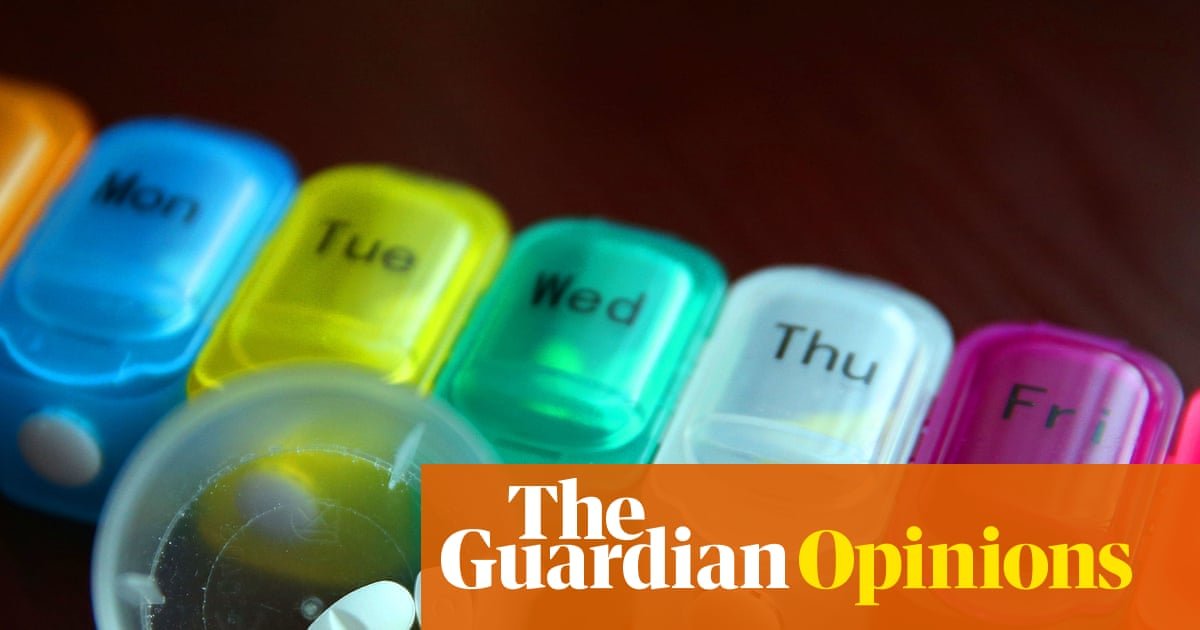
“I thought I was never supposed to come off these tablets!” my patient exclaims.
“Except when you no longer need them,” I say.
“Are you sure?”
His doubt drifts in like fog.
His advanced cancer has long had him feeling out of sorts – and, in his late 80s, he yearns for quality of life.
At diagnosis, my patient was taking an astonishing 17 pills a day. The original culprits were those taken for heart disease, diabetes, stroke, gout, reflux and anxiety. When he developed cancer, new doctors threw in extra drugs. Whenever he was admitted with a complication, other doctors added more.
The discharge summary might have said “GP to review” but my hapless patient barely makes it to his GP – and when he does, the GP assumes that the specialists have things in hand.
His daughter and chief gatekeeper furnishes a list of medications – now 25 pills a day – and the dismay on my face is obvious.
“By the time I swallow my tablets, I feel too full to eat,” the patient announces morosely.
It’s no wonder he feels full and confused. A cursory glance reveals that most of his drugs are no longer relevant and, moreover, potentially harmful.
Given his significant weight loss and dizziness, the multiple antihypertensives can go. With a limited life expectancy, the statin is useless. Factoring in his increasing falls, the blood thinner has crossed into risky territory, especially alongside the diabetes drugs plunging his blood sugars.
He suffered anxiety many years ago when his grandson was sick – now, the drug is not only redundant but harmful. His last episode of gout was decades ago, precipitated by too much alcohol. The same goes for his reflux. As for his supplements, most are useless.
When we look at the indication for every pill, his daughter says wonderingly that she can’t recall anyone going into so much detail. The patient laughs at hearing that de-prescribing is a “thing”, saying he has only ever known doctors to prescribe.
De-prescribing refers to a structured, supervised process of stopping medications that are no longer necessary or beneficial. In an era of multiple chronic diseases, 40% of Australians over 75 take five or more medications – the very definition of polypharmacy, something experienced by 80% of nursing home residents.
Due to people living longer, more therapies and many prescribers, the number of older people exposed to polypharmacy is rising.
For some older people, medications work in concert for optimum health – this is a triumph of modern medicine. But as people grow frail or cognitively impaired, the story can change. It is an astonishing figure but the risk of an adverse drug event in elderly people increases from 13% for two drugs to over 80% for seven or more.
An estimated 250,000 hospital admissions in Australia are medication-related, two-thirds of them potentially avoidable. The annual cost to taxpayers is $1.4bn. Imagine how many aged care services that money could buy.
No doctor intends it and, certainly, no patient wants to incur harm from drugs meant for good. The missing link, then, is better doctor-patient communication over the continuum of healthcare and a shared understanding of care’s goals. For instance, a fit golfer might benefit from robust heart failure management which would be harmful for a terminally ill cancer patient. Tight blood sugar control might be a good idea at age 70 but not at 90.
The bulk of de-prescribing is likely to fall to GPs. It’s going to be difficult when patients see multiple specialists whose communication is inadequate. Treatment guidelines tell doctors when to prescribe but rarely specify when to stop.
Prescribing out of inertia seems particularly true of drugs for mental illness but also many others.
But to err on the side of caution and continue any medication indefinitely is the ultimate disservice to patients.
New guidelines seek to close this gap by providing de-prescribing recommendations for the 100 most prescribed drugs in Australia as well as general recommendations for de-prescribing. Each section contains valuable information on when and how to safely de-prescribe, meeting ongoing treatment needs and monitoring requirements. The writing is clear enough to be understood by patients, a necessary step in shared decision making.
The average older Australian collects 31 pharmaceutical benefits scheme scripts a year.
Here are some tips I give to all my patients.
Carry a list or better, take a photo with your phone of your current medications. Patients think the information should be on file but medical records vary in age and quality and the most reliable medication record is the one you bring in.
Ask your GP the following questions: what is this medication for? Do I still need it? What would happen if I stopped it? Is there a safe way to stop? Do I need to consult someone else? These questions should prompt a responsible prescriber to think: “Does the ongoing benefit outweigh the potential harm?”
People should know that there is a free government scheme for people over age 75 living at home or in residential care. The medication management review is initiated by the GP and conducted by a pharmacist who ensures that medications are safe, appropriately stored and not mixed up with those that are dangerous, expired or unnecessary. Ninety-five per cent of elders don’t use the program. Every eligible person should.
At first, my patient was sceptical about de-prescribing but gradually felt relieved to be taking fewer medications.
Like him, there are hundreds of thousands of people for whom less could be more. The next time you see your doctor, ask about de-prescribing.
