

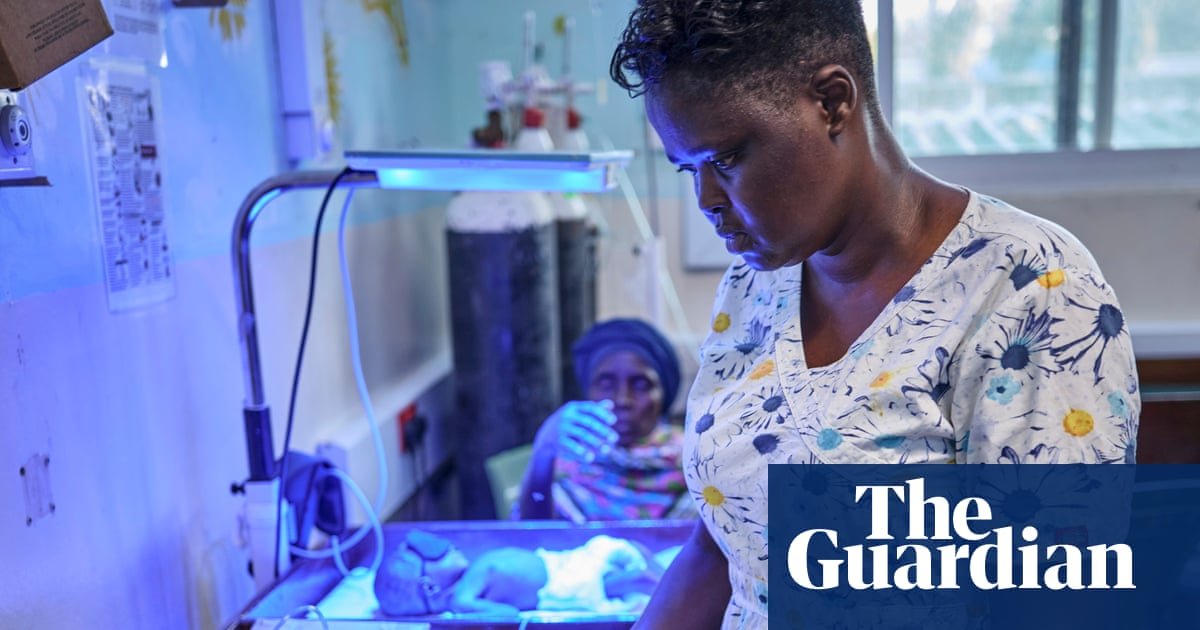
Just a few minutes from the turquoise waters of Kenya’s Kilifi Creek, a world away from the tourists enjoying their time on the estuary, a team of clinicians, technicians and microbiologists is helping to shape a new era of care for newborns.
NeoSep1 is a pioneering clinical trial that aims to identify effective and safe antibiotic combinations to treat sepsis in newborns. One of the centres leading the second phase of this study is the Kemri-Wellcome Trust Research Programme (KWTRP) in Kilifi.
Newborn babies are particularly vulnerable to sepsis, a life-threatening infection, because their underdeveloped immune systems struggle to fight off pathogens. Each year, neonatal sepsis is responsible for an estimated 800,000 deaths worldwide, while in Africa it accounts for 28% of all neonatal deaths.
Many of these newborns die because the antibiotics recommended for treating sepsis are no longer effective: the bugs have evolved and built up resistance over the years. Up to 214,000 neonatal deaths worldwide are caused by antimicrobial-resistant (AMR) infections.
A baby in the high-dependency unit in Kilifi. More than a quarter of deaths among newborn babies in Africa are due to sepsis
NeoSep1, led by the Global Antibiotic Research and Development Partnership (GARDP), aims to tackle this rising drug resistance by testing new combinations of existing antibiotics and comparing them with the regimens currently used to treat neonatal sepsis.
The goal is to minimise exposing babies to unnecessary antibiotics, because that is what ultimately drives resistanceChristina Obiero, investigator
A GARDP study in 2023 revealed that more than 200 different antibiotic combinations are being used to treat neonatal sepsis around the world. Sally Ellis, project leader of the children’s antibiotics programme at GARDP, says this variety of antibiotics “encourages bacteria to become resistant”.
At an early stage of the project, NeoSep1 research teams confirmed the correct dosages for three new combinations of existing antibiotics and identified five other regimens that are recommended to treat neonatal sepsis or used routinely in different hospitals around the world. In total, they narrowed the options down to eight.
Christina Obiero, principal investigator of the trial in Kilifi county hospital, says: “We were excited to find that the dosages we were using are safe and effective. In the second part of the trial, these treatments will be further used to treat sepsis in newborns.”
‘We were excited to find that the dosages we were using are safe and effective,’ says Christina Obiero
Ellis says the strategy of the study is to tackle the disease in several ways. “We aim to improve the dosing information of each antibiotic combination, identify the type of organisms that are causing the infection, and find potential or new treatment options,” she says.
Running in eight countries – South Africa, Kenya, Ghana, India, Bangladesh, Pakistan, Malaysia and Vietnam – the trial will enrol 3,000 babies by 2029, including 600 aged up to 28 days at three Kenyan clinics in Mombasa, Nairobi and Kilifi.
One of the most significant innovations of this work – developed by several international research partners – is the inclusion of two antibiotics that have been around for many years but have never been used in Africa to treat sepsis: fosfomycin and flomoxef.
“Those drugs were developed back in the 1970s and 1980s, respectively,” says Ellis. “Fosfomycin is widely used in Europe, mainly for urinary tract infections, but increasingly as part of combination therapies for difficult-to-treat infections. Flomoxef is also an older drug, used almost exclusively in east Asia.”
Peter Mwaura, a lab technician, in the process of identifying bacterial pathogens and performing drug sensitivity testing
Developing new antibiotics is expensive and slow, leaving few treatment options for newborns. “Now that fosfomycin and flomoxef are generic, they’re much more affordable. What we’re doing is repurposing them to treat sepsis,” says Obiero.
skip past newsletter promotion
Sign up to Global Dispatch
Get a different world view with a roundup of the best news, features, opinion and photography, curated by our global development team
Privacy Notice: Newsletters may contain information about charities, online ads, and content funded by outside parties. If you do not have an account, we will create a guest account for you on theguardian.com to send you this newsletter. You can complete full registration at any time. For more information about how we use your data see our Privacy Policy. We use Google reCaptcha to protect our website and the Google Privacy Policy and Terms of Service apply.
after newsletter promotion
Alexander Makazi, study coordinator of NeoSep1 at the Kenya Medical Research Institute (Kemri), says that to understand how the eight combinations – which include first- and second-line treatments, as well as newer options such as fosfomycin paired with flomoxef – reacted against different bacteria, “we exposed the bacteria to a panel of different antibiotics … If it was unable to spread, we knew that it was being killed by that specific drug.”
Immediate identification and administration of the appropriate treatment is one of the most critical tasks for the team at Kemri. Sepsis can develop suddenly and a newborn’s condition can deteriorate within seconds, making a rapid response and prompt initiation of antibiotics critical.
However, identifying which bacteria may be affecting a baby “can take about five days from the time the blood sample is taken until the laboratory obtains the results”, says Robert Mwakesi, manager of KWTRP’s lab, located next to the high-dependency unit at the Kilifi County hospital, where the babies are cared for by the medical team under the watchful eyes of their families.
Obiero says: “If we know exactly which bacteria are causing the infection and which treatment works best, we can act quickly and save more lives.”
In Africa, NeoSep1, part of a five-year project by a consortium of partners called Snip-Africa, is bringing together health professionals from multiple sectors working toward the same goal: ranking the eight antibiotic combinations to determine which are the most effective and safest for each newborn baby presenting with sepsis.
“Once we have the results of the ranking we aim to inform the World Health Organization and national governments to revise the existing guidelines,” says Obiero. “Beyond identifying the best option for each infection, the goal is also to minimise exposing babies to unnecessary antibiotics, because that is what ultimately drives resistance.”
Alexander Makazi says eight combinations of antibiotics are being tested on various bacteria and fungi
“If we achieve that, it is going to be a gamechanger,” adds Makazi, who recalls the relief he felt when one baby responded successfully to treatment for sepsis. “The look on the mother’s face when she saw the improvement in her sick baby – now strong enough to latch on to her breast – was incredibly moving,” he says.
“Moments like these remind us that our work is truly making a difference.”
