
Close Menu

    Subscribe to Updates

    Get the latest creative news from FooBar about art, design and business.

    What's Hot

    From ‘Ozempic breath’ to hair loss: sorting the science from the hype about weight loss jabs | Life and style

    How did your MP vote on the reintroduced assisted dying bill? | House of Commons

    Legionnaires’ disease outbreak kills one and infects others in the South Bronx | New York

    Facebook X (Twitter) Instagram
    Facebook X (Twitter) YouTube LinkedIn
    Naija Global News |
    Saturday, September 12
    • Business
    • Health
    • Politics
    • Science
    • Sports
    • Education
    • Social Issues
    • Technology
    • More
      • Crime & Justice
      • Environment
      • Entertainment
    Naija Global News |
    You are at:Home»Entertainment»Mohanad Yaqubi on Lebanese Filmmaker Jocelyne Saab
    Entertainment

    Mohanad Yaqubi on Lebanese Filmmaker Jocelyne Saab

    onlyplanz_80y6mtBy onlyplanz_80y6mtNovember 22, 2025004 Mins Read
    Share Facebook Twitter Pinterest LinkedIn Tumblr Email
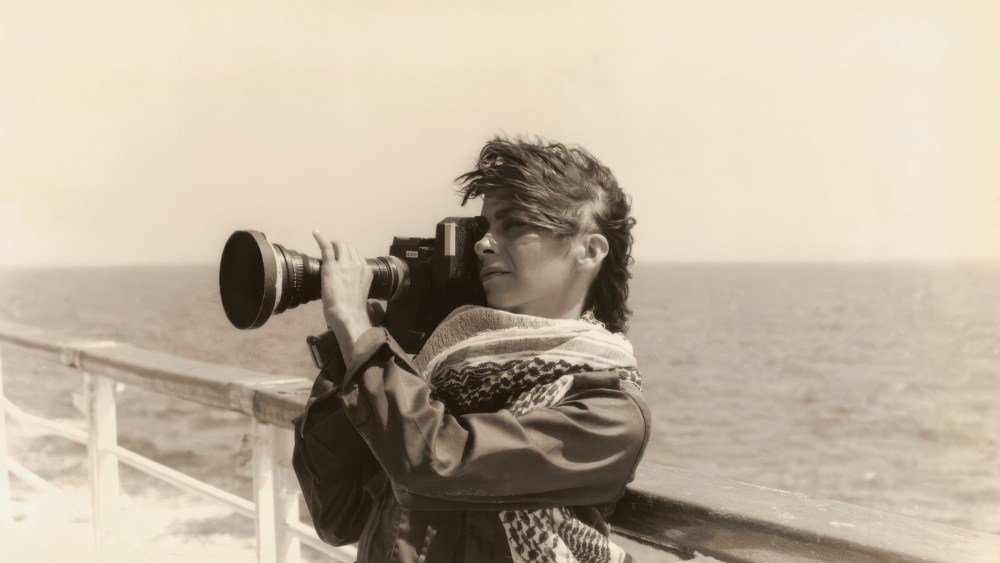
    Mohanad Yaqubi on Lebanese Filmmaker Jocelyne Saab
    "Revolutionaries Never Die" (Courtesy of Idioms Film)
    Share
    Facebook Twitter LinkedIn Pinterest Email

    “Revolutionaries Never Die” was the winner of the top award at this year’s Cairo Film Connection, the industry program of the Cairo Film Festival. Variety interviewed the Palestinian director Mohanad Yaqubi, who won the best project in post-production prize.

    “Revolutionaries Never Die,” which is produced by Yaqubi’s company Idioms Film, is his third archive-based film. It explores the work of Lebanese filmmaker Jocelyne Saab during her first decade of filmmaking, from 1973 to 1983.

    Yakubi grew up in Kuwait, Amman, Egypt, Libya, Gaza and the West Bank, and then studied a master’s degree in film at London’s Goldsmiths College, before returning to the West Bank, and eight years ago he settled in Ghent, Belgium, where he is a resident researcher at the Royal Academy of Fine Arts (KASK).

    For this project he is working with researcher Mathilde Rouxel, who was Saab’s assistant during the last decade of her life.

    How did this project come about?
    I obtained access to 115 reels directed by Jocelyne Saab between 1973 and 1983. The decisive turning point was when my family’s house was bombed in Gaza – in April 2024. There is a scene in Jocelyne Saab’s 1982 film “Beirut My City,” where she is standing in front of her bombed house and talking about the circumstances and her feelings and the meaning of that house for her. I completely identified with her, even though I never had the chance to be in front of my own destroyed house. That’s the moment where everything she made between 1973 and 1983 suddenly made sense for me – like, this is the price you pay as a politically engaged filmmaker trying to support the Palestinian struggle. It becomes magical once you place Jocelyne’s images on the timeline and her voice starts to lead us. It’s as if she’s making the film and I’m the instrument making this happen.

    Do you think films can change political realities?
    I’ve actually stopped believing in the power of the image and filmmaking, as I have watched the genocide unfold, seeing the entire destruction – live, 24 hours a day. It’s not about the amount of images or telling people what’s going on. It’s ultimately a question of geopolitical power.

    Did you ever meet Jocelyne Saab?
    No. We had an exchange by email. She sent me one email that I didn’t reply to, and she passed away five weeks later, in 2019.

    Why do you think her films from this period are interesting?
    She’s not only looking at the Palestinian question. Her films offer the hope for change. They are about the Arab left. She made films in Western Sahara, Egypt, Iran and also in Lebanon. In 1973 her films were about romantically politicized revolutionaries. But her outlook began to change because of the civil war in Lebanon and her sense of disbelief, as she saw how the country she believed in and loved was destroyed.

    Are there any parallels with what she filmed in this period and today’s situation?
    One big characteristic of the Arab mentality is that things are repeated all the time. What I’m trying to do is to step back and show that the aggression never stops and try to identify some of the underlying problems. This is really why I’m fascinated by archives because if we look at other films made in Gaza in the 1970s, it looks like nothing has changed. But in the 1960s and 1970s there were political ideas, related to left-wing parties, and trying to make a coherent understanding of the situation. Now it’s just blunt violence.

    Who is your film for?
    I’m interested, above all, in speaking with Palestinians. People who don’t have sovereignty, don’t have archives and don’t have production of a knowledge system. There is no organized education system. Films become a way to create this kind of dialogue. Right now, the main priority isn’t about creating images. It’s about creating a genuine dialogue.

    Why has it been important to show your project in the Cairo Film Connection?
    I think it’s the first market where I am showing this film. I wanted to have an Arab base for this and Cairo was the best option. I’ve been visiting Cairo over the last two years because my parents are living there, since they left Gaza. There are still people to discuss the project with and present the film in a wider perspective, for an Arab audience.

    filmmaker Jocelyne Lebanese Mohanad Saab Yaqubi
    Share. Facebook Twitter Pinterest LinkedIn Tumblr Email
    Previous ArticleTwo UK clinical trials to assess impact of puberty blockers in young people | Medical research
    Next Article Chris McCausland: Seeing into the Future – an astonishing look at how tech is changing disabled people’s lives | Television
    onlyplanz_80y6mt
    • Website

    Related Posts

    ‘Shoved the tube so hard it tore my nose’: Kurdish film-maker recounts ‘inhumane’ ICE force-feeding | US news

    August 11, 2026

    2 Professors Killed in Strike on Lebanese University

    March 17, 2026

    Stephen Colbert on Trump v Epstein files: ‘Fighting tooth and cankle’ | Late-night TV roundup

    November 24, 2025
    Add A Comment
    Leave A Reply Cancel Reply

    Top Posts

    The science influencers going viral on TikTok to fight misinformation

    February 17, 20262 Views

    Conservative MP Patrick Spencer cleared of sexual assault | UK news

    July 17, 20261 Views

    10 of the most terrifying moments in film

    October 30, 20251 Views
    Stay In Touch
    • Facebook
    • YouTube
    • TikTok
    • WhatsApp
    • Twitter
    • Instagram
    Latest Reviews

    At Chile’s Vera Rubin Observatory, Earth’s Largest Camera Surveys the Sky

    By onlyplanz_80y6mtJune 19, 2025

    SpaceX Starship Explodes Before Test Fire

    By onlyplanz_80y6mtJune 19, 2025

    How the L.A. Port got hit by Trump’s Tariffs

    By onlyplanz_80y6mtJune 19, 2025

    Subscribe to Updates

    Get the latest tech news from FooBar about tech, design and biz.

    Most Popular

    The science influencers going viral on TikTok to fight misinformation

    February 17, 20262 Views

    Conservative MP Patrick Spencer cleared of sexual assault | UK news

    July 17, 20261 Views

    10 of the most terrifying moments in film

    October 30, 20251 Views
    Our Picks

    From ‘Ozempic breath’ to hair loss: sorting the science from the hype about weight loss jabs | Life and style

    How did your MP vote on the reintroduced assisted dying bill? | House of Commons

    Legionnaires’ disease outbreak kills one and infects others in the South Bronx | New York

    Recent Posts
    • From ‘Ozempic breath’ to hair loss: sorting the science from the hype about weight loss jabs | Life and style
    • How did your MP vote on the reintroduced assisted dying bill? | House of Commons
    • Legionnaires’ disease outbreak kills one and infects others in the South Bronx | New York
    • MPs vote against legalising assisted dying in England and Wales | Assisted dying
    • Living with tinnitus can be distressing. So what can you do about it? | Health & wellbeing
    © 2026 naijaglobalnews. Designed by Pro.
    • About Us
    • Disclaimer
    • Get In Touch
    • Privacy Policy
    • Terms and Conditions

    Type above and press Enter to search. Press Esc to cancel.