

Unlock the Editor’s Digest for free
Roula Khalaf, Editor of the FT, selects her favourite stories in this weekly newsletter.
Last week, Alex Karp, the voluble chief executive of data company Palantir, went on CNBC and frantically attacked investors who doubted his company and dared to bet that its shares were overvalued.
“When I hear short sellers attacking what I believe is clearly the most important software company in America — and therefore the world, in terms of our impact — simply to make money, and trying to call the AI revolution into question . . . [it] is super triggering to me,” he said.
Who had caused Karp’s ire? The hedge fund manager Michael Burry, who had revealed in a routine regulatory filing that his Scion Asset Management was betting against Karp’s richly valued data intelligence company.
Burry shot to prominence in Michael Lewis’s 2010 book The Big Short as an iconoclastic doctor turned investor who successfully bet against subprime mortgage bonds before the financial crisis. In the subsequent film he was portrayed as an intense, socially awkward genius by Christian Bale, cementing his status as one of the rare oddballs who spotted the signs of impending meltdown and profited handsomely for their prescience.
Burry’s stature is particularly strong among the online retail investors who have helped to make Palantir one of the world’s best performing stocks. Headlines of his $912mn position of Palantir puts — derivatives which pay off if shares fall — and a smaller bet against Nvidia were therefore particularly damaging for the companies. On November 4, Palantir’s share price fell nearly 8 per cent despite reporting better than expected earnings the evening before.
However, the actual cost of the puts was just $9.2mn and Burry suggested the position quickly closed out. By the end of this week Karp enjoyed the last laugh, with news that Burry was winding down his hedge fund.
This has been a brutal era for many contrarian, value-orientated or bearish investors who bet on shares falling. Several famous short sellers — such as Jim Chanos and Nate Anderson — have shuttered their firms in recent years as the stock market has marched relentlessly higher. It has been a particularly unforgiving market regime for investors sceptical of the AI boom.
“My estimation of value in securities is not now, and has not been for some time, in sync with the markets,” Burry said in a letter to his investors.
The 54-year-old stands out even among the colourful characters who are attracted to short selling. At two he lost an eye to retinoblastoma and wears a glass eye. He grew up a self-described loner who has nevertheless been married twice. “My nature is not to have friends,” he once told author Michael Lewis. “I’m happy in my own head.”
After studying English, economics and medicine at the University of California, Los Angeles, Burry attended Vanderbilt’s medical school and went on to a residency at Stanford Hospital. However his new hobby — picking stocks — engaged him more than the messy world of medicine.
When Burry’s residency ended in 2000 he decided to leave medicine and set up an investment firm. He named it Scion Capital, after The Scions of Shannara, a 1990 fantasy book by Terry Brooks, and developed a reputation as a ferociously contrarian money manager.
“If you are going to be a great investor, you have to fit the style to who you are,” Burry told Lewis. “The late ’90s almost forced me to identify myself as a value investor, because I thought what everybody else was doing was insane.”
After the housing bubble crashed, Burry’s online fame spread via Twitter, (now X). He built a cult following with his erratic and often enigmatic posts, amassing more than 1.5mn followers as “Cassandra Unchained”, inspired by Warren Buffett once likening him to the Greek prophet whose curse was never to be believed.
Burry’s AI scepticism has coincided with a wobble in the stock market’s rapid rise this year. The Nasdaq has dipped 3.6 per cent this month, with some of the racier AI-linked stocks — including Palantir — falling even harder.
One issue that Burry has highlighted is that some of the biggest technology companies have boosted their reported earnings by extending the estimated lives of their AI servers for accounting purposes, thus spreading out depreciation costs over a longer period.
However, tech investors say the depreciation issue was already well known, and has little bearing on the main question the market is grappling with: will the monstrous investments in AI infrastructure generate a long-term return. “Specific depreciation schedules are unlikely to be the gotcha issue,” said Jim Tierney, a fund manager at AllianceBernstein.
Burry’s starring role in the financial crisis guarantees him an avid following among retail investors, but for many professionals, his performance since then has been distinctly ho-hum. “What are his other great calls since 2007?” groused one veteran investor. “I’m so surprised he gets the publicity he gets.”
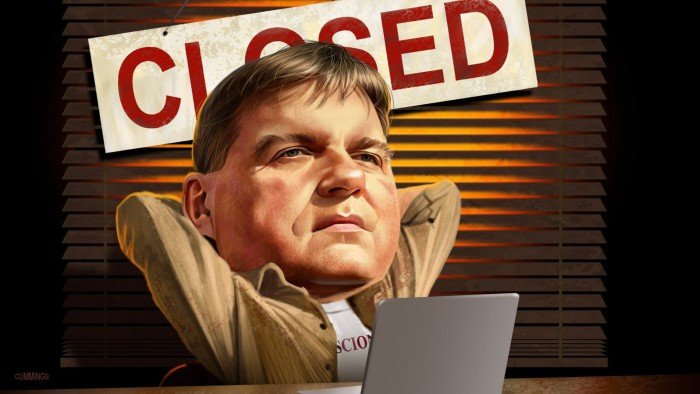
Burry has seemingly retired from investing before, shuttering Scion Capital after his bets against subprime mortgage bonds paid off in 2008 before reopening as Scion Asset Management a few years later. Perhaps this too will prove just a temporary break.
As he cryptically wrote on X shortly before filing for the wind-down of his fund: “Sometimes we see bubbles. Sometimes, there is something to do about it. Sometimes, the only winning move is to not play.”
robin.wigglesworth@ft.com, amelia.pollard@ft.com, richard.waters@ft.com
