

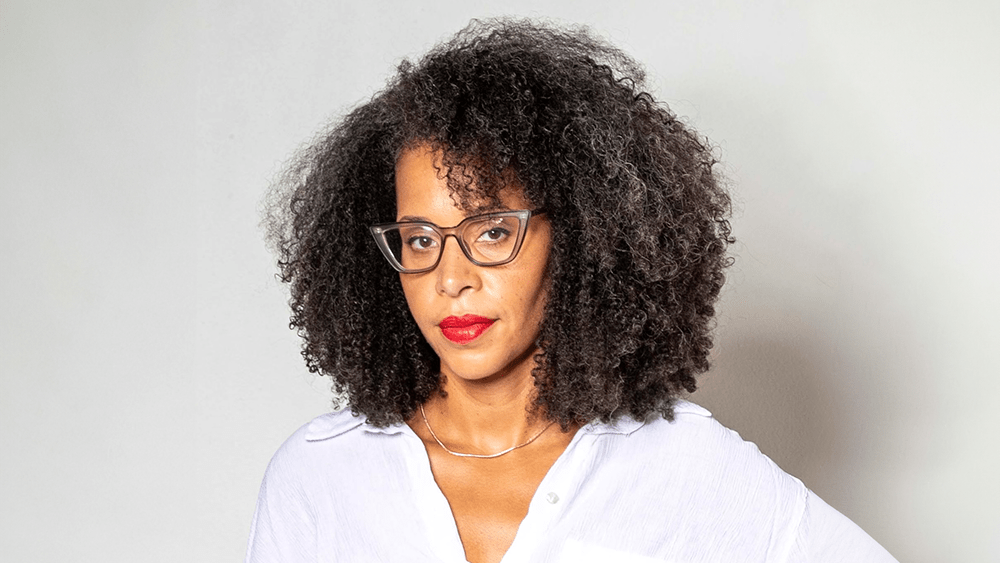
It’s been a stressful year for Firelight Media, the nonprofit that supports documentary filmmakers of color. In September, the company lost 41% of its annual funding when monies provided by PBS shrank and federal funding agencies such as the NEA and Corporation for Public Broadcasting shut down.
“The total 41% covered a lot of our programming and a lot of our institutional infrastructure,” says Loira Limbal, President and CEO of Firelight. “Some of that money was used to provide mentorship and to create programs and retreats. Some of it was for our overhead, and some of it was for re-granting.”
Founded in 2000 by producer Marcia Smith and her husband, Oscar-nominated filmmaker Stanley Nelson, Firelight Media has been an instrumental part of the doc community, providing resources including funding, mentorship, and creative development. “Miles Davis: Birth of the Cool,” “Freedom Riders,” and “Jonestown: The Life and Death of Peoples Temple” are among the numerous documentaries that the org has produced and supported.
Firelight’s most recent project, “Short: In the Making”, about artists becoming masters of their disciplines, was produced in partnership with PBS’ American Masters and debuts at DOC NYC on Saturday. In all, 12 Firelight supported feature docs will screen at DOC NYC, including Oscar contenders “The Perfect Neighbor,” “Cutting Through Rocks,” and “Seeds.”
To keep Firelight Media afloat, Limbal plans to embark on a new initiative to reach out to independently wealthy individuals to make up for the CPB and PBS funding deficit.
“It is something that we are very interested in being intentional about pursuing, because I read a statistic recently about arts giving in the United States, and basically, corporate giving is negligible for the arts,” Limbal says. “Private philanthropy is decreasing, and the only area of giving that is increasing is individual giving. So, if the trends are correct, then we somehow need to crack that major gifts, individual donor world and space.”
Limbal joined Firelight Media in 2009 and led the expansion of Firelight’s flagship Documentary Lab as well as the launch of its Groundwork Regional Lab, William Greaves Research & Development Fund, Impact Campaign Fund, and the In the Making documentary short film series. She ended her tenure at the company in 2021, when she served as Firelight Media’s senior VP of programs.
“I stepped away partly because I wanted to have a bit more time for my children,” Limbal says. “Then the 2024 election happened, and all the things that we are now living began to come to life. The organizer in me felt a real need and urge to be of service in this community in this really challenging, to put it mildly, and horrific, to put it perhaps more accurately, moment.”
In April, Limbal was appointed CEO of Firelight Media.
“I didn’t come into the role thinking that things were going to be easy or rosy,” says Limbal. “I wanted to be part of the fight for documentary film. The approach has been to double down. We hear corporations saying ‘Let’s tone this down. Let’s tone that down.’ That is not at all how I am looking at it. Documentary film is not a luxury. It is an essential part of a healthy arts and story narrative ecosystem. And our voices as filmmakers of color are essential right now.”
Doubling down meant shutting down two programs – Firelight’s William Greaves Research & Development Fund and Firelight’s Impact Campaign Fund – in order to establish the Firelight Fund, which supports Black, Brown, and Indigenous stories from development through distribution, with a focus on those who are telling urgent stories and using their craft to advance social justice. In all 16 projects will receive money from the $580,000 Firelight Fund. Grant sizes will range up to $50,000 per project.
The 16 projects selected for the Firelight Fund will be announced on Nov. 15 at the company’s 25th anniversary fundraiser gala at Lincoln Center.
