
Close Menu

    Subscribe to Updates

    Get the latest creative news from FooBar about art, design and business.

    What's Hot

    Glyphosate is driving a rift in MAHA. Here’s what the science says about its effects on health

    Legal challenge over plan to use East Sussex army camp as asylum housing dismissed | East Sussex

    U.S. officially surpasses 1,000 cases of measles in 2026

    Facebook X (Twitter) Instagram
    Facebook X (Twitter) YouTube LinkedIn
    Naija Global News |
    Friday, February 27
    • Business
    • Health
    • Politics
    • Science
    • Sports
    • Education
    • Social Issues
    • Technology
    • More
      • Crime & Justice
      • Environment
      • Entertainment
    Naija Global News |
    You are at:Home»Science»Google Scholar tool gives extra credit to first and last authors
    Science

    Google Scholar tool gives extra credit to first and last authors

    onlyplanz_80y6mtBy onlyplanz_80y6mtOctober 23, 2025003 Mins Read
    Share Facebook Twitter Pinterest LinkedIn Tumblr Email
    Google Scholar tool gives extra credit to first and last authors

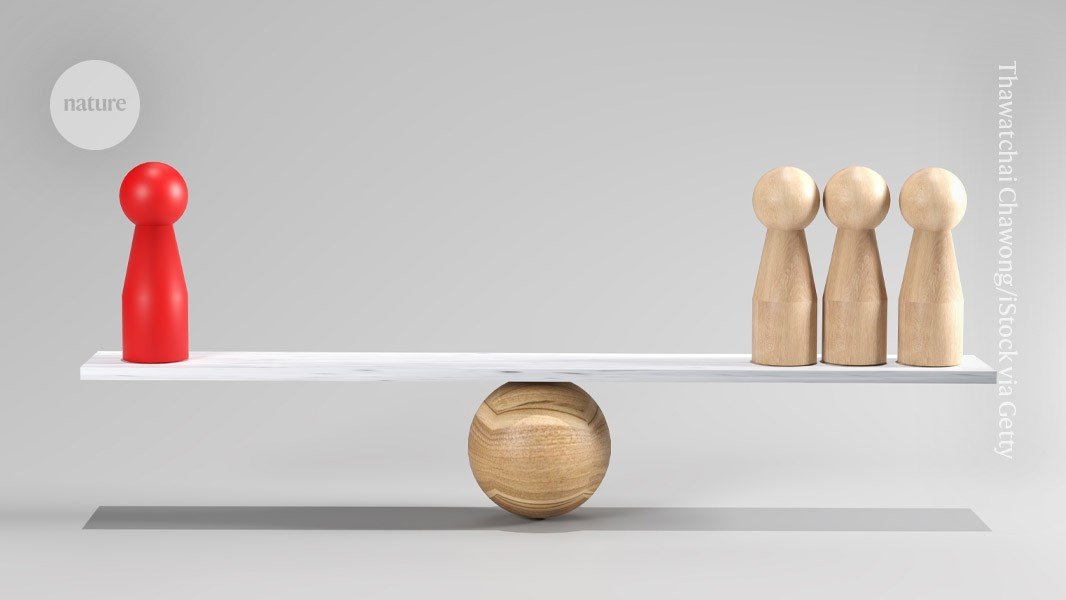
    Weighted ratings might help to identify the impact of a researcher’s contributions.Credit: Thawatchai Chawong/iStock via Getty

    Share
    Facebook Twitter LinkedIn Pinterest Email

    Weighted ratings might help to identify the impact of a researcher’s contributions.Credit: Thawatchai Chawong/iStock via Getty

    The h-index — a widely used measure of impact based on publications and citation count over time — treats all of an author’s papers equally, irrespective of whether they are a first, last or middle author. A browser extension called GScholarLens now aims to change that for Google Scholar users.

    Launched earlier this year for the Google Chrome and Mozilla Firefox browsers, the tool provides a weighted metric, called the Scholar h-index (Sh-index), which accounts for a researcher’s position in author lists.

    The tool gives corresponding (or last) authors the highest weighting: 100% of the citations that their paper accumulates contributed to their Sh-index. First authors receive the second-highest weighting, of 90% of the total citations.

    Second authors get a 50% weighting. Other co-authors get 25% if there are six or fewer authors, or 10% if there are seven or more authors, according to a preprint published in September1 by the tool’s creators.

    The highest weighting is given to the first and last authors because, in most research fields, they are the people who contributed most to the paper, says GScholarLens co-creator Gaurav Sharma, a computational biologist at the Indian Institute of Technology Hyderabad in Kandi. He adds that the weighting given to authorship positions might be tweaked in the future on the basis of user feedback.

    The Sh-index was designed to help researchers, institutions and policymakers to create fairer and more-comprehensive evaluation systems that capture the nuance of authorship, says Sharma.

    For example, if a researcher is a co-author on a few very highly cited papers and first or last author on several less-cited papers, their h-index will be high, but their Sh-index will be low, which could give a more accurate picture of their work. “Overall, productivity-wise, contributions of such authors are mostly collaborative in nature, where they often support large teams but seldom lead small or big projects,” says Sharma.

    A high h-index and low Sh-index could also help to identify individuals who might be engaging in unethical practices, such as gift or paid authorship — in which researchers become authors of papers without actually contributing to the work.

    Capturing the nuance

    Fair credit for contributions is a major challenge in academic publishing. In a 2022 survey of around 47,000 researchers across Europe, just under 70% said they’d worked on projects for which some authors hadn’t contributed enough to deserve credit.

    Alberto Martín-Martín, an information scientist and bibliometrician at the University of Granada in Spain, says that he is sympathetic to the aims of GScholarLens. But he adds that he is not sure that the tool achieves its goal of making Google Scholar data more useful for research evaluation.

    Simply assigning different weights to study authors isn’t enough to capture the nuances of their contributions, says Martín-Martín, because authorship positions themselves aren’t perfect representations of contributions. For example, two researchers might perform the same task in different projects, and one could be assigned a second-author position whereas the other becomes one of the co-authors. He also notes that GScholarLens wrongly assumes that corresponding authors are always last in author lists, which is often not the case.

    Authors Credit extra Google Scholar tool
    Share. Facebook Twitter Pinterest LinkedIn Tumblr Email
    Previous ArticleUS strikes alleged ‘narcoboat’ with threat to widen attacks on cartels | Drugs
    Next Article The FDA Is Hiding the Names of Drugs Made in Contaminated Factories — ProPublica
    onlyplanz_80y6mt
    • Website

    Related Posts

    U.S. officially surpasses 1,000 cases of measles in 2026

    February 27, 2026

    Nasa announces Artemis III mission no longer aims to send humans to moon | Nasa

    February 27, 2026

    Pokémon turns 30 — how the fictional pocket monsters shaped science

    February 27, 2026
    Add A Comment
    Leave A Reply Cancel Reply

    Top Posts

    Watch Lady Gaga’s Perform ‘Vanish Into You’ on ‘Colbert’

    September 9, 20251 Views

    Advertisers flock to Fox seeking an ‘audience of one’ — Donald Trump

    July 13, 20251 Views

    A Setback for Maine’s Free Community College Program

    June 19, 20251 Views
    Stay In Touch
    • Facebook
    • YouTube
    • TikTok
    • WhatsApp
    • Twitter
    • Instagram
    Latest Reviews

    At Chile’s Vera Rubin Observatory, Earth’s Largest Camera Surveys the Sky

    By onlyplanz_80y6mtJune 19, 2025

    SpaceX Starship Explodes Before Test Fire

    By onlyplanz_80y6mtJune 19, 2025

    How the L.A. Port got hit by Trump’s Tariffs

    By onlyplanz_80y6mtJune 19, 2025

    Subscribe to Updates

    Get the latest tech news from FooBar about tech, design and biz.

    Most Popular

    Watch Lady Gaga’s Perform ‘Vanish Into You’ on ‘Colbert’

    September 9, 20251 Views

    Advertisers flock to Fox seeking an ‘audience of one’ — Donald Trump

    July 13, 20251 Views

    A Setback for Maine’s Free Community College Program

    June 19, 20251 Views
    Our Picks

    Glyphosate is driving a rift in MAHA. Here’s what the science says about its effects on health

    Legal challenge over plan to use East Sussex army camp as asylum housing dismissed | East Sussex

    U.S. officially surpasses 1,000 cases of measles in 2026

    Recent Posts
    • Glyphosate is driving a rift in MAHA. Here’s what the science says about its effects on health
    • Legal challenge over plan to use East Sussex army camp as asylum housing dismissed | East Sussex
    • U.S. officially surpasses 1,000 cases of measles in 2026
    • Winter getting shorter in 80% of major US cities, new data shows | US weather
    • Nasa announces Artemis III mission no longer aims to send humans to moon | Nasa
    © 2026 naijaglobalnews. Designed by Pro.
    • About Us
    • Disclaimer
    • Get In Touch
    • Privacy Policy
    • Terms and Conditions

    Type above and press Enter to search. Press Esc to cancel.