

Regulators measuring “forever chemicals” near a Lancashire chemicals plant are not testing for a substance made by the company itself, despite evidence it could be reprotoxic and is being emitted in large volumes.
Reprotoxic means a substance can be damaging to a person’s sexual function, fertility, or their child’s development and, now,
independent sampling has found the substance in soils around the factory.
Pfas, or forever chemicals, are a large group of manmade substances used in a wide range of consumer products, firefighting foams and industrial processes. They do not break down easily and therefore build up in the environment, water, wildlife and human bodies. Scientists have linked some Pfas (per- and polyfluoroalkyl substances) to cancers, hormone disruption, immune system effects and other health risks.
AGC Chemicals in Lancashire has been under investigation since the Guardian and Watershed Investigations revealed high levels of a banned carcinogenic Pfas, called PFOA, being discharged from the site into the River Wyre. People living nearby have been told not to eat food from their gardens or allotments, and PFOA (perfluorooctanoic acid) has been found in vegetables. AGC said while levels of Pfas had been detected, there had been no conclusion to the ongoing investigation.
The Environment Agency is sampling soils and water around AGC for a range of Pfas – and has detected some, including PFOA – but it has ignored a Pfas produced by AGC called EEA-NH4, which is used in the production of chemicals used on non-stick products such as cookware.
In one report on the substance, the agency estimated about 800kg of EEA-NH4 was being emitted into the River Wyre annually. In another it says the chemical is “very persistent” and “mobile” in the environment, as well as being classified as “reprotoxic category 2”. AGC said it had not been determined what, if any, public health risk there might be around the site.
New independent sampling has confirmed the presence of EEA-NH4 in soils around the plant. Dr David Megson, a forensic scientist and Pfas expert who carried out the analysis, said there was “a giant chunk of toxic material” in the environment that regulators were ignoring.
“Our results showed that in addition to PFOA, the soil surrounding the site consistently contains EEA-NH4 and hydrogen-substituted carboxylic acids (H-PFCAs). Less is known about them … but studies are showing that they have a similar toxicity,” Megson said. “It is essential to consider them, as any human health risk assessment that does not include these chemicals is likely to underpredict the health risks from Pfas in this area.”
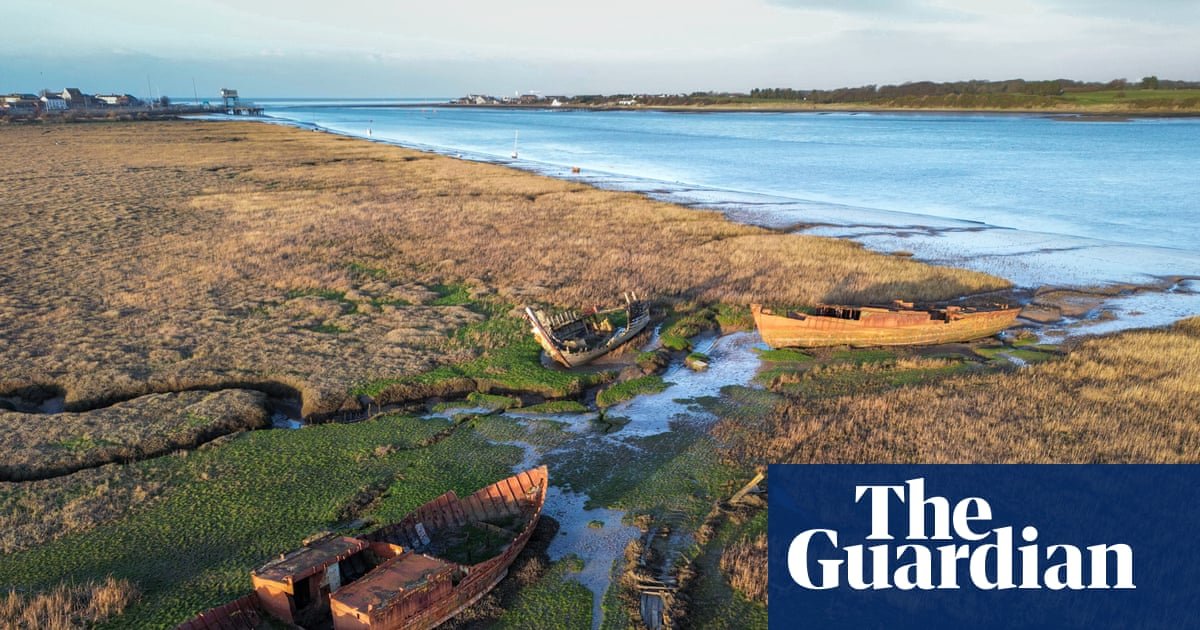
A spokesperson for AGC said effluent from the company’s Hillhouse site was ‘not having a significant effect’ on protected areas of the Wyre estuary. Photograph: Christopher Furlong/Getty Images
The Environment Agency has said it could only look for Pfas for which an established analytical standard had already been created, and there was not one available for EEA-NH4, but Megson says it is absurd to ignore known Pfas emissions from the site.
“To me this highlights a key limitation of the current testing regime,” he said. “Any contaminated land investigation should carefully consider the source, receptor and pathway. There are over 7m potential Pfas – just focusing an assessment on a handful of commonly detected Pfas is not appropriate. Instead it should focus on the specific Pfas that are originating from the source – this includes EEA-NH4 and H-PFCAs.”
Prof Hans Peter Arp, a Pfas expert at the Norwegian Institute of Science and Technology, said: “Considering all we know about Pfas – their persistence, costly clean-up, and emerging hazards – it remains a shock that there is so little oversight of emissions from production factories.
“This is not just a UK problem but a global one. We need stronger monitoring of total Pfas, not just known substances like EEA-NH4, but residuals too. Citizens, who often bear the health and remediation costs, need to know how much Pfas is being released so polluters can be held responsible and a transition to zero Pfas emissions can begin.”
skip past newsletter promotion
The planet’s most important stories. Get all the week’s environment news – the good, the bad and the essential
Privacy Notice: Newsletters may contain information about charities, online ads, and content funded by outside parties. If you do not have an account, we will create a guest account for you on theguardian.com to send you this newsletter. You can complete full registration at any time. For more information about how we use your data see our Privacy Policy. We use Google reCaptcha to protect our website and the Google Privacy Policy and Terms of Service apply.
after newsletter promotion
Crispin Halsall, a professor of environmental organic chemistry at Lancaster University, said: “The Environment Agency should be widening their search and screening for EEA-NH4 and other shorter-chain polyether perfluorocarboxylic acids.”
He said these compounds “can be relatively easily added to current analytical procedures for Pfas measurements” and including them “would alter the risk assessment and likely increase the [assessed] risk of harm to humans exposed to Pfas”.
A spokesperson for AGC Chemicals Europe Ltd said the company had “a proud history of manufacturing in Lancashire and sets the highest standards for itself, taking its commitments to the local community and to the environment extremely seriously”.
They noted that while the current multi-agency investigation was focused on PFOA air emissions, AGC had “last year volunteered to commission a third-party assessment of the land it occupies”, covering current and legacy chemicals, with the scope agreed by Wyre council and the Environment Agency. That assessment had now advanced “to intrusive investigations of both soil and water on-site”, with findings due to be shared with authorities early next year.
The spokesperson stressed that the use of EEA-NH4 was authorised under the site’s permit, subject to Reach registration (a EU regulatory procedure), and that the Environment Agency had carried out an independent risk assessment in April 2023.
“At present it has not been determined what, if any, public health risk there may be,” they said, adding that independent monitoring over four decades showed the company’s Hillhouse site’s effluent was “not having a significant effect” on protected areas of the Wyre estuary.
An Environment Agency spokesperson said they were working with AGC’s Thornton-Cleveleys site “to ensure ongoing compliance with the requirements of their environmental permit”. They confirmed that, at Wyre Council’s request, the agency was “investigating the site and surrounding land for historic contamination unrelated to current operations”.
“There is no strong evidence to suggest EAA-NH4 contamination is widely present in land surrounding the site,” the spokesperson added.
