

Produced with financial support from Vertex Pharmaceuticals. This video is part of an editorially independent special report.
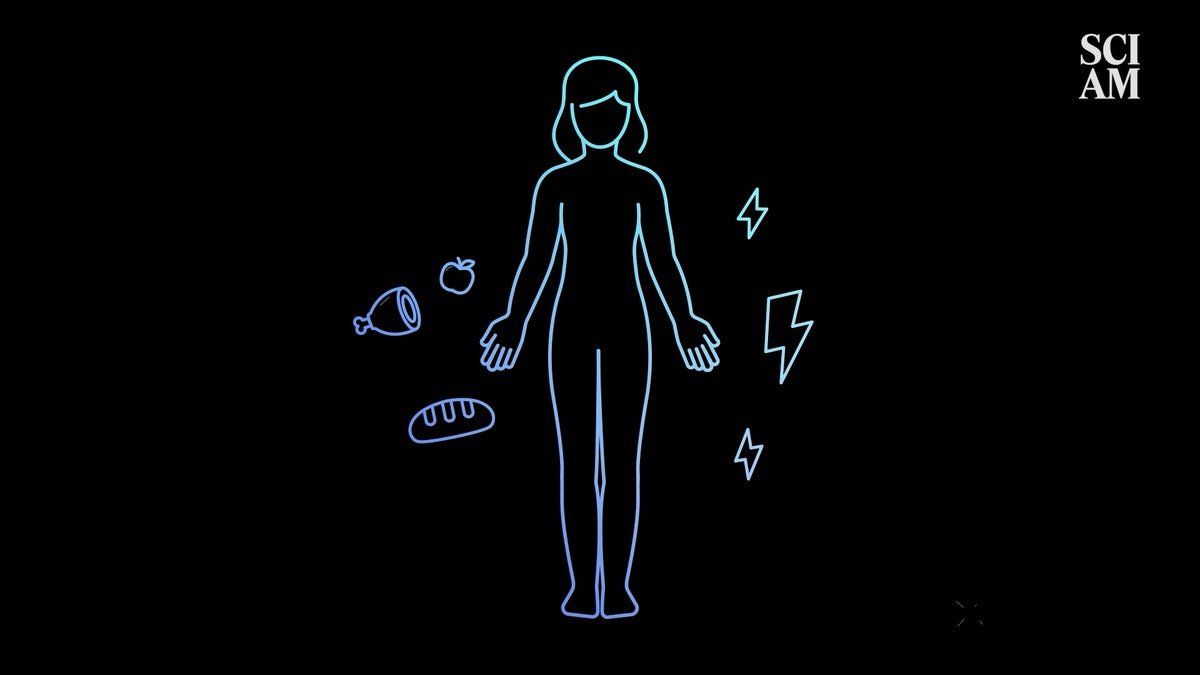
Narrator: Have you ever thought about how your body turns food into energy or just how carefully it has to manage that process?
When we eat, the glucose from our food gets stored in the liver as glycogen.
On supporting science journalism
If you’re enjoying this article, consider supporting our award-winning journalism by subscribing. By purchasing a subscription you are helping to ensure the future of impactful stories about the discoveries and ideas shaping our world today.
And based on our body’s needs, the liver will convert that glycogen back into glucose, so that it can travel through the blood and get to our cells, which turn that glucose into energy.
Meanwhile our pancreas produces a hormone called insulin, whose job is to go into the blood and tell our cells to take in that glucose.
That also makes insulin a regulator of our body’s blood sugar levels, preventing the complications that can happen when our levels are too high or too low.
When the pancreas stops producing insulin, glucose doesn’t enter our cells. Instead it accumulates in the bloodstream.
In some people, the pancreas stops making insulin altogether.
This condition is known as Type 1 Diabetes.
Type 1 Diabetes is sometimes called juvenile diabetes because it often makes its appearance in childhood or adolescence.
While the exact cause is mysterious, we know the disease happens because immune cells target and attack insulin-producing cells in the pancreas called beta cells.
As these cells get destroyed, the body stops producing insulin and loses that key regulator of blood sugar levels.
That in turn can drive a number of symptoms, including fatigue and weakness.
Rising blood glucose levels cause the body to look for other ways to get rid of excess sugar, like frequent urination.
That in turn requires the body to draw water from other places, such as the skin and eyes, leading to dry mouth and skin and also vision changes.
People may also feel very thirsty as their body signals the need for more water.
High blood sugar levels can also cause poor blood flow, making it difficult for the body to heal sores and other wounds.
And some people may also experience a type of nerve damage known as diabetic neuropathy, which can lead to numbness or pain in areas such as the chest or hands.
Our understanding of diabetes goes back millennia.
Ancient records from India and China documented some kind of condition with a very curious symptom: pee that tasted sweet.
Various texts included other symptoms as well, such as excessive thirst and rapid weight loss.
One of the earliest references to the term “diabetes” dates to the second century C.E., when the Greek physician Aretaeus noted the term and said it drew from the Greek word diabaino.
It means “I pass through,” in reference to the excessive urine.
In his writing, he noted that while it could take a long time for the condition to form, people died quickly once it had established itself.
As treatment, he suggested consuming cereals, milk and wine.
Despite these early observations of diabetes, it would take a long time for doctors and scientists to understand the condition well enough to make it less fatal.
In the 17th century the English physician Thomas Willis expanded the name to “diabetes mellitus.”
The addition of “mellitus” drew on the Latin word mel, for honey, to once again emphasize the sweet taste of urine that was associated with diabetes.
And in 1776 a physician named Matthew Dobson traced that sweetness to the presence of sugar in the urine.
Over the next few centuries, scientists would uncover the organs and molecules that led to that excess sugar.
In the 19th century Claude Bernard uncovered the importance of the liver in regulating blood sugar levels.
Several decades later Joseph von Mering and Oskar Minkowski discovered that removing the pancreas from a dog led to the development of diabetes.
Shortly after that, Edward Albert Sharpey-Schafer hypothesized that diabetes was the result of a deficiency in a single chemical made in a region of the pancreas called the islets of Langerhans.
He called this chemical insulin, relying on the Latin word “insula” for island to give credit to those islet cells.
But the actual discovery of insulin was the work of Frederick Banting and Charles Best, who, in 1921, found that they could reverse diabetes in dogs by introducing pancreatic cells from healthy dogs.
They would later work with James Collip and John Macleod to purify insulin from cow pancreases, and in 1922 a 14 year old boy named Leonard Thompson received one of the first insulin injections to treat diabetes.
He would go on to live 13 years before dying of pneumonia.
Over the 20th and 21st centuries, scientists have developed technologies that have made type 1 diabetes treatable.
These include meters to check blood glucose levels and pumps that give small doses of insulin.
And with advances in construction and software, these tools have become smaller and more portable.
Despite these advances, scientists are still pursuing a cure for type 1 diabetes.
The history of type 1 diabetes shows how we have managed to take a disease that was once fatal and make it treatable.
And as scientists make more advances, their work reflects the hope and possibility that one day, this disease will become curable.
Produced with financial support from Vertex Pharmaceuticals. This video is part of an editorially independent special report.
