

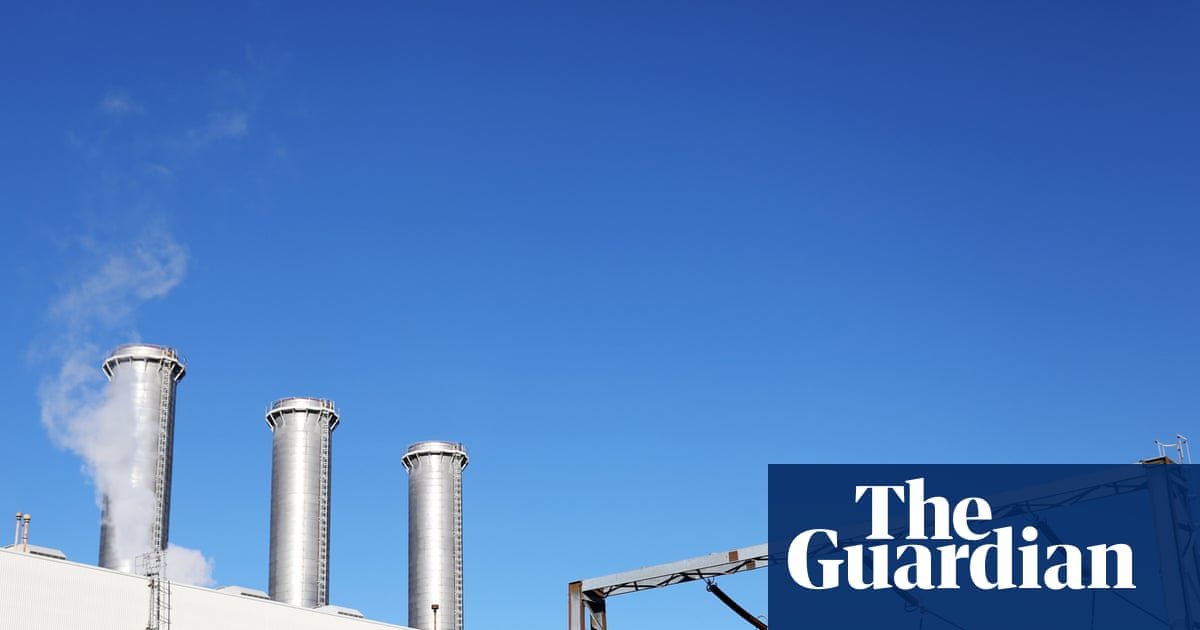
Travel 18 miles north of London and the grey bulk of a gas power plant comes into view near Rye House railway station in Hertfordshire.
Rye House power station has generated electricity since 1993, making it Britain’s longest-serving such power plant still in the market. But it also produces some of the most expensive electricity in the country.
The power plant, owned by a subsidiary of the commodities trading giant Vitol, raised eyebrows in recent years by calling for record high payments to generate power when electricity was in short supply.
In the winter of 2022, months after Russia’s invasion of Ukraine triggered record high gas market prices, Rye House set its own records by charging £6,000 for every megawatt-hour it generated. UK electricity market prices are typically between £60 and £100 per megawatt-hour.
In January, Rye House was one of two power plants that were each paid more than £6m to run their gas turbines for a few hours during a spell of freezing weather.
The payments provoked outrage from climate campaigners and consumer groups who have called on the government to hasten Britain’s plan to reduce its reliance on gas power to just 5% of the electricity system by 2030.
Under the system to balance Britain’s grid when electricity supply is short, the National Energy System Operator (Neso) encourages energy companies to bid prices at which they would be prepared to power up their plants.
But like it or not, these gas plants are here to stay for the foreseeable future. They will still be required to help keep the lights on by the end of the decade, according to official forecasts – and the one-off payments needed to make these plants economic over the course of a financial year are likely to rise.
A price worth paying?
VPI, which owns Rye House, believes the plant’s high costs are a price worth paying. The company justifies the staggering payments it receives on a per megawatt-hour basis by pointing to the costs of maintaining the plant for much of the year when it is not needed. The power plant is held in preservation mode over the summer, a period in which the plant still incurs some costs but makes no money.
The rapid decarbonisation of Britain’s electricity generation, whereby the last coal power station in Ratcliffe-on-Soar in Nottinghamshire closed a year ago, has made the grid more unstable. Gas plants and their big, spinning turbines are needed to provide the inertia that wind and solar cannot, helping keep the grid’s frequency stable.
Senior industry executives have warned that if companies like VPI were unable to cover their costs, and make a justifiable profit, it could spell the closure of Britain’s older gas power plants, which would ultimately lead to higher costs for consumers if new gas plants needed to be built to replace them.
Ratcliffe-on-Soar power station, the final coal powered plant in the country, closed last year. Photograph: Christopher Thomond/The Guardian
To guard against this, the government’s capacity market mechanism was devised in 2012 to secure the future of Britain’s gas plants even as the country shifts away from fossil fuels. Energy companies must vie for contracts that cover the cost of keeping the power plants on standby for when they are needed. Separate auctions offer contracts to gas plants one year in advance or four years in advance.
The competition between generators to clinch a contract keeps the auction costs as low as possible, since the lowest bids are the ones that win. So to earn a profit, gas generators still need to top up these earnings by selling electricity into the market.
Rye House runs only 5-10% of the time, meaning its opportunity to turn a profit is limited. In the future, as the UK moves towards a low carbon energy system, many more gas generators will find themselves in the same position.
skip past newsletter promotion
Sign up to Business Today
Get set for the working day – we’ll point you to all the business news and analysis you need every morning
Privacy Notice: Newsletters may contain information about charities, online ads, and content funded by outside parties. If you do not have an account, we will create a guest account for you on theguardian.com to send you this newsletter. You can complete full registration at any time. For more information about how we use your data see our Privacy Policy. We use Google reCaptcha to protect our website and the Google Privacy Policy and Terms of Service apply.
after newsletter promotion
The ‘fire brigade’
An alternative trade-off would be higher prices through the capacity market, according to Tom Glover, the boss of RWE’s UK business. RWE is the UK’s biggest gas generator, and also one of the country’s biggest renewable energy investors. Its plants run more often, meaning they do not typically call for “scarcity prices” on a par with those earned by Rye House.
“These things have been debated for years,” Glover said. ‘Twenty-five years ago everyone thought relying solely on scarcity pricing was the right economic signal to send. As the years go by, we’re starting to realise that no one wants to accept a price of £1,000/MWh as fair.
“We’re becoming the fire brigade of the energy system,” he added. “You have to pay for the fire brigade to be around all the time. Hopefully you don’t call on them very often but when you do, they best be there and they best be reliable. Today our gas plants still make up a quarter of the UK’s electricity but this is going to evolve over the next five to 10 years. Eventually we will effectively be paid to be there, rather than getting paid for running.”
Despite the arguable success of Britain’s capacity market, concerns over whether gas generators are making fair profits have prompted fresh proposals to reform the system. Earlier this month, research by a former government energy mandarin found that the government could save energy users £5bn a year by overhauling the electricity market by removing gas plants from it.
Adam Bell, the government’s former head of strategy at the Department for Energy Security and Net Zero, argues that the UK’s gas plants should be held in strategic reserve, available to be fired up when needed without distorting the overall cost of electricity in the wholesale market.
The report, which was commissioned by Greenpeace, proposed that gas plants should no longer be able to sell power on the open market, and instead provide a strategic reserve of electricity, at an agreed price, whenever they are required to fire up.
Connah’s Quay, a gas-fired power station in Flint, Wales. Photograph: Adam Vaughan/EPA
A senior industry source said that although gas generators are eager to tackle Britain’s energy affordability crisis, the proposals were unlikely to win over private companies. A second source described the proposals as “economically illiterate”.
Critics of the plan believe that dampening volatility in the electricity market would undermine the incentive needed to spur batteries to release electricity, or for energy users to pause their demand, when supplies are short.
But there may still be room for further debate on reforming the market, according to Glover. “We want lower consumer prices, we want lower gas power generation, we want more renewables. We’d like to work with them to achieve the objective we’re all trying to get to, but maybe with a greater understanding of the market,” he said. “There are different ways to get there.”
