

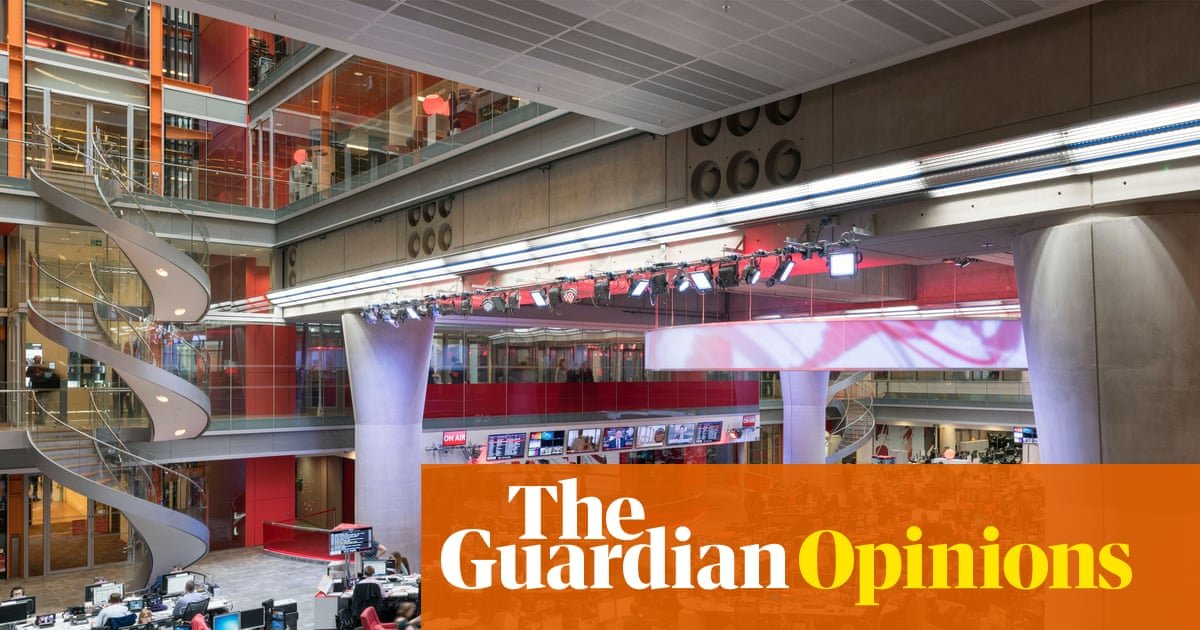
The Sutton Trust has researched the educational backgrounds of Britain’s most influential people – and in one sector in particular, that should ring alarm bells. It seems clear that the British media has a social mobility problem. And despite some recent efforts, it’s not a problem that is going away anytime soon.
A high proportion of leading figures in the British media are from private school backgrounds. While only 7% of people attend private school nationwide, our report found half of newspaper columnists are privately educated, along with 47% of political commentators, 45% of leading podcasters and 38% of BBC executives.
What’s more, the proportion of privately educated newspaper columnists has actually increased since our last report in 2019. In the case of BBC executives, it has jumped by 10 percentage points.
It’s striking and somewhat depressing that so many of those providing commentary on the issues affecting British people’s lives – columnists, talking heads and podcasters – are from a private school background, much more so than those whose role is to report news. Furthermore, more than 40% of columnists and political commentators attended Oxbridge, a significantly higher proportion than the rest of the media. Even amid a rapidly changing media environment, these roles have great influence over the perspectives that are shared daily and help to shape the national conversation. They also play a crucial role in holding the government and others to account. But they continue to come from a very narrow segment of society.
Even the emergence of podcasting as a new medium does not appear to be translating to an increased diversity of voices. Many of the most popular podcasts are owned by the big media players and populated with familiar voices from the existing media and political firmament.
This report should also raise serious questions for the BBC, at a time when it is under frequent political attack and trying to justify its licence fee. To see those at the highest levels becoming less representative of ordinary Britons is of significant concern. To its credit, the corporation is recognising the issue and has in the past published socioeconomic data for its staff. But it must go further and faster in bringing class into the diversity conversation. Ofcom research found that people from lower socioeconomic groups are less satisfied with the BBC, with some blaming a lack of representation of normal working-class lives and the prevalence of stereotypes.
Of course, editors in all media will be acutely aware of the need to reflect the audiences they serve. Encouragingly, many media organisations – the Guardian included – are now trying to address these structural inequalities and to introduce schemes to encourage greater diversity, including class diversity.
However, there are serious headwinds against wider change. The industry is rapidly changing, and as local media has collapsed and specialist titles have dwindled, so have many of the entry-level positions that traditionally served as a springboard. It is harder than ever to break into media for those without connections, for example, or opportunities to complete unpaid work experience.
Even once in the door, it is a precarious industry, which may put off many of those without a financial safety net. Long-term contracts are becoming rarer, and it is increasingly difficult to make freelancing pay. Addressing these issues will be extremely challenging, but crucial if the industry is to develop a more representative pipeline of talent for the future.
skip past newsletter promotion
Get the day’s headlines and highlights emailed direct to you every morning
Privacy Notice: Newsletters may contain information about charities, online ads, and content funded by outside parties. If you do not have an account, we will create a guest account for you on theguardian.com to send you this newsletter. You can complete full registration at any time. For more information about how we use your data see our Privacy Policy. We use Google reCaptcha to protect our website and the Google Privacy Policy and Terms of Service apply.
after newsletter promotion
Meanwhile, a new generation of online content creators and influencers are finding bigger audiences. We have included them in our report for the first time this year, and the differences with more established media are stark. Only 18% of this group attended private schools (although still above the national average). And a far greater proportion, 68%, attended state comprehensives, no doubt due to the relative ease of creating content from home and sharing through platforms such as TikTok, YouTube and Instagram.
But it is also likely that talented young people with media aspirations are choosing these routes as more accessible and viable options, as they find traditional doors closed to them. The bastions of old Fleet Street should take note.
