
Close Menu

    Subscribe to Updates

    Get the latest creative news from FooBar about art, design and business.

    What's Hot

    Donald Trump? Please no. Here’s who actually deserves this year’s Nobel peace prize | Haakon Gjerløw

    British celebrities beat AI companies lobbying to get free use of their work. They have a warning for Australia | Australian politics

    Silver linings in the garden’s snail trails | Wildlife

    Facebook X (Twitter) Instagram
    Facebook X (Twitter) YouTube LinkedIn
    Naija Global News |
    Monday, September 28
    • Business
    • Health
    • Politics
    • Science
    • Sports
    • Education
    • Social Issues
    • Technology
    • More
      • Crime & Justice
      • Environment
      • Entertainment
    Naija Global News |
    You are at:Home»Science»Octopuses prefer to use different arms for different tasks, scientists find | Marine life
    Science

    Octopuses prefer to use different arms for different tasks, scientists find | Marine life

    onlyplanz_80y6mtBy onlyplanz_80y6mtSeptember 11, 2025003 Mins Read
    Share Facebook Twitter Pinterest LinkedIn Tumblr Email
    Octopuses prefer to use different arms for different tasks, scientists find | Marine life
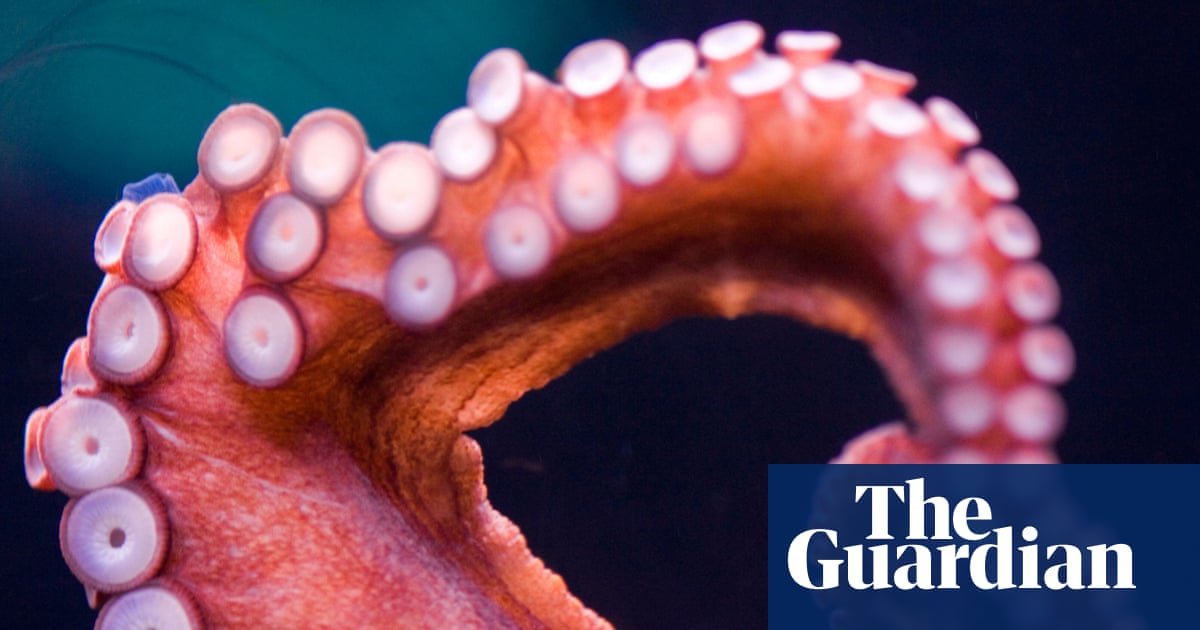
    For each clip, the researchers classified the behaviour of the octopus, such as fetching an object or walking, then classified the arm actions involved. Photograph: blickwinkel/Alamy
    Share
    Facebook Twitter LinkedIn Pinterest Email

    While some humans find they have two left feet on the dancefloor, octopuses manage to coordinate eight highly flexible arms across a host of behaviours, from foraging to den-building, or moving around the seafloor.

    Now researchers say they have completed the most comprehensive study of its kind, not only identifying the actions and small motions involved in different types of movements, but revealing that – like primates, rodents and fish – the cephalopods prefer to use particular limbs for certain tasks.

    “In general, we did see that for most actions the octopuses used their front arms more often than their back arms,” said Kendra Buresch, a co-author of the study who is based at the Marine Biological Laboratory, Woods Hole, in the US. However, she noted there were exceptions.

    Writing in the journal Scientific Reports, Buresch and colleagues reveal how they analysed 25 one-minute video clips of 25 wild octopuses across three species. These were filmed between 2007 and 2015 at six sites ranging from Vigo in Spain to the Cayman Islands, each with a different habitat.

    For each clip, the researchers classified the behaviour of the octopus, such as fetching an object or walking, then classified the arm actions involved – such as curling the limb or reaching it away from the body

    The team also explored which of the four ways octopus arms can deform – shortening, elongating, bending and twisting – was involved in each action.

    Overall, the team identified 15 different octopus behaviours and 12 different arm actions, with some – such as crawling or parachute attack – requiring more arm actions than others, such as backward swimming.

    The team found multiple arm actions could occur at the same time on the same or adjacent arms, and that all eight arms were capable of all actions and deformations.

    “This means that octopuses can be very flexible and adaptable in many different environments and tasks,” said Buresch.

    While the researchers did not find the octopuses had a preference for using their right or left arms, the cephalopods did favour using their front arms over their rear arms, with a split of 61% to 39% respectively when all 12 actions were considered together.

    Delving deeper, they found the creatures used their two front pairs of arms more often for reach, raise, lower and curl actions. By contrast, the study suggests they prefer to use their rear two pairs of arms for the stilt action – where the body sits upright on the arms – and for the roll action, where the arm moves like a conveyor belt, both of which are used in locomotion.

    The team say the results provide new insights into how octopuses coordinate their eight flexible arms to carry out complex behaviours and multitask, while the findings could also be useful beyond marine science.

    “Such demonstrations of flexibility may help inform ethologists, sensory ecologists, neuroscientists and engineers designing soft robotic appendages,” they write.

    arms Find life marine Octopuses prefer Scientists tasks
    Share. Facebook Twitter Pinterest LinkedIn Tumblr Email
    Previous ArticleBest Travel Cameras (2025), Tested and Reviewed
    Next Article Most States Won’t Keep Funding Pandemic-Era Tech. Is That a Problem?
    onlyplanz_80y6mt
    • Website

    Related Posts

    The one change that worked: I was terrified of the dentist – until I found a very special one | Life and style

    September 14, 2026

    From ‘Ozempic breath’ to hair loss: sorting the science from the hype about weight loss jabs | Life and style

    September 12, 2026

    AI will help find cure for cancer ‘within our lifetimes’, says Arm Holdings chief | Arm

    September 8, 2026
    Add A Comment
    Leave A Reply Cancel Reply

    Top Posts

    The science influencers going viral on TikTok to fight misinformation

    February 17, 20263 Views

    MPs vote against legalising assisted dying in England and Wales | Assisted dying

    September 11, 20262 Views

    The backlash to revelations of sexual torture of Palestinian prisoners aims to raise the cost of speaking out | Yuli Novak

    May 14, 20262 Views
    Stay In Touch
    • Facebook
    • YouTube
    • TikTok
    • WhatsApp
    • Twitter
    • Instagram
    Latest Reviews

    At Chile’s Vera Rubin Observatory, Earth’s Largest Camera Surveys the Sky

    By onlyplanz_80y6mtJune 19, 2025

    SpaceX Starship Explodes Before Test Fire

    By onlyplanz_80y6mtJune 19, 2025

    How the L.A. Port got hit by Trump’s Tariffs

    By onlyplanz_80y6mtJune 19, 2025

    Subscribe to Updates

    Get the latest tech news from FooBar about tech, design and biz.

    Most Popular

    The science influencers going viral on TikTok to fight misinformation

    February 17, 20263 Views

    MPs vote against legalising assisted dying in England and Wales | Assisted dying

    September 11, 20262 Views

    The backlash to revelations of sexual torture of Palestinian prisoners aims to raise the cost of speaking out | Yuli Novak

    May 14, 20262 Views
    Our Picks

    Donald Trump? Please no. Here’s who actually deserves this year’s Nobel peace prize | Haakon Gjerløw

    British celebrities beat AI companies lobbying to get free use of their work. They have a warning for Australia | Australian politics

    Silver linings in the garden’s snail trails | Wildlife

    Recent Posts
    • Donald Trump? Please no. Here’s who actually deserves this year’s Nobel peace prize | Haakon Gjerløw
    • British celebrities beat AI companies lobbying to get free use of their work. They have a warning for Australia | Australian politics
    • Silver linings in the garden’s snail trails | Wildlife
    • The final whistle for the football booze ban? | Soccer
    • How the Trump administration is trying to defend its firing of Maurene Comey | US justice system
    © 2026 naijaglobalnews. Designed by Pro.
    • About Us
    • Disclaimer
    • Get In Touch
    • Privacy Policy
    • Terms and Conditions

    Type above and press Enter to search. Press Esc to cancel.