
Close Menu

    Subscribe to Updates

    Get the latest creative news from FooBar about art, design and business.

    What's Hot

    ICO watchdog opens inquiry into cameras in mental health patients’ bedrooms | Mental health

    ‘A child goes to bed and doesn’t wake up’: the families left in shock after the sudden death of their healthy children | Health

    ‘It’s Russian roulette’: alarm as Europe backs critical minerals mines in water-stressed regions | Mining

    Facebook X (Twitter) Instagram
    Facebook X (Twitter) YouTube LinkedIn
    Naija Global News |
    Sunday, June 21
    • Business
    • Health
    • Politics
    • Science
    • Sports
    • Education
    • Social Issues
    • Technology
    • More
      • Crime & Justice
      • Environment
      • Entertainment
    Naija Global News |
    You are at:Home»Environment»Disposable face masks used during Covid have left chemical timebomb, research suggests | Plastics
    Environment

    Disposable face masks used during Covid have left chemical timebomb, research suggests | Plastics

    onlyplanz_80y6mtBy onlyplanz_80y6mtSeptember 8, 2025003 Mins Read
    Share Facebook Twitter Pinterest LinkedIn Tumblr Email
    Disposable face masks used during Covid have left chemical timebomb, research suggests | Plastics
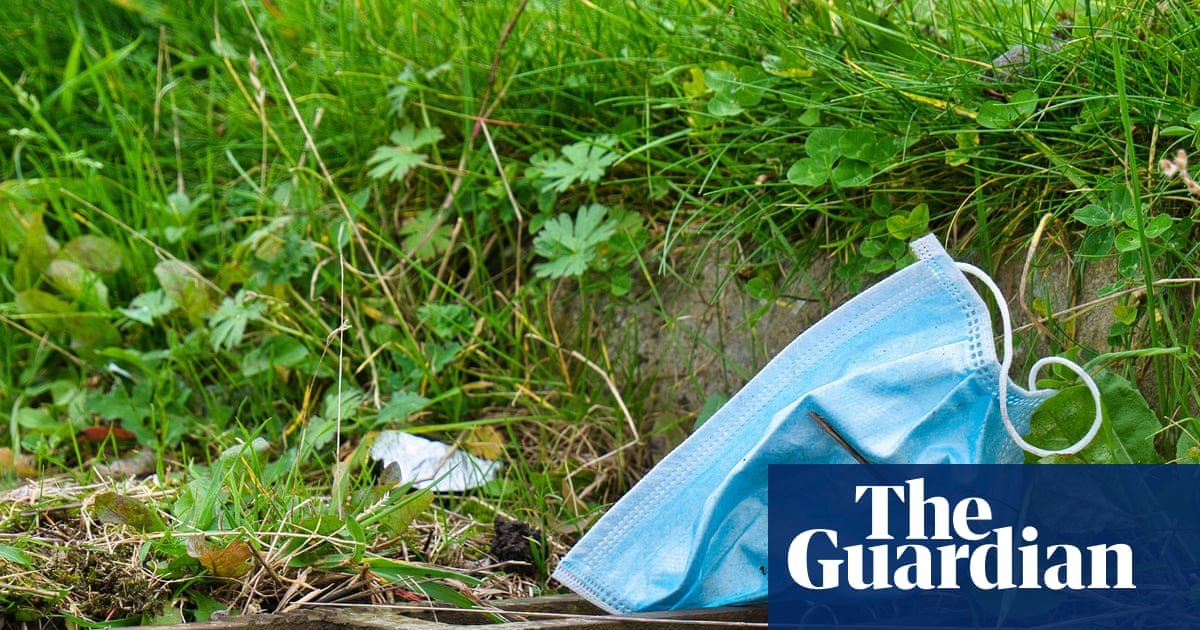
    The masks are now breaking down, releasing microplastics and chemical additives. Photograph: Alan Morris/Alamy
    Share
    Facebook Twitter LinkedIn Pinterest Email

    The surge in the use of disposable face masks during the Covid pandemic has left a chemical timebomb that could harm humans, animals and the environment, research suggests.

    Billions of tonnes of plastic face masks created to protect people from the spread of the virus are now breaking down, releasing microplastics and chemical additives including endocrine disruptors, the research found.

    As a result, the very equipment whose use was intended to protect people during the pandemic now poses a risk to the health of people and planet, potentially for generations.

    “This study has underlined the urgent need to rethink how we produce, use and dispose of face masks,” said Anna Bogush of Coventry University’s Centre for Agroecology, Water and Resilience, the lead author of the study.

    It has been estimated that during the height of the coronavirus pandemic 129bn disposable face masks, mostly made from polypropylene and other plastics, were being used every month around the world.

    With no recycling stream, most ended up either in landfill or littered in streets, parks, beaches, waterways and rural areas, where they have now begun to degrade. Recent research has reported a significant presence of disposable face masks in both terrestrial and aquatic environments.

    Bogush and her co-author, Ivan Kourtchev, set out to determine how many microplastic particles were released from face masks simply sitting in water, without moving at all.

    They left newly bought masks of several different kinds for 24 hours in flasks containing 150ml of purified water, then filtered the liquid through a membrane to see what came out.

    Every mask examined by Bogush and Kourtchev leached microplastics, but it was the FFP2 and FFP3 masks – marketed as the gold-standard protection against the transmission of the virus – that leached the most, releasing four to six times as many.

    “The particle sizes of MPs [microplastics] varied greatly, ranging from around 10μm–2,082μm, but microplastic particles below 100μm were predominant in the water leachates,” they wrote in their paper, published in the journal Environmental Pollution.

    skip past newsletter promotion

    The planet’s most important stories. Get all the week’s environment news – the good, the bad and the essential

    Privacy Notice: Newsletters may contain information about charities, online ads, and content funded by outside parties. If you do not have an account, we will create a guest account for you on theguardian.com to send you this newsletter. You can complete full registration at any time. For more information about how we use your data see our Privacy Policy. We use Google reCaptcha to protect our website and the Google Privacy Policy and Terms of Service apply.

    after newsletter promotion

    And they made an even more worrying discovery. Subsequent chemical analysis of the leachate found medical masks also released bisphenol B, an endocrine-disrupting chemical that acts like oestrogen when absorbed into the bodies of humans and animals.

    Taking into account the total amount of single-use face masks produced during the height of the pandemic, the researchers estimated they led to the release of 128-214kg of bisphenol B into the environment.

    Bogush said: “We can’t ignore the environmental cost of single-use masks, especially when we know that the microplastics and chemicals they release can negatively affect both people and ecosystems. As we move forward, it’s vital that we raise awareness of these risks, support the development of more sustainable alternatives and make informed choices to protect our health and the environment.”

    Chemical Covid Disposable face left Masks Plastics research suggests timebomb
    Share. Facebook Twitter Pinterest LinkedIn Tumblr Email
    Previous ArticleThe Apple Watch Series 11 Could Share the Stage at Tomorrow’s Event
    Next Article Dwayne Johnson Says Weight Loss Is for Chicken Man Movie Role
    onlyplanz_80y6mt
    • Website

    Related Posts

    ‘A child goes to bed and doesn’t wake up’: the families left in shock after the sudden death of their healthy children | Health

    June 20, 2026

    New research links prenatal exposure to Pfas to later development of PMOS | Pfas

    June 20, 2026

    Bending forwards a lot at work in early pregnancy may increase miscarriage risk, study suggests | Miscarriage

    June 18, 2026
    Add A Comment
    Leave A Reply Cancel Reply

    Top Posts

    The science influencers going viral on TikTok to fight misinformation

    February 17, 20262 Views

    Watch Lady Gaga’s Perform ‘Vanish Into You’ on ‘Colbert’

    September 9, 20251 Views

    Advertisers flock to Fox seeking an ‘audience of one’ — Donald Trump

    July 13, 20251 Views
    Stay In Touch
    • Facebook
    • YouTube
    • TikTok
    • WhatsApp
    • Twitter
    • Instagram
    Latest Reviews

    At Chile’s Vera Rubin Observatory, Earth’s Largest Camera Surveys the Sky

    By onlyplanz_80y6mtJune 19, 2025

    SpaceX Starship Explodes Before Test Fire

    By onlyplanz_80y6mtJune 19, 2025

    How the L.A. Port got hit by Trump’s Tariffs

    By onlyplanz_80y6mtJune 19, 2025

    Subscribe to Updates

    Get the latest tech news from FooBar about tech, design and biz.

    Most Popular

    The science influencers going viral on TikTok to fight misinformation

    February 17, 20262 Views

    Watch Lady Gaga’s Perform ‘Vanish Into You’ on ‘Colbert’

    September 9, 20251 Views

    Advertisers flock to Fox seeking an ‘audience of one’ — Donald Trump

    July 13, 20251 Views
    Our Picks

    ICO watchdog opens inquiry into cameras in mental health patients’ bedrooms | Mental health

    ‘A child goes to bed and doesn’t wake up’: the families left in shock after the sudden death of their healthy children | Health

    ‘It’s Russian roulette’: alarm as Europe backs critical minerals mines in water-stressed regions | Mining

    Recent Posts
    • ICO watchdog opens inquiry into cameras in mental health patients’ bedrooms | Mental health
    • ‘A child goes to bed and doesn’t wake up’: the families left in shock after the sudden death of their healthy children | Health
    • ‘It’s Russian roulette’: alarm as Europe backs critical minerals mines in water-stressed regions | Mining
    • Elizabeth Greenhall obituary | Health
    • How do people in the US describe customer service in 2026? ‘Debilitating, depressing, enraging. Ugh’ | Consumer affairs
    © 2026 naijaglobalnews. Designed by Pro.
    • About Us
    • Disclaimer
    • Get In Touch
    • Privacy Policy
    • Terms and Conditions

    Type above and press Enter to search. Press Esc to cancel.