

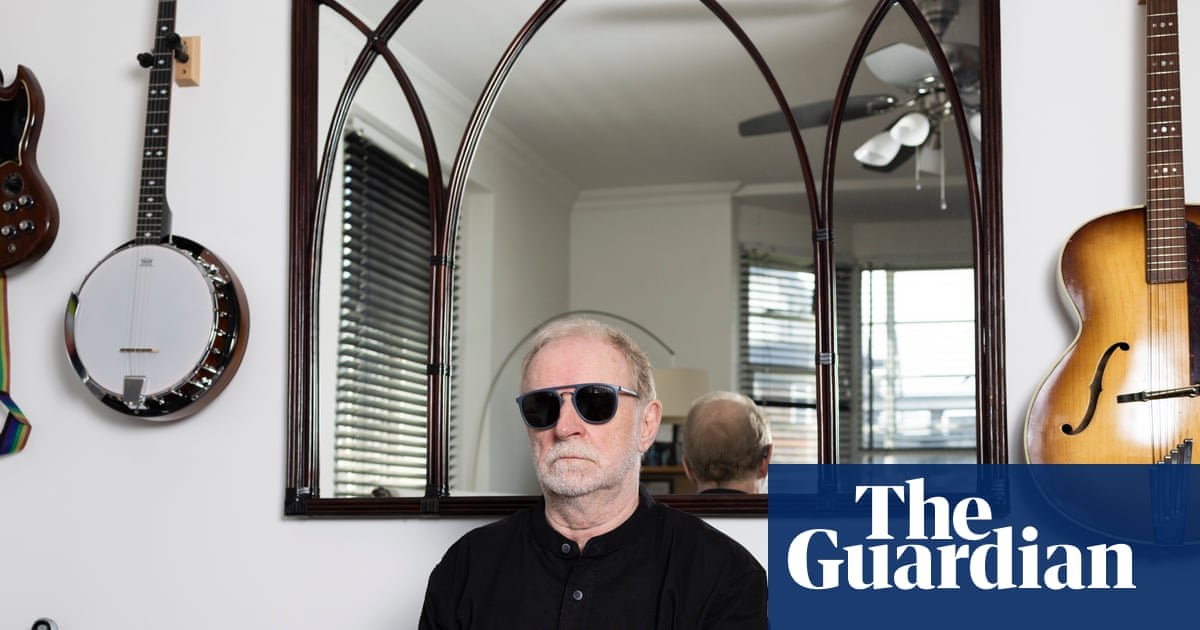
Pop mogul Sir Robin Millar is not a man who you would expect to struggle with access in the music industry.
In a glittering career that spans decades, he has worked alongside some of the most celebrated names in British music, from Sade to Boy George, and counts legends such as the Rolling Stones among his list of A-list friends.
But a recent struggle to get a ticket for a concert was nothing his profile could solve. Instead, it was his status as a disabled person that caused him difficulty.
Millar tells the anecdote with a sarcastic world-weariness. A music venue refused to sell him a ticket for an accessible seat unless he could provide “proof of disability.”
Millar, who was registered blind as a teenager before losing his sight entirely in his 30s, said: “I told them: ‘Oh, OK, I’ll get my neighbour to photograph me walking down the corridor and smashing straight into the wall at the end. Will that do?’”
At 73, Millar has spent a lifetime confronting societal ignorance about disability and confounding assumptions about the limits of his usefulness, all the while carving out a stellar career in the music business, as a producer and label owner.
The starry career, the model girlfriends, parties with the Rolling Stones, the country houses and Ferraris are a compelling part of his story, but Millar, who is chair of the charity Scope, also wants to talk about disability rights, welfare cuts and culture war debates around diversity, equity and inclusion.
His disability rights evangelism – whether it’s opportunity in the workplace or an accessible concert hall seat – in part reflects his own extraordinary life experience. “I never had the option of a conventional career. All doors were shut to me,” he says. He’s a slightly reluctant disability activist who fights for what he calls “the right for disabled people to live the same life as everyone else”.
“I can’t think of a disability so complex and profound that that person cannot make a positive contribution to the work, their environment, their friends and the world of work, given the right possibilities and options,” he says.
Millar grew up in north London in the 1950s and 60s, “a frightened little skinny boy with Mr Magoo glasses”, he told the BBC’s Desert Islands Discs. He had an inherited genetic condition that meant his eyesight was chronically poor and deteriorating. “I couldn’t see in the dark and I had tunnel vision and little spots in the middle of my eyes,” he says.
The young Robin Millar played in bands, and had dreams of becoming as songwriter before trying to get into record production. Photograph: Robert Millar/Home & Studio Recording
Boyhood was an endless round of tests and treatments, his Irish GP father deploying medical science – daily vitamin A injections, stinging eye drops – and his Guyanese nurse mother trying faith healers and psychics, “people putting their fingers on me and poking me and putting stuff on me and saying: ‘You’ll be cured.’”
None of the cures worked. He was having to sit ever further forward in the classroom to see the blackboard at his north London grammar school. He was clever, but “blundering through life”. “Nobody taught me any useful skills like braille or, like learning to touch type. I had to do all that as an adult. Because they were all obsessed with curing me. Rather than equipping me.”
As a teenager he was taken to the Royal National Institute for the Blind (now known as the Royal National Institute of Blind People) for career advice. “They said: ‘Do you want to be a physiotherapist or a piano tuner?’ I said: ‘Neither.’ And they said: ‘Well, we can’t help you.’”
At 16 he was told bluntly by doctors he would be totally blind in a few years. Raging, miserable, determined, he got himself to Cambridge University to study law.
He subsequently played in bands, and had dreams of becoming as songwriter before trying to get into record production. His big break came when he wangled an apprentice job in a Paris recording studio in the mid-1970s, making coffee and doing microphone checks for the likes of Elton John and David Bowie.
Getting the studio job was an “incredibly random” thing, he admits. The owner wasn’t ticking an inclusion box (“they weren’t woke in 1976”) but he was prepared to take a risk. “I think I just charmed him … I’d been a male model and I was a very striking young man. I think he liked the idea of having someone who hung out with the Rolling Stones and was a bit kind of cool in that way.”
“The owner said: ‘Do you want the job?’ I just mumbled something like: ‘I’m a bit worried about knocking over microphones.’ And he said: ‘Don’t worry, we can work around that.’” Millar pauses. “We should have that phrase hung across Trafalgar Square. At every school: ‘We can work around that.’”
That kind of lucky break won’t happen to 99% of young disabled people, he admits. But he believes his experience is a lesson for institutions, companies and entrepreneurs to make themselves open to spotting, nurturing and investing in talented employees who also happen to have a disability.
Diamond Life by Sade. Photograph: Publicity image
The studio owner’s’ instinct was right. The many gold discs on the walls of his south London home attest to Millar’s massive success, not least a golden streak in the mid-1980s when produced a string of bestselling albums, notably Sade’s acclaimed Diamond Life. He was involved in 44 No 1 hits and has sold millions of records.
Life was not happy ever after. He became totally blind while producing Sade’s second album in the south of France, prompting a breakdown and a patient rebuilding of his life and career. Outdated attitudes about disability from the past that had been in some ways masked by his success, resurfaced, often in unexpected ways.
He recalls how his 40th birthday he hosted his parents for the weekend. “Country house, everything I’d aspired to. Gravel drive. Bentley parked outside. Swimming pool, tennis court, two lovely children. My mother says to me: ‘If we had known about your eyesight, your father and I would have had you aborted.’” He is clearly still hurt, adding: “She was so blighted by the negative side.”
The world has moved along way since then, he says. There have been incredible improvements in accessibility. There are disability discrimination laws. On a visit to the BBC he was thrilled to be met by a visually impaired trainee. “I went: ‘Blimey, that wouldn’t have happened in my day. They’ve taken you [on] not just knowing you are blind but hopefully actually realising that disabled people are pretty amazing.’”
That said, he’s not complacent. He and Scope have spent years campaigning to persuade employers to do more to recruit and retain disabled people, and yet the disability employment gap remains stubbornly wide. He’s scathing about the “arc of progress” argument that says “of course it was terrible in the 70s, but now, let’s face it, things are all right for disabled people”.
Companies who employ disabled people are more profitable and understand their markets better, Millar says. Photograph: Graeme Robertson/The Guardian
Of the post-Trump pushback against “woke”,equal access and affirmative action – “all the stuff that worries Telegraph readers” – he says: “I’m sorry guys and girls, but sexual harassment at work, sexism, gender pay gap, worse prospects for people with disabilities, worse prospects for black and Asian communities – I’m afraid it is all true. It may not be as true everywhere, but it is true.”
This is nothing to do with being woke, he says. Companies who employ disabled people are more profitable. They understand their markets better. He reckons employer negativity stems less from prejudice and more from misplaced fears about the costs of making “reasonable adjustments” that allow disabled people to do the job.
Millar would overhaul the 35-year-old legal principle of reasonable adjustment, because it implies there is an “unreasonable” adjustment, allowing companies to feel they have done enough if they stick strictly to the interpretation of the law. At Scope he asked for the word “reasonable’” to be removed from job ads and replaced with “we will make any adjustments to allow you to apply”.
It’s a government ambition to get more long-term ill and disabled people into work. The independent report by the former John Lewis boss Sir Charlie Mayfie on how to do this is due to be published next month. Millar wants to see it recommend financial and other incentives to persuade employers to take “the big step on inclusion”.
Millar opposed the government’s now abandoned plans to cut £5bn from disability benefits. But he believes attitudes and intentions around disability rights are generally “pretty good”. He starts to say there are pockets of discrimination, and then pauses. “It’s not pockets of disability discrimination, actually, it’s just pockets of wankers.”
