

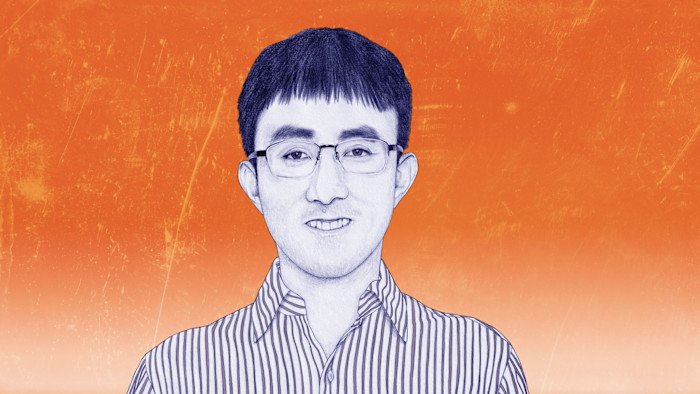
James Wu is the founder and CEO of FJDynamics, a robotics company, which specialises in automating labour intensive industries such as agriculture and construction. He was previously chief scientist at DJI, the world leading manufacturer of consumer drones.
He argues that artificial general intelligence — where systems reach levels of capability similar to those of humans — and humanoid robots are still very far away. Instead there are more immediate gains to be made from advances in AI by focusing on “forgotten” sectors, such as agriculture, where big labour shortage problems threaten sustainability as the world’s population grows.
In this conversation with FT’s Asia Technology Correspondent Zijing Wu, he says the introduction of demand-specific, or specialised, robots can address these issues. He also talks about why blue-collar jobs are becoming more important in a world increasingly powered by AI, and how automation can help make them more attractive to the younger generation.
Zijing Wu: Can you tell me about your personal background in terms of education and career, and why did you leave DJI to found FJDynamics?
James Wu: I studied telecommunications and artificial intelligence for my master’s degree in Beijing in 2000. Back then AI was very cold — academics like Geoffrey Hinton and Yann LeCun were marginalised. Internet and mobile communications were the hotspots where companies like Nokia and Ericsson were among the most popular.
After graduation I received a scholarship to study in Sweden and I changed to chip design, with a focus on mobile phones. I didn’t go to the US because it was right after 9/11 and few foreign students could obtain visas. I joined Ericsson after my PhD and I was part of a team to make the first roaming call between 4G and 2G, which was a milestone for the commercialisation of 4G. Then our team left Ericsson to found our own start-up, which we later sold to MediaTek.
After that I returned to China, taking up a teaching position in Suzhou University, before DJI hired me to lead their R&D around the end of 2015. I also worked on DJI’s M&A projects including the acquisition of Hasselblad.
Two years later I had a vision. What I did earlier, mobile chip design or works at DJI, were all high tech. Their customers were all middle class and above. But many in this world are blue collar and they face issues that are much more serious. You ask anyone what do you want your kids to do in future, no one would say farming, because it’s hard work and low income. But at the same time we need to feed 8bn people in this world.
I thought this was a place where I could make some difference. Agricultural machinery was very behind in terms of technology. My main goal is to automate this industry that few young people want to be involved in. It’s a global phenomenon. I saw the problem. Someone has to solve the problem. This is how we started the journey.
ZW: Going into a new area is never easy. What were your biggest challenges?
JW: We made many mistakes at the beginning. We were the first to automate machinery in all four areas of agriculture: cultivating, sowing, managing and harvesting. But we then realised that our solutions were too advanced and costly for our customers. The lesson was to find the right product-market match, instead of pursuing the most advanced technology.
We also started to broaden out — to use the same agricultural machinery technology in areas such as grass maintenance, construction and animal husbandry. In summary, what we’ve been doing is what people don’t want to do. It’s fashionable to make electric supercars or drones, but we do the opposite. Our clients on average are above the age of 60. Why? Because no young people want to do the hard labour any more.
All farms are in distant places. You don’t have McDonald’s, you can’t go to the bars, you can’t meet girls. There’s no social life, which makes it not attractive for young people even if they can make some money from it.
ZW: Give me an example.
JW: One of our clients owns a farm in north Sweden, five hours drive from Stockholm. It’s covered in snow most times of the year. The owners were an old Swedish couple who adopted a son from Africa, and hired three young workers from Thailand, Cambodia and Ukraine. No local young people want to work there. I spoke with the adopted son who now manages the farm and he complained about working too hard because it’s too difficult to find people to help. We sold them a robot which pushes feed to the cows every hour, 24 hours a day. It solved the labour shortage problem for him.
We all stood in the manure for hours to understand the details of the job required
His other major headache is to clean the cow dung. He needs to do it often otherwise the cows get sick, which affects milk yield. I saw him standing in ankle high manure scraping and cleaning. We developed another robot for this dirty work that no one wants to do. In the process of this development our engineers, myself included, all stood in the manure for hours to understand the details of the job required and adjust the systems accordingly. We were literally fixing the shit.
Many ask me why don’t you choose a more popular area such as humanoids. I think the forgotten areas have larger problems and we want to help those hopeless people see the hope. It’s more meaningful to me than developing a few humanoids to dance in the shopping malls. Plus humanoid [development] is too crowded, where[as] my area is not.
ZW: You don’t seem to think highly of the prospects of humanoids.
JW: What is a generalised robot? What is generalised AI? Many people working on these concepts have only worked in labs. They think it’s solvable while I think it’s not, because the complexity of reality is beyond your imagination.
We are dealing with narrowly defined areas only, for example in mowing grass. But you can’t imagine the complexity already involved if you haven’t been there yourself. To develop such understanding takes longer than you think. And we are talking about demand-specific robots here, not to mention general robots. You will face millions of “corner cases” [unexpected situations the systems are not trained for}. You never know which case you’ll fail and if you fail you are doomed.
For our demand-specific robots we can’t even solve all the problems. Our current strategy is to go into areas where we can solve the problems. Those we can’t, we are not touching. I don’t see how humanoid robots can meaningfully work in real life any time soon.
ZW: So do you envision a future where we have many demand-specific robots, instead of one general robot?
JW: It’s a philosophical question. I don’t think it’s binary. It may be somewhere in the middle but no one knows. The technology of humanoid robots is widely available these days. I can put a team together and produce one in three months. I can do it. Everyone can do it, BYD, Xiaomi etc. The supply chain is advanced in both hardware and software. Smaller companies like us don’t stand a chance in the long run because once it matures the giants will eat our lunch. Whereas, in our area, economically it’s too small for these giants to care.
People tell stories about the future to get investments. I don’t believe in stories. I believe in facts. Whatever we do needs to have a real business model and have clients willing to pay.
ZW: If technology is already advanced and accessible to all, what’s your competitive advantage?
JW: We started early to gain valuable understanding of how things work in our areas. How many scientists with my background are willing to stand in cow dung these days? I smelled like shit for two weeks after that, people next to me on the flight were complaining. You have to fix the shit yourself and this is our culture.
You can’t plan for innovation. You have to be there, be tortured by the problem, fight again and again to fix the problem on site, then you have innovation. In a start-up especially at the beginning you don’t have the resources available at a big company like DJI or Huawei, you have to go to the frontline yourself.
People tell stories about the future to get investments. I don’t believe in stories. I believe in facts
I was willing to do it because I never thought of myself as somebody. I have no assistant and I take the metro. I have a simple life even now so I can focus on solving problems. I don’t like to socialise and I don’t need friends. My friends are my products. In our business we also don’t need to drink with our clients to get orders. Our products sell themselves. What I do care about is customer feedback.
ZW: In terms of technology, are there any entry barriers? Or is it just because it’s such hard work that no one wants to do it?
JW: The real technology barrier exists in companies like [chip giants] TSMC and Nvidia. Companies our size won’t have a real advantage in technology. We can’t even afford to use the most advanced chips in our machines.
The focus is to solve the problems for our clients. The challenge here is to spend the least amount of money to solve the real problem. Our core competence is the culture of being willing to get our hands dirty on the front line. This is not easy. In a way, I believe defining the most advanced technology is easier than finding the most cost-efficient way to solve the complicated problems.
ZW: This sounds like a business problem more than a technical problem. As someone with a technical background, what do you find most enjoyable about this project?
JW: You can do almost anything if there’s unlimited resources. What we deal with are customers with limited education, a harsh environment and low purchasing power. What I found very challenging and interesting is to find a way to help these customers improve productivity, make more money and in turn to grow our own business.
Our customers are the forgotten ones. But what they do is crucial to help the world become more sustainable in the next few decades. Everyone needs to eat and build houses. Blue-collar jobs will become more valuable in a world powered by AI. What we do is to help these industries attract more young people in an improved environment.
ZW: Compared with your competitors who are mainly from the US, does being a Chinese company give you a supply chain advantage?
JW: We are not a Chinese company trying to find a way to go overseas. We are a global company. We established ourselves this way from the very beginning. Our headquarters are in Singapore and most of our core team, including myself, sit in Hong Kong, when we are not travelling the world.
Anyone can build the supply chain as well as we do. I don’t think it’s fair to say Chinese companies have a supply chain advantage. All components are accessible to every competitor, Chinese or not, but how you choose and assemble them is key. This is part of the R&D competence, or design innovation, not simply an advantage in the supply chain itself.
ZW: What are the biggest sectors now at FJDynamics?
JW: Agriculture used to be our main focus but now it accounts for a smaller proportion because of the increased business in construction and grass maintenance etc. We don’t define the sector boundaries inside our company. In general we are trying to solve the labour shortage problems in blue collar industries and it doesn’t matter where the problem is.
Technology is very similar. The GPS, sensory systems, battery and motor are very similar no matter which industry they are being used for. We do affordable technology, not cutting edge. Cost optimisation and reliability are key. Our engineers can work across all these different sectors.
FJDynamics sells steering kits to Ukrainian farmers to help deal with the labour shortage caused by the war © Ed Ram/Getty Images
ZW: How do you identify the opportunities? Do you look at where in the world there’s the worst labour shortage in certain industries?
JW: We simply don’t know. We talk to our dealers around the world and they will tell us what sells the best. Generally speaking, we make more profits in high-income areas such as Europe and Japan. But I believe developing markets in Asia, Latin America and Africa are important too. We shouldn’t leave anyone behind. We make low-end precision farming affordable for these people too, so their productivity increases and later they will have more money to buy more advanced products.
But if you look at our revenue composition now, of course the higher income areas contribute the most. Europe is our largest client base. In Germany for example many young people go to vocational high schools where they learn the skills to specifically do blue-collar jobs, but you still see generation after generation less willing to actually do them. Why? Because they grow up with TikTok and have too much distraction. Plus all people are naturally lazy. We all want easy jobs and to go home early. So we can’t blame this young generation for being lazy. In the future people all want to work less and automation is the way to make it happen.
The Swedish farm near the [Arctic] circle for example — you earlier had to work from dawn to dusk feeding, cleaning and milking the cows, while with our help soon you only need to control the robots remotely from a comfortable place while checking on them maybe twice a day. You can go home early to have dinner with your family and go to the movies with your girlfriend. It’s becoming more of an office job. In a way we are turning the blue collar to white collar, which is the only way to attract young people.
ZW: This could also be useful in countries like Ukraine where there’s war and all farming’s affected.
JW: That’s a different issue but you can look at it this way. Countries like Ukraine where there’s a shortage of labour due to war, women need to handle a lot more of the hard labour. We sell mainly steering kits to Ukrainian farmers for tractors, for example. Once set up, they can be operated by a grandmother by pushing a few buttons.
We sell mainly steering kits to Ukrainian farmers for tractors. Once set up, they can be operated by a grandmother by pushing a few buttons
ZW: You talked about FJDynamics being a global company, not Chinese. But in reality people don’t necessarily see it that way. Do you ever run into geopolitical issues because of this?
JW: We are a productivity tool. We are not high technology, or stars in the spotlight. We have 8bn people to feed and that’s beyond geopolitics. We are not . . . [developing] AI or humanoids . . . where things can be more sensitive.
I can’t change people’s perception if they have a bias. We follow the rules strictly. Our customers mainly care about what value our products bring. When you are cleaning [up] manure, all you want is someone to do the job for you. They don’t care if the robot is Chinese or not.
Many of these farms are also in a terrible financial condition, owing large debts. Using our products can help them survive.
ZW: You also have an office in Sweden. Is this related to your background studying and working there?
JW: [The] Nordics is an undervalued region where you see a lot of innovation and entrepreneurship. Sweden, especially Stockholm, is one of the most active places globally in terms of technology start-ups. Skype, Spotify, Minecraft for example are all from there. People don’t realise it because of the Nordic culture of not being loud about their achievements. [AI app builder] Lovable is a recent example with a small team. Being modest is their culture. Stay low profile and a focus on work life balance. It’s really good.
If you look at Asian countries, China, Japan and South Korea for example, “involution” [or neijuan in Chinese, referring to excessive price competition by companies that officials fear is fuelling a race to the bottom] is the hot word. But it leads to questions about sustainability. True innovation is encouraged in the Nordics, not repetitive competition. Because the cost of labour is so high, you can’t afford to do anything if there’s no true innovation involved.
This philosophy is deeply embedded in what I do now. If your gross margin is very low and you create a “me too” product, there’s no point at all. You have to make something that’s different. This is the culture in DJI as well. You see most of the people who left DJI ventured into other areas, instead of taking the shortcut to copy DJI’s model with minor modifications.
We believe we have the capabilities to innovate. It’s not just because of non-compete clauses. Human beings won’t be able to advance if everyone is just repeating the same thing at lower cost. We need to have higher goals.
There are no short-cuts in this world. Those who choose so-called short-cuts are limited by their understanding and capabilities, and [this] will only lead them to the abyss.
No one, including the Chinese companies, can succeed any more by copying. It might have been possible during the earlier decades to leverage China’s labour and market advantages. But in today’s highly competitive world, there is no chance to succeed from simply copying something.
This transcript has been edited for brevity and clarity
