

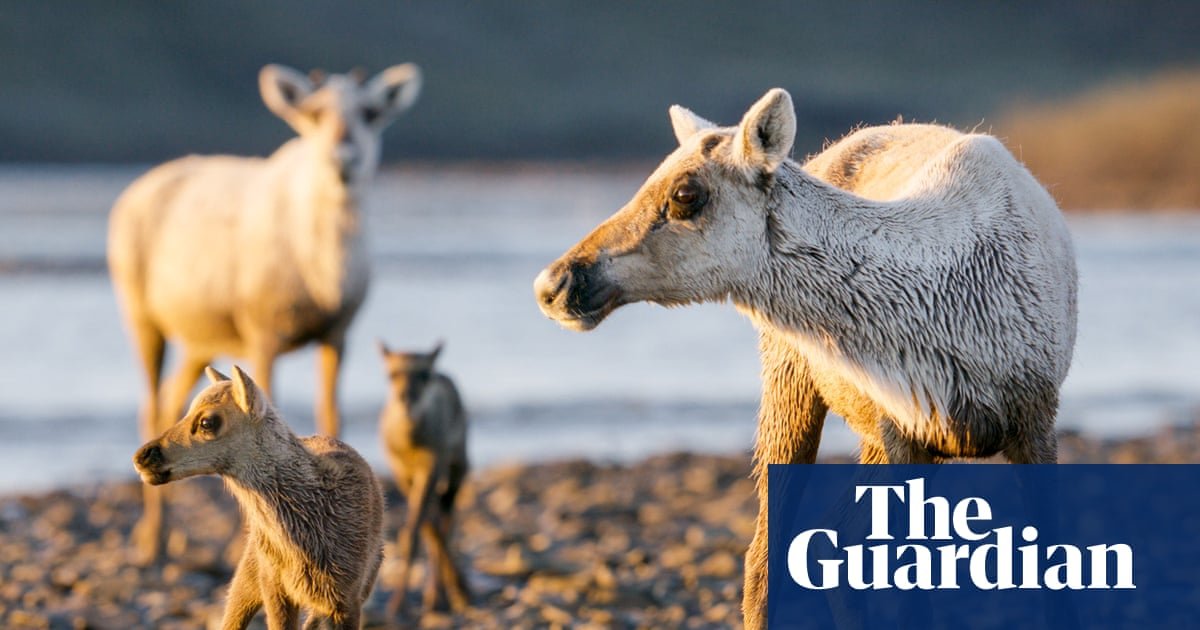
The Trump administration’s plan to expand oil and gas drilling in a 23m acre reserve on the Arctic Ocean is sparking an impassioned response, amid fears it threatens Arctic wildlife, undermines the subsistence rights of Alaska Natives and imperils one of the fastest-warming ecosystems on Earth.
More than a quarter of a million people have responded to the 2 June proposal from the US Bureau of Land Management (BLM) to roll back protections on the National Petroleum Reserve-Alaska (NPR-A), the largest tract of public land in the US.
A man from Georgia described hearing from an oil company that an employee shot a mother polar bear after encountering her with two cubs in northern Alaska.
“I beg you to reconsider … I’m just 18 years old and haven’t had a chance to see the real world yet,” said a teenager from Denmark. “This will make that impossible – if not in the whole world, then at least in the icy areas of our planet.”
The staggering number of comments submitted during the two-month comment period showed the public was watching, said Andy Moderow, senior director of policy at the Alaska Wilderness League. “That’s a pretty large turnout of Americans saying this is not the direction we need in the Arctic.”
The BLM rollback is part of a broad, rapid-fire regulatory push to industrialize the Alaskan Arctic, particularly the NPR-A. Weeks after proposing to strip protections from the reserve, the Department of Interior signaled it would adopt a management plan that would open 82% of the NPR-A to oil drilling. Two weeks ago, before the public comment period had ended, the BLM rescinded three other Biden-era documents protecting the reserve.
The Alaska Wilderness League, an Alaska-focused conservation non-profit, said the administration’s decision to start dismantling protections for the NPR-A before the comment period concluded showed “a lack of interest in meaningfully reviewing any input before taking action to allow unfettered industrialization across this landscape”.
Alaska Native groups, some of which have worked for years to secure protections for areas of the NPR-A, also expressed frustration.
The Natural Petroleum Reserve-Alaska. Photograph: Florian Schulz/protectthearctic.org
The rollback is “a coordinated erasure of years of work by Alaska Native communities”, said Sovereign Iñupiat for a Living Arctic in a press statement.
“To have all the work we’ve done for the last two decades, trying to create important special areas with their unique biological features demonstrated by science, disregarded to allow full-force development is crazy to consider,” said Rosemary Ahtuangaruak, an activist and former mayor of Nuiqsut, Alaska, a village in the NPR-A.
The BLM said in a statement it was working through all comments received on the 2024 NPR-A rule rescission, and that it would respond to substantive comments in the final rule.
The White House referred the Guardian to the BLM when asked for comment.
‘Devastating’ change
Under Trump, the Department of Interior has embarked on a push to promote resource extraction in the Arctic, vowing to expand oil and gas in the NPR-A, open oil leasing on the coastal plain of the Arctic national wildlife refuge, and advance a controversial mining road in the southern Brooks range.
The total land in play from these proposals is nearly 25m acres (10m hectares) of Arctic ecosystem, an area larger than the state of Indiana. The NPR-A comprises the vast majority of this. The reserve supports home grounds for polar bears, calving areas for caribou, and habitat for millions of migratory birds from Africa and Europe, as well as the Americas.
In 2023, the Biden administration began consultations with Alaska Native groups and other stakeholders to update existing rules on how the NPR-A should be managed.
skip past newsletter promotion
The planet’s most important stories. Get all the week’s environment news – the good, the bad and the essential
Privacy Notice: Newsletters may contain info about charities, online ads, and content funded by outside parties. For more information see our Privacy Policy. We use Google reCaptcha to protect our website and the Google Privacy Policy and Terms of Service apply.
after newsletter promotion
These consultations led to the 2024 rule which the BLM now aims to rescind. That rule protects key areas in the NPR-A for subsistence use and habitat, including Teshekpuk Lake, the Utukok Uplands and the Colville River.
Ahtuangaruak, who participated in the 2023 consultations, said removing these protections could be “very devastating rapidly”. She described a worsening ecological situation across the reserve, partly driven by existing oil development.
Caribou herds were declining, she said, and some had shifted their migration patterns away from her village because of oil and gas development to the west of her village. Permafrost was thawing, causing freshwater Arctic lakes to drain. Ice roads separated caribou calves from caribou cows; polar bears struggled to den in the melting snowpack.
Tim Fullman, a senior ecologist at the Wilderness Society, a US conservation non-profit, said that already-existing roads in the Alaskan Arctic had been shown to hinder caribou movement, at times delaying migrating animals for up to a month.
Then there’s the perennial health impacts on communities from gas flaring in the NPR-A, which Ahtuangaruak said she began to notice in the early 2000s when she was a healthcare worker.
“The flares, when there’d be 20 or more, there would be nights where people would have trouble breathing,” she said. “Babies would start to have events. There was one point where we had 20 babies develop respiratory distress and 10 of them were put on ventilators.”
Oil for decades
Thirty miles east of Nuiqsut, Ahtuangaruak’s village, is the ConocoPhillips Willow project, a drilling operation approved in March 2023 under the Biden administration. Still under construction, it is projected to come online in 2029. Once it begins to produce, Willow will be operational for at least 30 years, according to its environmental impact statement.
The project is an example of the timeframe involved in the Arctic oil and gas projects the Trump administration is currently encouraging, says Moderow – spanning decades.
“We’re not talking about oil next year. We’re talking about oil in 2050 and 2060 and beyond, when we need to move past it,” he said. The projects “could easily be pumping oil when babies born today are retiring in a climate that’s not livable if that oil is not blocked”.
“It’s investing in production that’s going to be going on for decades, well past when we need to be at essentially net zero greenhouse gas emissions if we’re going to have a livable climate,” said Jeremy Lieb, a senior attorney at Earthjustice.
