

Butterflies flit across my vision wherever I go this summer. Screams of swifts have been unusually audible in cities. Hedges are laden with blackberries. Hordes of plump wood pigeons devour my kale. Fruit trees bow with plums and apples. There are wasps galore and each morning I’m woken by a raucous new neighbour: a herring gull that’s moved on to the factory roof next door.
Wild nature, in Britain this year, is visibly abundant. Most of us share similar stories. But is there really a blizzard of butterflies? Are there actually more swifts? Is nature in recovery after years of decline? Or is this shifting baseline syndrome in action, whereby we are so inured to decimated levels of nature that we are deceived by tiny blips of hope?
Restoration is a popular notion in modern conservation. In an era of entwining extinction and climatic crisis, it is not enough to protect the tiny pockets of nature we have left. We must create new wild spaces and revive lost species. If we could only restore an Emma Turner or a Philip Henry Gosse, they would scoff, or possibly weep, at my descriptions of abundance. Today’s wildlife spectacles would be thin gruel for a Victorian or Edwardian naturalist.
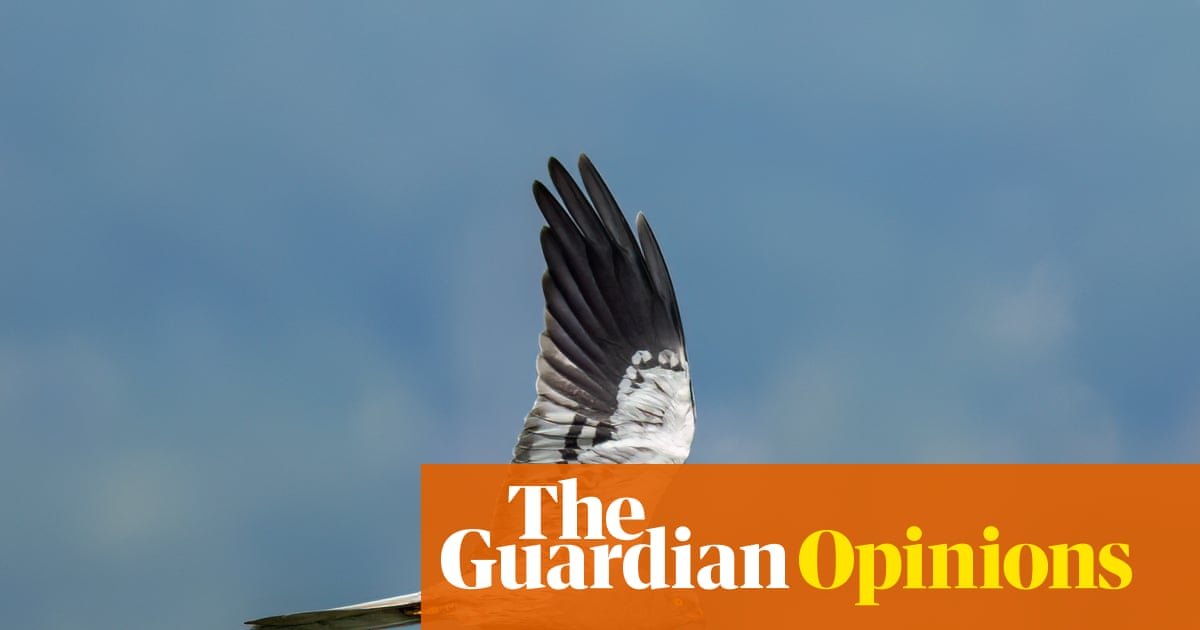
And yet we need not scoff at hope. It is an intrinsic part of every encounter with the natural world. If they are not suffering, fellow species lift our hearts. When I see my local blackbirds as scruffy and hollow-eyed as the most sleep-deprived parents because they have successfully reared three broods this year, I can’t stop smiling. When I discover a pair of vanishingly rare Montagu’s harriers reared four young in a wheat field – the first British breeding success since 2019 – it brings new hope: next year, there could be more.
This year’s hopeful abundance is nothing to do with us, not yet. The summer of 2024 was a grim, sunless season following a cold spring. It was the second worst summer for butterflies since scientific recording began in 1976. The spring and summer of 2025 have been miraculously sunny. Britain’s sunniest-ever spring boasted 43% more sunshine than average. Crucially, there were few, if any, spring frosts at night, and so plants thrived, blossom set, warmth-loving insects multiplied, birds fed and chicks fledged.
Invertebrate populations can swiftly bounce back. Well-studied butterflies are useful indicators of how other flying insects – bees, beetles, hoverflies – are faring. It’s been the best year for the purple emperor butterfly at Knepp in West Sussex since the former dairy farm was rewilded at the turn of the century. It’s the best year for gatekeeper butterflies in my garden since I moved in 11 years ago. Species teetering close to extinction from swallowtails to high brown fritillaries have done well in a few remaining strongholds.
A small white butterfly in London this summer. Photograph: Butterfly Conservation/PA
Anecdotal evidence awaits confirmation from scientific surveys but it looks like a vintage summer for most breeding birds. Anglers report one of the best supplies of fish this century on my local river. Every time I take a swim, I meet a kingfisher; I’ve never seen so many. The water is clear; aquatic plant growth is rampant.
What this means for the big picture is not much. Temperature graphs still point up. Biodiversity graphs still point down. But this sunny year reveals a profoundly hopeful tendency in our fellow species: open the door a tiny crack to animals, plants and fungi and they will stampede through it.
If only we were as quick to take our chance, and repair some of the damage that human hegemony is doing to the planet. I’d love to declare that noticing nature this summer and celebrating its success is another instance of hope. The noticing is significant. Awareness can lead to action.
We last noticed so much nature when we were locked down during Covid in the similarly dazzling spring of 2020. We appreciated the peace, birdsong and blossom. Many of us formed new bonds with neighbourhood nature. And then the data suggests most of us returned to our human-centric lives. We took a short holiday from gobbling up the planet before resuming the feast of late capitalism.
Here’s another chance: we’ve been shown again how much joy, wellbeing and real growth there can be when we live among thriving nature.
Politically, nationally, there is less hope than ever for nature. Labour is wedded to a myopic version of economic growth that will bankrupt the planet. When a government won’t even oblige multibillion-profit-making builders to install one £35 nest brick in every new home to save swifts and other rapidly declining birds, we cannot expect it to lead the way in living more lightly on our planet. New infatuations with energy-hungry AI will only further squeeze nature.
And yet locally there is more hope than ever for nature. There is more action than ever. So many of us are desperate to help our non-human neighbours. Neighbours sow wildflower meadows. Retirees build nest boxes. Councils declare rivers have rights. Companies rewild land. Farmers rediscover nature-friendly food growing.
We have to join this flowering, for us, our children and our planet. We can see from this summer that wild nature wants to flourish, is ready to blossom and will spring back to life, if only kind deeds create space where it can.
