

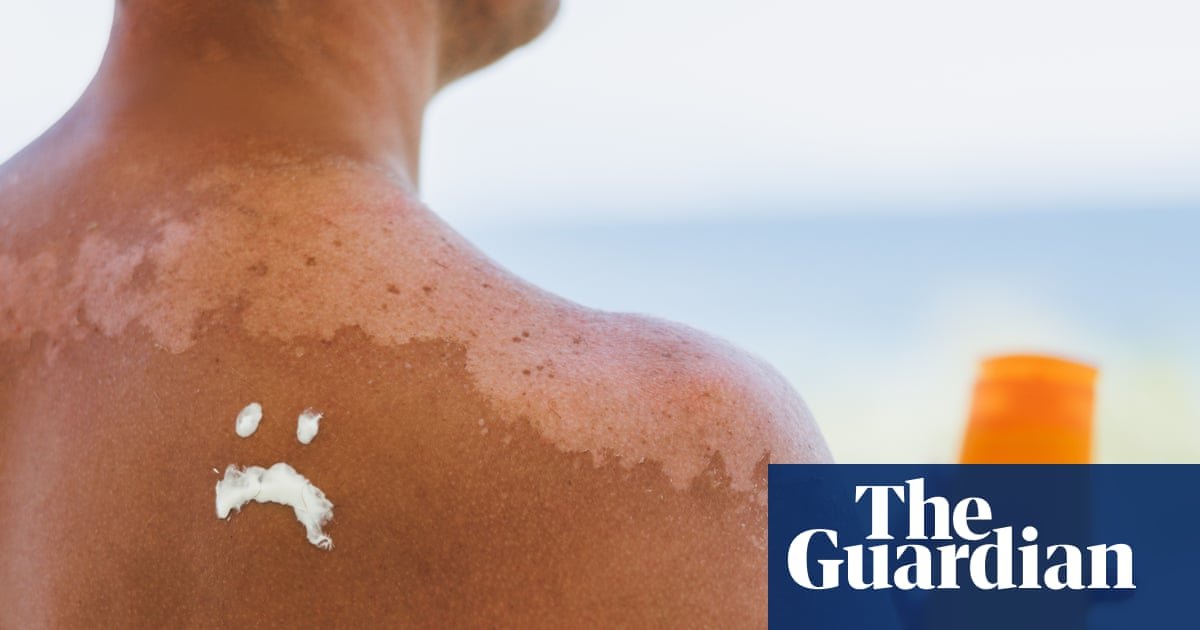
It’s summertime in the UK and social media is awash with influencers airing their concerns about sunscreen. Among them is reality TV star Sam Faiers from The Only Way Is Essex, who believes sunscreen is “full of toxic ingredients”. None of her family wore sunscreen, she said, adding that her children had built up “a really good tolerance” to the sun. Some of the claims appear to be fuelled by a US doctor who told his followers: “Be careful what you smear on yourself and your children.” Here we look at the science behind sunscreen and sun exposure.
How does sunshine damage skin?
It’s all down to the high energy ultraviolet (UV) rays. These cause premature skin ageing and wrinkles by degrading collagen and elastin. Collagen gives skin its firmness and structure, while elastin makes it stretchy. UV rays can also damage the DNA in skin cells, leading to mutations that ultimately drive skin cancers. One in three cancers globally is a skin cancer, and the main driver is UV rays.
“Too much UV radiation from the sun is the main cause of melanoma, the most serious type of skin cancer,” said Dr Claire Knight at Cancer Research UK. “That’s why it’s important to develop good sun safety habits from a young age and protect your skin when the sun is strong using shade, clothing and sunscreen together.”
Can you develop tolerance to the sun?
When the summer sunshine arrives, the skin responds to protect itself. The outermost layer, the epidermis, thickens and many people develop a tan, as cells in the skin called melanocytes produce more UV-absorbing melanin. Not everyone tans though, and acquiring a tan itself results in DNA damage.
“Most of that damage gets repaired, but some of it doesn’t, it causes mutations and those can go on developing throughout life to give rise to skin cancer,” said Brian Diffey, emeritus professor of photobiology at Newcastle University. “Sun exposure in childhood is a critical period for developing skin cancer, particularly melanoma, later in life.”
He advises using sunscreen when the sun can harm your skin and not bothering when the UV index is less than three, which in the UK is generally from mid-October to mid-March.
How do sunscreens work?
Sun creams contain filters that absorb UV rays. They protect by reducing the amount of UV that reaches the skin where it can cause burning and other damage.
There are two main types of UV filters. The first are inorganic compounds, typically zinc oxide and titanium dioxide. The second are organic compounds, where organic simply means they contain carbon. Both types are manufactured and added to creams, sprays and lip salves. Many sunscreens contain inorganic and organic UV filters to improve sun protection.
Why the concerns?
They trace back to a 2019 study conducted by the US Food and Drug Administration (FDA). Researchers found traces of organic UV filters, namely avobenzone, oxybenzone, octocrylene and ecamsule, in people’s blood after applying sun cream. The concentrations exceeded the level at which the FDA recommends companies do specific tests for toxic effects. Dr Tro Kalayjian, who runs a US weight loss clinic, posted the paper on X, adding: “Be careful what you smear on yourself and your children.”
The study prompted the FDA to call for more work on the compounds, but the authors stressed that they were not warning people off the products. “These results do not indicate that individuals should refrain from the use of sunscreen,” they wrote.
The study looked at sunscreen under “maximal use conditions”, which meant really slathering the cream on. Under real conditions, people apply about one tenth of that used in the study, Diffey said. That alone would bring three of the four ingredients below the FDA’s threshold, he added.
How might UV filters cause harm?
The inorganic UV filters, zinc oxide and titanium dioxide, have raised few concerns because they are not easily absorbed into the bloodstream. They can still, however, have an environmental impact when they wash off sun cream-covered swimmers and accumulate in water and marine life.
More questions surround organic UV filters such as oxybenzone. These are endocrine disruptors, meaning they mimic natural hormones. Whether they cause harm at the doses people get from wearing sun cream is unclear, but a number of studies have looked at levels of benzophenones (which include oxybenzone) in urine and linked higher levels to effects on sperm and poorer fertility, with affected couples taking longer to conceive.
Will sunscreens be reformulated?
Regulatory bodies around the world are seeking more information from manufacturers on organic UV filters, but some countries are already taking action. The UK’s Office for Product Safety and Standards plans to tighten limits on oxybenzone next year, bringing them more in line with Europe. Today, UK sunscreens can contain up to 6% oxybenzone, but in 2026 the maximum concentration will be reduced to 2.2% for products that are applied to the whole body. Creams and sprays for the face and hands, and lip salves, can still contain 6%, as they are applied to smaller patches of skin.
In Australia, the Therapeutic Goods Administration (TGA) has recommended a reformulation of sunscreens and additional safeguards on three chemical compounds, including oxybenzone. In the US, an FDA review is ongoing.
Do sunscreens cause cancer or vitamin deficiency?
Some social media posts have spread claims that sunscreens cause cancer, but that is false. “There’s zero evidence for that,” said Antony Young, emeritus professor of experimental photobiology at King’s College London. “Skin cancers are caused by mutations, and almost all skin cancers have a mutation that is highly UV specific.”
Others raise concerns over vitamin D deficiency. In the summer, most of our vitamin D is made through sun on our skin. But Young and his colleagues found that sunscreens have little impact on the vitamin D people make. The amount of sunlight needed to produce vitamin D is far below what it takes to cause sunburn.
But isn’t sunshine healthy?
According to some doctors, concerns over skin cancer have eclipsed the broader health benefits of sunshine. Tentative research suggests that people who get more sun may have a lower risk of heart disease, high blood pressure, autoimmune diseases and even certain cancers. “Sunburn is a risk factor for melanoma, but sunlight is good for you,” said Prof Richard Weller at the University of Edinburgh. “You can use sunscreen, you can use a hat, or you can pop inside, whatever is good for you. Just don’t get sunburned.”
“My general advice is to enjoy the sun, but don’t get sunburned,” Young added. “You can limit your time, or choose your time, or protect yourself, whether that’s by shade, clothing or sunscreen. And sunscreens do work.”
