

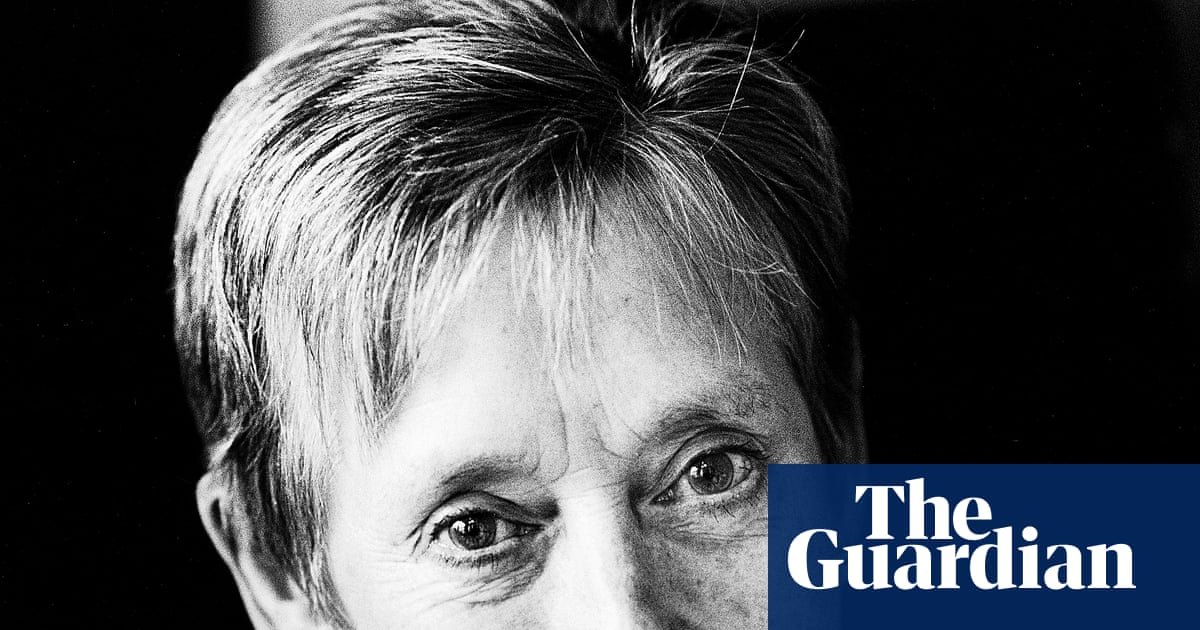
Stella Rimington, who has died aged 90, was the first head of the Security Service, commonly known as MI5, to be officially identified. She was also the first woman to head the agency, one that had been deeply infused with male culture. Asked what attracted her to MI5, she told me: “Even though there were all of these tweedy guys with pipes, I still thought the essence of the cold war and spies and stuff was fun. You know, going around listening to people’s telephones and opening their mail and stuff.”
Rising to the top of MI5 after heading the agency’s counter-subversion, counter-espionage, and counter-terrorism divisions was an achievement consolidating her reputation as a formidable Whitehall streetfighter, manifested not least by her success in wrenching from the police Special Branch its historical lead role countering Irish Republican terrorism in mainland Britain.
Soon after she retired, she was embroiled in a furious row with her former Whitehall colleagues over her decision to write her memoirs. “It was quite upsetting,” she said, “because suddenly you go from being an insider to being an outsider and that’s quite a shock.” But, she added: “I’ve never been one to retreat at the first whiff of gunshot.”
Her most controversial role as she rose up the ranks of MI5 was responsibility for countering “subversion”. She was active during the miners’ strike during the mid-1980s, and justified spying on the leadership of the National Union of Mineworkers (NUM) on the grounds that Margaret Thatcher regarded it as “the enemy within”.
She said: “If the strike is led by people who say they are trying to bring down the government, our role [is] to assess [them].”
She chose her words carefully in an interview with the Guardian, denying that MI5 itself ran agents in the NUM, adding: “That’s not to say the police or police Special Branch … might have been doing some of those things …” The Special Branch reported to MI5 while GCHQ was providing MI5 and the police with technical help for bugging operations.
Stella Rimington with a copy of her autobiography, Open Secret, 2001, which caused fury among some of her former colleagues. Photograph: Dan Chung/Reuters
Rimington also justified targeting and keeping files on civil liberty campaigners, protest groups and MPs, on the grounds that while not all their members were regarded as subversives, some of their contacts, colleagues, and friends were. Targets included the Campaign for Nuclear Disarmament – one of its organisers had been a member of the Communist party – the National Council for Civil Liberties (now Liberty) and two of its senior officials, Patricia Hewitt and Harriet Harman, and Jack Straw, former president of the National Union of Students. All became Labour cabinet ministers.
Rimington admitted MI5 checked files on prospective MPs to see if “there is anything in there of importance … so the prime minister can take it into account when he forms his government”. She insisted that individuals on whom MI5 had files should not be allowed to see them.
She later acknowledged that during the cold war MI5 was “overenthusiastic”, opening files on people who were not “actively threatening the state”. She also went as far as to accuse successive governments of wanting to “live in a police state”, introducing more and more anti-terrorism laws, including plans to hold terror suspects for 42 hours without charge.
Such laws, she said, combined with “war on terror” rhetoric, played into the hands of those they intended to deter. She described the response to the 9/11 attacks on the US in 2001 as a “huge overreaction”. Looking back, she said: “I suppose I’d lived with terrorist events for a good part of my working life and this was, as far as I was concerned, another one.”
Asked what impact the 2003 invasion of Iraq had on the terrorist threat, she replied: “Well, I think all one can do is look at what those people who’ve been arrested or have left suicide videos say about their motivation. And most of them, as far as I’m aware, say that the war in Iraq played a significant part in persuading them that this is the right course of action to take.”
She was born Stella Whitehouse in south London; her father was a draughtsman, her mother a midwife and nurse. Her father had fought at Passchendaele in the first world war. “He was never able to relax after that, a very uneasy soul, difficult to get close to,” she recalled.
He worked in the steel industry in Barrow and then in the Derbyshire-Nottinghamshire borders. “Unfortunately, when we moved out of London, we always seemed to move to places that were priorities for German bombing,” she said, describing her childhood as “disturbed and frightening … I was four when we left London as the second world war broke out … as the Barrow blitz commenced: hiding under the stairs, windows were blown out and ceilings fell down … Claustrophobia plagued me into adulthood. I struggled to sit in the middle of rows and always stood by the door on the underground. At all times I needed an exit route.”
Educated at Nottingham high school, Stella studied English at Edinburgh University, then archive administration at Liverpool University. Her first job was as an assistant archivist in Worcestershire county council’s record office.
In 1963 she married John Rimington, her childhood boyfriend, who became a high-flying civil servant, and was posted to the British high commission in Delhi responsible for economic and trade relations with India. It was there that, in 1965, she “fell into intelligence”, as she later put it. She was approached by the resident MI5 officer who offered her a job as a typist. “I was holding coffee mornings and the like … I was grateful for an end to the boredom,” she said. She joined the staff of MI5 in 1969 after the couple returned to Britain.
In a colourful passage in her autobiography, to which she gave the provocative title Open Secret (2010), she recounts how she came up against what she described as a “strict sex-discrimination policy” in MI5. She wrote: “It did not matter that I had a degree, that I had already worked for several years in the public service, at a higher grade than it was offering, or that I was 34 years old. The policy was that men were recruited as what were called “officers” and women had their own career structure, a second-class career, as “assistant officers”.
“They did all sorts of support work, but not the sharp-end intelligence gathering operations.” She vigorously challenged MI5’s prevailing culture so successfully that John Major, the then prime minister, approved her appointment as director general – head of the agency – in 1992.
After she retired in 1996, she became the target of bitter attacks by Whitehall mandarins and the SAS for daring to write her autobiography. In a ferocious diatribe, David Lyon, colonel commandant of the SAS, wrote in a letter to the Times: “All members of the country’s security forces should keep silent about their work, for life. When there is a requirement to publish, it is the government alone who should do so.” Rimington, he added, could expect “a long period of being persona non grata, both to many she has worked with and many she has yet to meet among the general public”.
She said she received a “bollocking” from the cabinet secretary, Richard Wilson, and was told to remove any reference to the SAS despite widespread media coverage of their operations, including the well-documented killing of three unarmed members of the IRA in Gibraltar.
In an attempt to sabotage her memoir, a copy of the manuscript was leaked to the Sun newspaper. The woman who had spent years deploying the secret state described the process of vetting her memoir as “Kafkaesque”, an experience that, she said, led her to understand “how persecuted you can feel when things are going on that you don’t actually have any control over”.
Rimington said she decided to write her memoir to explain to her daughters, Sophie and Harriet, why she was never around as a mother. She separated from her husband when the children were young, but divorce “seemed a faff” as she put it. They became friendly in old age and lived together during lockdown. “It’s a good recipe for marriage,” she said looking back. “Split up, live separately, and return to it later.”
After completing her memoir she turned to fiction, writing thrillers starring Liz Carlyle, a female agent sometimes referred to as her alter ego, and later Manon Tyler, a CIA agent.
In 2011 she chaired the Booker prize panel, when she provoked a controversy by saying “readability” and an ability to “zip along” were important criteria for judging books. Literary critics suggested other things such as quality might be taken into account, adding that the shortlist was the worst in decades. Rimington responded by comparing the publishing world with the KGB and its use of “black propaganda, destabilisation operations, plots and double agents”.
Rimington was made Dame Commander of the Order of the Bath in 1996. After she retired she held a number of corporate posts including a directorship of Marks & Spencer, and was chair of the Institute of Cancer Research. She was widely credited as the inspiration for Dame Judi Dench’s M in the James Bond films.
She is survived by her husband and two daughters.
Stella Rimington, intelligence officer, born 13 May 1935; died 3 August 2025
