

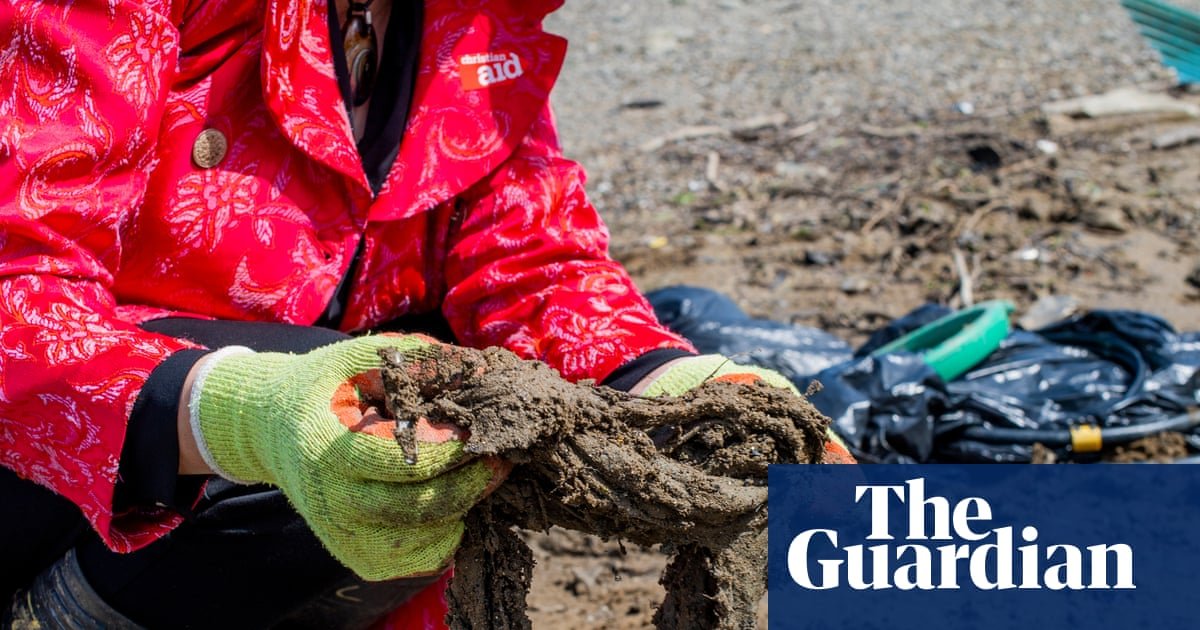
Wet wipe producers should be charged to remove their pollution from England’s waterways, the author of a government review into reforming the sector says.
Sewage has been a critical factor in the devastating pollution of our waterways, but other sources of pollution include microplastics, consumer products such as wet wipes, and the byproducts of modern manufacturing, such asPfas (“forever chemicals”), as well as fertiliser and pesticides from farming. Many of these have been linked to harmful effects on human health and the natural environment.
The fairest way to deal with this, Sir Jon Cunliffe, a former Bank of England deputy governor, said, could be to apply the “polluter pays” principle, whereby the company behind the pollution contributes towards its removal. “The alternative is for everyone to pay for it through their bills, and the question is, should we spread that among everybody, or should we go through a polluter pays route? So I think, really, we should look at those routes,” he said.
It has been a landmark week for the water sector, after Cunliffe published a major review containing recommendations on how to clean up England’s filthy rivers and seas. The regulator Ofwat is to be abolished, the government has pledged, and a new, powerful, super-regulator created to better hold water companies to account.
Campaigners welcomed many of the recommendations, in particular ending the self-monitoring of water companies, which currently voluntarily publish information on how much sewage they dump. Citizen scientists have argued for years that this system is open to under-counting, and have tried to shed light on the true amount of human waste in waterways: under new proposals sewage spills will be automatically published online.
But there are those who felt this was a missed opportunity. The environment secretary, Steve Reed, took nationalisation out of the scope of the review from the outset, and also told Cunliffe not to consider more radical approaches such as turning companies into not-for-profits. This despite the fact that it is the mismanagement of water companies as much as the dumping of sewage that has enraged the public.
So what of the idea that polluters – the upstream companies that generate some of the worst pollutants in our waterways such as wet wipes and Pfas – should pay? “One of the best ways to deal with stuff not going into our rivers is not to let it into the sewers in the first place,” Cunliffe said, “Why do we need wet wipes?”
Sewage floats on the River Thames in Datchet, Berkshire. Photograph: Maureen McLean/Alamy
“I have some sympathy for the water companies,” he said, “because the drinking water system is closed and no one can touch it unless authorised to do so. The wastewater system is open. Anybody can put anything down the loo, and then at the treatment works, I’ve seen literally huge machines taking wet wipe mountains out of the sewage system.”
Water companies claim that wet wipes, which shed microplastic particles and also build up into major blockages, are the main cause of sewage pollution. John Penicud, Southern Water’s managing director for wastewater, said recently that “the majority of wastewater pollutions are caused by wet wipes, fats, oils and grease being flushed down toilets and sinks”, and called for wet wipes to be banned.
The EU is introducing quaternary treatment, a more advanced method than that used in the UK. This has powerful filters that remove these trace chemicals from the water supply, but is expensive, so the bloc is looking at making the producers of these chemicals pay a levy that would then be used to create these treatment plants. Producers would be required to cover at least 80% of the costs associated with the sewage treatment upgrades necessary for removing these substances from wastewater.
Cunliffe thinks the UK could look at adopting a similar approach for wet wipes; as a side-effect this would make plastic wet wipes more expensive, which would discourage their use. His report has recommended looking at adopting the EU laws in the UK, and investigating the prevalence and impact of these micropollutants in the environment and on human health.
This way, he says, “it’s not the water bill payer who pays to take it out, but the people who make and buy the products … Pfas and so on will require quaternary treatment, and there are currently three levels of sewage treatment. To build another would be expensive.” The question, he said, was whether the user or the polluter paid.
A Water UK spokesperson said: “Removing Pfas ‘forever chemicals’ and other micropollutants from the water environment is a huge challenge because current sewage technology was never designed to deal with them. We need a national plan from government for upgrading sewage treatment that is paid for by chemical manufacturers instead of water bill payers, as well as a ban on Pfas products that will otherwise keep making the problem worse.”
