

It’s what the extreme right of the Tory party wanted from Brexit: to tear down crucial public protections, including those that defend us from the most brutal and dangerous forms of capital. The Conservatives lost office before they were able to do their worst. But never mind, because Labour has now picked up the baton.
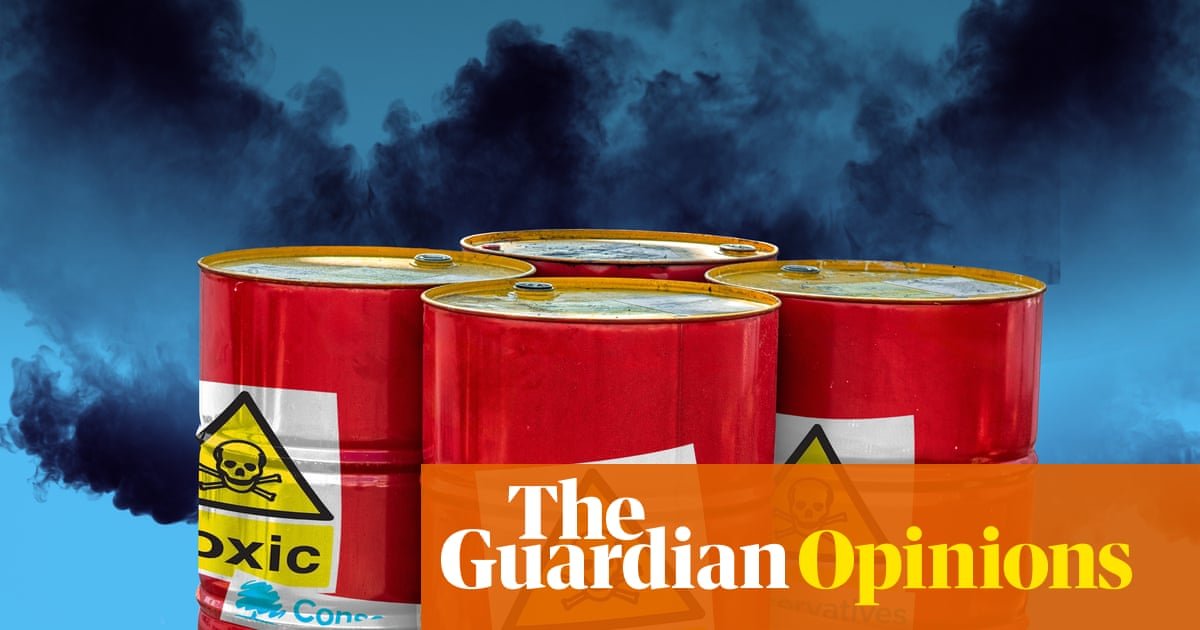
A month ago, so quietly that most of us missed it, the government published a consultation on deregulating chemicals. While most consultations last for 12 weeks, this one runs for eight, half of which cover the holiday period – it closes on 18 August. The intention is set out at the beginning: to reduce “costs to business”. This, as repeated statements by Keir Starmer make clear, means tearing up the rules.
If, the consultation proposes, a chemical has been approved by a “trusted foreign jurisdiction”, it should be approved for use in the UK. No list is given of what these trusted jurisdictions are. It will be up to ministers to decide: they can add such countries through statutory instruments, which means without full parliamentary scrutiny. In one paragraph the document provides what sounds like an assurance: these jurisdictions should have standards “similar to and at least as high as those in Great Britain”. Three paragraphs later, the assurance is whisked away: the government would be able “to use any evaluation available to it, which it considers reliable, from any foreign jurisdiction”.
In this and other respects, the consultation document is opaque, contradictory, lacking clear safeguards and frankly chilling. Lobbyists will point out that a chemical product has been approved for sale in the US, or Thailand or Honduras, then ask the government to add that country as a trusted jurisdiction. If the government agrees, “domestic evaluation” would be “removed”, meaning that no UK investigation of the product’s health and environmental impacts will be required.
In the US, to give one example, a wide range of dangerous chemical products are approved for uses that are banned here and in many other countries. The government has fired the gun on a race to the bottom.
To make matters worse, once a country has been added to the list of trusted jurisdictions, all the biocidal products it authorises for use could, the consultation says, be “automatically approved” for use here. The proposed new rules, in other words, look like a realisation of the fantasy entertained by the ultra-rightwing Tory MP Jacob Rees-Mogg in 2016: “We could say, if it’s good enough in India, it’s good enough for here … We could take it a very long way.”
There is in fact a means of reducing costs while maintaining high standards: simply mirror EU rules. Though far from perfect, they set the world’s highest standards for chemical regulation. Mirroring them as they evolve would avoid the pointless institutional replication and total regulatory meltdown our chemicals system has suffered since we left the EU. But we can’t have that, as it would mean backtracking on Brexit, which would be BETRAYAL. Adopting the weaker standards of other states at the behest of foreign corporations, by contrast, is the height of patriotism.
The divergence from European standards is likely to mean breaking the terms of the EU-UK trade and cooperation agreement, as well as landing Northern Ireland in an even greater quandary, as it remains in both the EU single market and the UK internal market. In many cases, deregulation delivers bureaucratic chaos.
The consultation also suggests the removal of all expiry dates for the approval of active chemical substances. The default position would be that, as long as a foreign jurisdiction has approved a product, allowing it to be used in the UK, it stays on the books indefinitely. Those arguing that new evidence should lead to its deletion from the approved list would have a mountain to climb. Worse still, the consultation proposes removing any obligation on the Health and Safety Executive to maintain a publicly available database of the harmful properties of chemical substances on the UK market. No wonder they kept it quiet.
Yes, these proposals might reduce costs for business. But the inevitable result is to transfer them to society. Already, we face a massive contamination crisis as a result of regulatory failure in this country, as compounds such as Pfas (“forever chemicals”), microplastics and biocides spread into our lives. If the decontamination of land and water is possible, it will cost hundreds of times more than any profits made by industry as a result of lax rules. In reality, we will carry these costs in our bodies and our ecosystems, indefinitely. The true price is incalculable.
Many have paid with their lives, health, education or livelihoods for previous “bonfires of red tape”: through the Grenfell Tower disaster, filthy rivers, collapsing classrooms, consumer rip-offs and the 2008 financial crisis. But as long as these costs can be shifted off corporate and current government balance sheets, that is deemed a win for business and win for the Treasury.
Earlier this month, the chancellor, Rachel Reeves, told financiers in her Mansion House speech that regulation “acts as a boot on the neck of businesses”. In reality, business acts as a boot on the neck of democracy, a boot the government slathers with kisses.
Before the general election last year, Reeves told an assembly of corporate CEOs: “I hope when you read our manifesto, or see our priorities, that you see your fingerprints all over them.” The catastrophic planning reforms the government is now forcing through parliament were hatched, she told them, at a “smoked salmon and scrambled eggs breakfast” with corporate lobbyists.
This was just one instance of a massive pre-election grovelling offensive, involving hundreds of meetings behind closed doors with corporations, which shaped Labour’s plans and explains so much of what has gone wrong since. The point and purpose of the Labour party was to resist economic warfare by the rich against the rest. Starmer and Reeves have turned their party into the opposite of what it once was.
Capital demands three things at once: that the government strip away the rules defending the public interest from ruthless profit-making; that the government regulate itself with insanely restrictive pledges, such as Reeves’s fiscal rules; and that the public is regulated with ever more draconian laws, such as those restricting protest. It gets what it asks for. Everything must give way to capital, but capital must give way to nothing.
George Monbiot is a Guardian columnist
On Tuesday 16 September, join George Monbiot, Mikaela Loach and other special guests at the Guardian’s climate assembly, live at the Barbican in London and livestreamed globally. Book tickets here or at Guardian.Live
